Colorado winters are extremely harsh on lawns; a lot of damage can occur during these times. If you do not prepare properly for winter, your lawn can sustain serious damage due to rapid temperature drops, heavy snowfall, dry air, and freeze-thaw cycles. Most homeowners pay attention to taking care of their lawns in the spring and summer months, but preparing for a Colorado winter is just as important as preparing for a Colorado summer.
Preparing your lawn properly for winter will help protect your irrigation system, turf, and soil structure from long-term damage. Lawn professionals in Denver spend a great deal of time preparing lawns for winter use to strengthen grass roots, prevent irrigation failure, and prepare lawns for new growth as soon as the weather warms up again. This guide will provide you with the information you need to prepare your lawn and irrigation system for winter.
Why You Need to Winterize Your Lawn in Denver
Winter weather in Denver is a unique and difficult situation due to altitude, dry air, and fluctuating temperatures. Most lawns that are not properly winterized experience soil compaction, weak root systems, and dead spots when spring arrives.
The purpose of Lawn Winterization Services in Denver is to provide quality protection to turf during its dormant stages, minimize damage caused by diseases resulting from stress on the grass, and reduce the costs associated with frozen water lines leading to loss of irrigation during a freeze weather period.
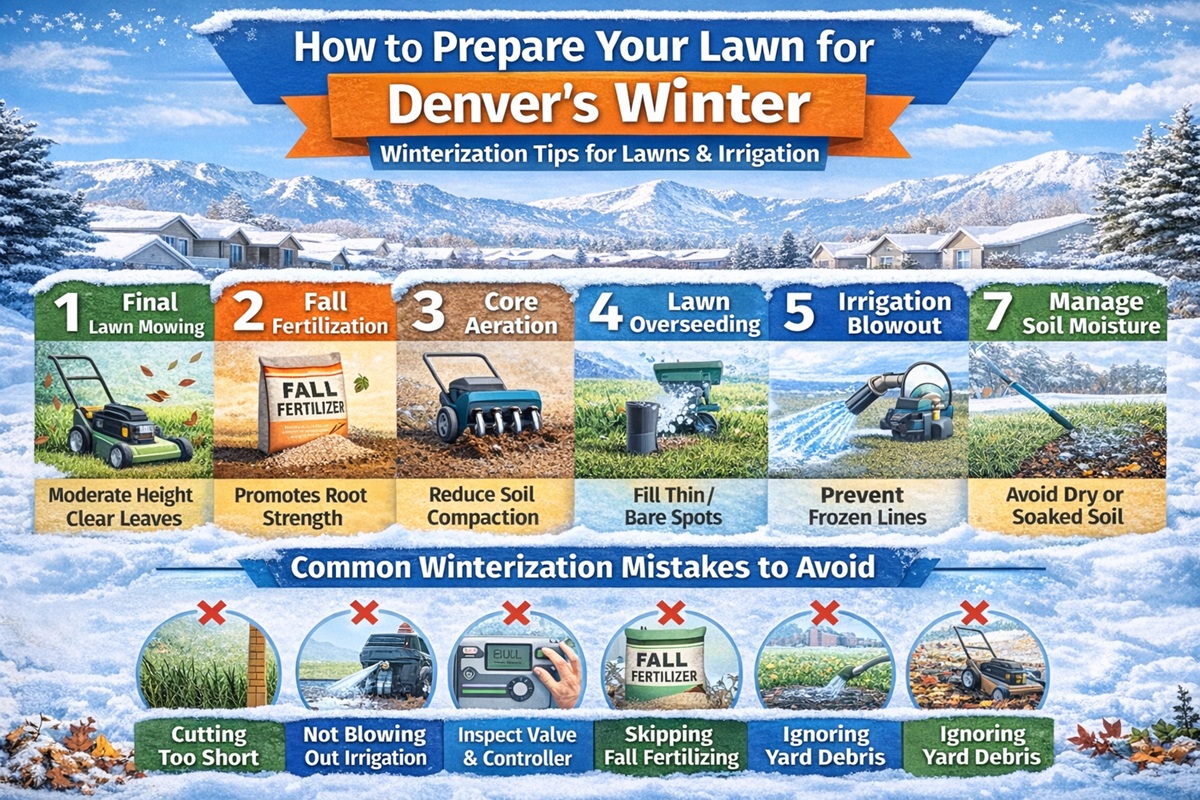
1 - Last Mowing (of the Season) Before Winter
Length of Grass at Last Mow of the Season - If grass is too long, it could mat during snow and develop conditions that are conducive to mold and disease development. If the grass length is cut too short at the last cut of the season, root systems will become weaker and may have less cold tolerance.
Moderate length - The majority of Denver homes have their grass mowed to a moderate length for the last mow of the season. At this length, grass blades stand upright and protect the crown of the plant, allowing for better chances of surviving dormancy and having healthy vitality in springtime.
b) Cleaning Up the Lawn Debris Before Snow Falls.
Before the snow falls, leaves, branches, and other organic debris should be removed from the area. Organic debris creates moisture and shade, which are the main contributors to mold growth and dead areas in the lawn.
Professional lawn care companies in Denver make sure to clear out the lawn of all debris to create a breathable area going into the winter season. This will help reduce the potential for snow mold or suffocating the lawn.
2 - Fertilize Your Lawn in Fall to Give Your Lawn the Strongest Possible Roots
Why You Should Fertilize Your Lawn in the Fall.
Fall fertilization is often one of the missing components of winterization for your lawn. While your grass above ground is not actively growing in the fall, the roots beneath the ground are. Providing the correct nutrients through fertilization to the roots will ensure that the grass continues to store energy for the duration of the winter season.
A properly applied fertilizer at the time of fall fertilization will promote better crown strength, cold hardiness, and quicker green-up in the spring.
Choosing the Right Fertilizer Blend for Winterization.
Generally, most fertilizers that are used for winterizing grass have a higher potassium content than other fertilizers. Potassium helps in developing cold hardiness and also increases the disease resistance capability of grass. Nitrogen is used carefully to prevent any excess top growth before the freezing conditions of winter set in.
Professional lawn care companies will create a custom fertilizer application based on the type of grass, the soil conditions, and the local climate.
Step 3 – Core Aerating Your Lawn Before Winter
Soil Compaction Reduction
Soil compaction is commonplace in Denver because of its heavy clay soil combined with pedestrian traffic. When the soil becomes compacted, it does not allow air to flow freely into it, nor does it allow water to be absorbed into the soil or nutrients to move through the soil, all of which are necessary for survival during winter months.
Through core aeration, many small holes are created in the soil, which allow for the movement of air into the root zone as well as the absorption of water and nutrients into the root zone.
As a Result of Aeration, You Will Improve Your Lawn's Ability to Absorb Moisture
Aeration will also give the lawn's roots the ability to absorb moisture prior to the freezing of the ground. During and after aeration, the lawn's roots will be able to store moisture in their root systems for dormancy usage during the winter months.
Most Lawn Care Companies in Denver provide aeration and fall fertilization in conjunction with each other for optimal results.
Step 4 - Overseeding for Thicker Lawn Grass by Repairing Weak Spots in Your Lawn
When you overseed in early fall, you are providing your lawn with a means to recover weak spots prior to winter dormancy. As soon as the new seedlings establish themselves and develop root systems, they will increase the density and resiliency of the turf.
A denser lawn is better able to sustain colder winter temperatures and resist broadleaf weed invasion during the spring.
When to Overseed
To achieve the maximum benefit from your overseeding efforts, you must overseed when you feel it is appropriate for the growth of the new seeds. If done properly, overseeding will prepare your lawn for winter dormancy and ultimately lead to a denser lawn the following spring.
Step 5 – Winterization of Your Irrigation System Is Beneficial for Any Homeowner
One of the most common winter problems a homeowner must deal with is the cost of replacing frozen irrigation pipes that were damaged due to a freeze. If you have water remaining in your pipes, valves, or sprinkler heads at the time you turn off your irrigation system for the winter, those fittings can freeze and expand, causing the pipe or valve to crack or burst.
Winterization involves blowing compressed air through designed drains to eliminate remaining water from irrigation lines. Caution must be taken during this process to prevent damage to the irrigation system (pipes and/or fittings).
Certified technicians carefully adhere to predetermined pressure limits in order to remove all water from the irrigation system without putting stress on individual components of the system.
Final Thoughts
Professional Lawn Care Denver and irrigation winterization services assist homeowners in avoiding financial hardship resulting from damaged and depleted lawn care during the winter months.
Heroes Lawn Care is a lawn care company that provides professional Lawn Care Denver services to homeowners and businesses in Denver and the surrounding areas. For more information, please visit us at Heroes Lawn Care.