
Drought-Resistant Grass Options for Northwest Austin Lawns
Choosing drought-resistant grass for Northwest Austin lawns requires more than selecting a turf variety that can survive heat. A skilled landscaping contractor looks at the entire outdoor environment, including soil type, sun exposure, grading, irrigation performance, drainage patterns, and how the lawn is used throughout the year. In Central Texas, turf is constantly challenged by long heat cycles, irregular rainfall, compacted soil, and periods of watering restriction. A lawn that performs well in spring can quickly thin, fade, or develop stressed patches if the grass type is not matched to the property’s conditions.
A drought-resistant lawn should be designed for endurance, not just appearance. The best results come from pairing the right grass selection with strong installation practices and practical maintenance planning. A landscaping contractor may evaluate whether the lawn needs improved soil preparation, yard grading and leveling services, irrigation and drainage solutions, or larger property landscape upgrades before recommending turf replacement. Without these foundational steps, even a drought-tolerant grass variety may struggle because the underlying environment is still working against it.
For Northwest Austin homeowners, drought-resistant grass is only one part of a broader outdoor strategy. A knowledgeable landscaping contractor can help determine whether the property needs turf improvement, residential landscape installation, hardscape and softscape installation, or custom outdoor design build planning to reduce water demand and improve long-term usability. Heroes Lawn Care understands that a water-smart lawn must be supported by the full landscape system, not treated as a single isolated feature.
Why Drought-Resistant Grass Matters in Northwest Austin
Northwest Austin landscapes face a combination of heat, rocky soil pockets, clay-heavy areas, and inconsistent rainfall that can make traditional lawn maintenance difficult. Grass varieties that require frequent watering may look attractive under ideal conditions, but they often struggle during extended dry periods. When turf is poorly suited to the local climate, homeowners may find themselves using more water, fertilizer, and repair work just to maintain basic lawn quality. Over time, this can make the yard more expensive and less reliable.
Drought-resistant grass options help reduce this pressure by using turf varieties that can better tolerate heat, recover from dry conditions, and maintain acceptable color with less frequent irrigation. However, turf selection should still be guided by site conditions. Full-sun yards, shaded side areas, high-traffic lawns, and sloped properties each have different needs. This is where landscape construction services and outdoor project management become valuable, because the right installation process can determine whether the selected grass performs well after establishment.
Comparing Common Drought-Tolerant Grass Options
Several warm-season grass types are commonly considered for drought-resistant lawns in Central Texas. Bermuda grass is known for its heat tolerance, aggressive growth, and strong recovery in sunny areas, making it a practical choice for active lawns that receive regular use. Zoysia grass offers a denser texture and can tolerate moderate shade better than Bermuda in some conditions, though it may establish more slowly and require careful preparation. Buffalo grass is another option for homeowners seeking a lower-water, more natural-looking lawn, particularly in areas where a less manicured appearance is acceptable.
Each variety has trade-offs. Bermuda may require more mowing during active growth, Zoysia may require more patience during establishment, and Buffalo grass may not suit every aesthetic preference or traffic level. Garden installation specialists and turf professionals often evaluate these trade-offs alongside the property’s real use. A lawn that serves children, pets, outdoor gatherings, or commercial visibility must be chosen differently from a low-traffic decorative space. The strongest turf decision is not the most popular grass; it is the variety that fits the property’s conditions and expectations.
Matching Grass Selection to Soil, Sun, and Use
Grass selection should always begin with the site itself. In Northwest Austin, one property may have rocky, fast-draining sections while another may have compacted clay that holds water too long after rain. Turf that performs well in one yard may struggle in another if the soil profile, slope, or sun exposure is different. Before installation, the lawn area should be evaluated for compaction, drainage behavior, grade consistency, and existing irrigation coverage.
Yard grading and leveling services can be important before installing drought-resistant grass because uneven ground can create dry high spots and soggy low areas. Irrigation and drainage solutions also matter because drought-resistant does not mean water-free. New turf still needs proper establishment, and mature turf still benefits from efficient watering during severe heat. Matching the grass variety to the property’s practical realities helps create a lawn that is both attractive and easier to maintain.
How Installation Quality Affects Drought Performance
Drought-resistant grass will only perform as well as the installation allows. Poor soil preparation, uneven grading, weak sod contact, or inadequate irrigation during establishment can lead to long-term problems that are difficult to correct later. Residential landscape installation should include proper soil preparation, removal of unsuitable material, grade correction when needed, and careful placement of sod or seed. These details help roots establish more deeply and evenly, which is essential for drought tolerance.
Hardscape and softscape installation can also influence turf success. Patios, walkways, beds, retaining features, and drainage elements all affect how water moves across the property. If hardscape areas direct heat or runoff into the lawn, turf may experience stress even if the grass variety is drought-tolerant. A well-planned installation considers these interactions from the beginning, ensuring that grass, planting beds, and built features support one another rather than creating competing maintenance problems.
Reducing Lawn Size with Smart Landscape Design
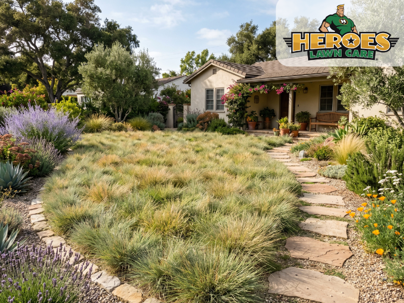
In some Northwest Austin properties, the best drought-resistant strategy is not replacing every inch of grass with another turf variety. It may be smarter to reduce turf in areas where grass repeatedly struggles and replace those zones with planting beds, stone features, pathways, or outdoor living areas. Custom outdoor design build planning can help homeowners create a yard that uses grass where it performs best and alternative landscape features where turf demands too much water or maintenance.
Property landscape upgrades may include expanding patios, adding decomposed granite areas, creating native planting beds, or using hardscape features to reduce high-stress lawn zones. These upgrades can improve usability while lowering water demand. Commercial landscape development often follows this same logic, using turf selectively in high-value visual areas while incorporating lower-maintenance materials in areas that do not need traditional grass. The result is a more efficient landscape that still feels complete, intentional, and visually appealing.
Supporting Drought-Resistant Turf with Irrigation and Drainage
Even drought-resistant grass needs proper water management, especially during establishment and prolonged summer heat. Efficient irrigation helps train roots to grow deeper by delivering water at the right frequency and depth. Shallow, frequent watering can weaken turf by encouraging surface-level roots, while deep, measured watering supports stronger long-term performance. Irrigation and drainage solutions should be reviewed before and after turf installation to ensure water is reaching the right areas without runoff or pooling.
Drainage is equally important because drought-tolerant grass can still decline in areas where water collects and suffocates the root zone. If a lawn has soggy sections after storms or irrigation, the problem may be grading, soil compaction, or poor drainage design. Heroes Lawn Care helps homeowners evaluate these conditions as part of a full lawn improvement strategy, ensuring drought-resistant turf is supported by the infrastructure it needs to perform in real conditions.
Building a Long-Term Grass and Landscape Plan
A long-term drought-resistant lawn plan should combine grass selection, installation quality, irrigation management, and ongoing maintenance. A landscaping contractor can help property owners avoid the common mistake of choosing a grass variety without addressing the surrounding landscape factors that affect performance. The goal is to create a yard that looks good, uses water responsibly, and remains functional during difficult weather patterns.
A landscaping contractor should also help homeowners think beyond the first season. Drought-resistant grass still needs proper mowing, seasonal adjustment, occasional soil support, and monitoring for traffic damage or irrigation problems. When combined with landscape construction services, outdoor project management, and smart property landscape upgrades, the lawn becomes part of a resilient outdoor system rather than a high-maintenance feature that constantly needs correction.
Conclusions
Drought-resistant grass options can significantly improve the performance of Northwest Austin lawns, but the right choice depends on more than heat tolerance alone. A landscaping contractor can evaluate soil, sun exposure, drainage, irrigation, property use, and long-term maintenance goals to recommend a turf solution that fits the site. Bermuda, Zoysia, Buffalo grass, and other warm-season options each have strengths, but their success depends on proper preparation and installation.
The best results come from combining drought-resistant turf with thoughtful landscape planning. A landscaping contractor may recommend residential landscape installation, yard grading and leveling services, irrigation and drainage solutions, hardscape and softscape installation, or custom outdoor design build improvements to reduce water demand and improve usability. With guidance from Heroes Lawn Care and a practical long-term plan, homeowners can create a lawn that is more resilient, attractive, and prepared for the realities of Northwest Austin weather.