
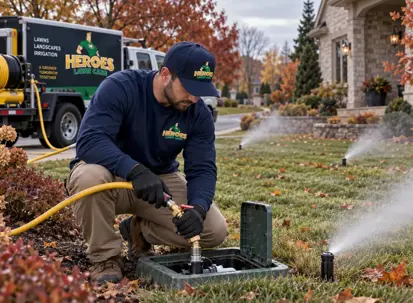
Sprinkler Blowout: What it Is & When to Get One
Sprinkler systems contain pressurized water to keep your lawn lush and green throughout the year. When cold weather sets in, any water left in the system can freeze, expand, and lead to costly damage. The best way to protect your investment is with a sprinkler blowout. But what is a sprinkler blowout and when do you need one? Here's what you need to know about winterizing your entire irrigation system.
What Is a Sprinkler Blowout?
A sprinkler blowout is the process of removing water from irrigation systems using compressed air. Pressurized air is forced through your irrigation lines from a chosen source, often an air compressor, while the rain valves remain open. This creates a controlled air compressor that blows to push most of the water out of the pipes, sprinkler zones, and backflow valves before the first winter freeze.
It’s not necessary to remove every drop of water. The risk of damage significantly decreases as long as the system components—like PVC piping, sprinkler heads, and valves—are mostly clear.
Why Do You Need a Sprinkler Blowout?
A sprinkler blowout is necessary if your region freezes in the winter. Even if the pipes inside your home are safe, an outdoor sprinkler system will likely take damage when the temperatures drop.
Prevents Damage from Freezing
Water expands when it freezes. In a pressurized water system like your sprinklers, leftover water in the lines can freeze, expand, and crack pipes, fittings, and valves. Frozen water in your sprinkler lines or components can lead to more expensive repairs and water damage to your lawn from leaks later on.
Extends the Lifespan of Your System
Regular sprinkler blowouts can protect your sprinkler system components and prolong its lifespan. By preventing damage, they can save time and money by reducing the need for additional sprinkler maintenance and costly irrigation repairs.
When Should You Get a Sprinkler Blowout?
The most important time for a sprinkler blowout is before the first freeze of the year. This will vary depending on your climate and local weather patterns, but the date often occurs in the mid to late fall before the temperature drops below freezing.
Ideal Timing Based on Climate
In the northern states and regions that are typically colder in the winter, schedule your sprinkler blowout for early to mid fall This may be somewhere between late September and mid-October before the first hard freeze.
In milder and more southern climates, late fall is often the best time for a sprinkler blowout. Be sure to schedule your blowout before the temperatures start consistently dropping below freezing.
Signs That It's Time
Don’t wait until the first freeze! When you start to see frost in the mornings, it's time for your sprinkler blowout if you haven't done it already. Watch for dropping nighttime temperatures and freeze warnings in the weather forecast. This will tell you when it's time to schedule sprinkler winterization and irrigation services. Or, simply find a local irrigation professional to set up your service.
DIY vs. Professional Sprinkler Blowouts
When it comes time for sprinkler blowouts, you have two options: DIY vs. professional service.
DIY Considerations
For a DIY sprinkler blowout, you’ll need an air compressor with adequate cubic feet per minute (CFM) to generate sufficient air pressure. Attach an air compressor hose or blowout adapter to the main water supply and slowly open the valves to relieve pressure. Be cautious about excess pressure, which can damage seals or sprinkler heads. Additionally, managing automatic or manual drain valves on uneven terrain can complicate the process.
Why Hire a Professional
A certified professional uses the right tools, including air compressors calibrated for blowing air through the system without damaging components. They will clear each zone of your irrigation system thoroughly, ensure rain mode is activated, and address backflow preventers or airflow valves. Professionals also provide peace of mind by reducing the risk of damage caused by mechanical faults or improper technique.
Benefits of Regular Sprinkler Blowouts
Saves Money on Repairs: Preventing freeze damage saves on costly pipe and component repairs and reduces system wear and tear.
Ensures a Functional System in Spring: A properly winterized lawn and irrigation system will be ready to go when you need it in spring. This will minimize delays in lawn care so you can start revitalizing your lawn right away.
Protects Lawn and Landscape Health: A well-maintained irrigation system supports a healthier lawn. An autumn blowout achieves this by preventing system breakdowns that can disrupt watering schedules.
Tips for Irrigation Winterization
Don't let freezing temperatures cause damage to your property! Here are a few other irrigation and garden winterizing tips to keep your lawn safe throughout the year.
Clear all your outdoor taps
Place insulator caps on outdoor taps and faucets
Release the water pressure from your sprinklers
Disconnect and blowout your sprinklers and drip lines
Cover your flowers and bushes for the winter
Schedule your sprinkler blowout early this year and consider hiring a professional irrigation system service if you're not sure about DIY methods. Just a small investment in winterizing your lawn sprinkler system can save you time and money in the long run.
FAQs: Sprinkler Blowouts
What is a zone-by-zone blow, and why is it important?
A zone-by-zone blow is a method where each sprinkler zone is cleared of water individually using compressed air. This ensures thorough water removal, preventing freezing and damage to pipes, sprinkler heads, and valves. Properly clearing each zone helps avoid more expensive repairs in the spring.
Do I need to turn off the backflow preventer during a sprinkler blowout?
Yes, turning off and draining the backflow preventer is a crucial step in the sprinkler blowout process. This device protects your drinking water supply from contamination but can freeze and crack if water remains inside during the winter.
What’s the difference between a manual drain and an automatic drain method?
A manual drain requires you to open specific valves to release water from the sprinkler system, while an automatic drain method uses specially designed valves that automatically release water when the system is shut off. Both methods are effective, but an automatic drain may be more convenient if your system includes this feature.
Can a sprinkler blowout damage my sprinkler heads or pipes?
If done incorrectly, a sprinkler blowout can damage components like sprinkler heads, pipes, or seals, especially if too much air pressure is used. Hiring a professional ensures the proper air compressor pressure is applied to protect your irrigation system and avoid costly repairs.
What happens if I skip a sprinkler blowout?
Skipping a sprinkler blowout increases the risk of water freezing inside the pipes and components. This can lead to cracked pipes, damaged valves, and broken sprinkler heads, resulting in more expensive repairs and potential disruptions to your lawn care routine next spring.
Schedule a Sprinkler Blowout with Heroes Lawn Care
Winterizing your sprinkler system with a professional blowout is essential for preventing costly freeze damage and extending the lifespan of your irrigation components. By using compressed air to clear water from pipes, valves, and sprinkler heads, you protect your entire system from damage caused by freezing temperatures. Whether you choose a DIY approach or hire an expert, timely maintenance ensures your sprinklers are protected and ready to keep your lawn healthy when spring arrives.
Don't wait—schedule your sprinkler blowout before the next freeze to safeguard your irrigation system and avoid expensive repairs. Heroes Lawn Care is ready to ensure your system is cleared with professional expertise, care, and efficiency. Find a Heroes Lawn Care near you to schedule your sprinkler blowout.