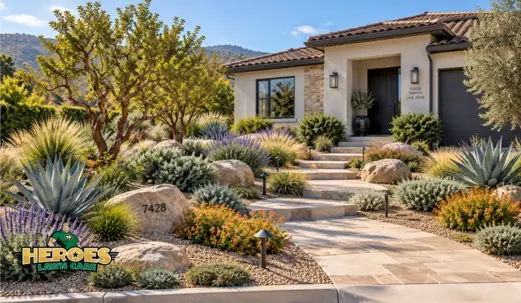
7 Xeriscape Ideas for a Low-Water Landscape
If you live in parts of the U.S. that have very hot and dry summers, keeping your lawn, flower beds, and traditional landscaping green and thriving can be very difficult to do– plus it requires a ton of water!
Xeriscape landscaping offers an eco-friendly option for homeowners and business owners in arid climates to have a beautiful landscape design that uses little to no water, is very low maintenance, and helps support your local environment.
If you’ve been considering xeriscapes for your outdoor space, here are what we consider to be the seven top xeriscape ideas to get you started.
7 Xeriscape Design Ideas
The main purpose of xeriscaping is to create attractive, low-maintenance landscaping that uses no to very little water. You can add xeriscape elements to your front yard to boost curb appeal, to accentuate your walkways throughout your property, or in your backyard to beautify your patio or pool.
The sky is truly the limit on xeriscape ideas and how you can create the perfect xeriscaped yard for your property. For more information, check out our article that answers the question, “What Is Xeriscaping,” or keep reading for xeriscape ideas and how to choose the right plants for your area!
Use Native Drought-Tolerant Plants
A main feature of many xeriscape ideas is using native plants that grow naturally in your local area. By using native plants, you help guarantee they will thrive in your xeriscaping because they are already used to your area’s soil and weather conditions. Plus they can provide habitats and nourishment for birds, butterflies, bees, hummingbirds, and other pollinators in your area.
And because xeriscaping is all about water conservation, drought-tolerant plants like succulents, lavender, agave, yucca, and ornamental grasses that use less water make great additions as well.
Create a Rock Garden
Allowing large rocks and boulders, and smaller pebbles and gravel to be the focus of your xeriscape idea can help you achieve a lovely rock garden for your property. You can also decorate the rock garden with drought-resistant plants like cacti and succulents to add pops of color and visual interest.
Also, remember that using rocks and gravel can help improve water drainage and keep water from evaporating before plants can get to it.
Incorporate Mulch for Moisture Retention
Many xeriscape ideas use mulch as part of their design. Popular xeriscaping mulch options include bark, wood chips or shavings, pine straw, pea gravel, and crushed rock. Just like with rocks used in a rock garden, mulch helps maintain soil moisture by stopping evaporation. Additionally, mulch helps prevent weed growth and protect the soil from erosion.
Use Groundcovers to Reduce Lawn Areas
Integrating groundcover plants can be a great way to add more color and interest to your xeriscape idea, as well as reduce thirsty traditional grass lawn areas that would still require mowing. There's a variety of low-water usage groundcovers to choose from, including clover, creeping thyme, moss, carpet sedum, and creeping juniper.
Rainwater Harvesting and Irrigation Systems
Traditionally, drip irrigation or soaker hoses are used for water-efficient xeriscaping as they efficiently target plants’ roots with minimal water use. However, you can also turn your xeriscape idea into a rainwater harvesting system by adding cisterns and rain barrels to collect rainwater or figure out your property's natural drainage patterns to direct rainwater runoff directly into your xeriscaping.
Any rainwater collected can also be used to water your xeriscape garden via its soaker hoses or drip irrigation system.
Add Hardscaping Elements
In addition to rocks and mulch, there are tons of different hardscaping design elements that you can incorporate into your xeriscape. For example, add in a walkway using paver stones to allow visitors to walk through your xeriscape idea without damaging plants. Or add a patio or gazebo to create an outdoor living space, or water features to give your xeriscape garden a Zen garden or Mediterranean vibe.
Use Lighting to Enhance Features
Lighting can be a great way to highlight focal points of your xeriscaping once the sun sets. Use solar LED lighting to mark pathways, inground lighting to spotlight special areas of the landscaping, or spotlights focusing on water features. Make sure to stick to energy-efficient lighting to keep the eco-conscious theme of your xeriscape garden.
Choosing the Right Plants for Xeriscaping
We get asked by our customers all the time about the best plants they should use to bring their xeriscape ideas to life. It really comes down to where you live as any native plants you select will be used to your area’s weather — such as hot and dry summers — and soil condition. And of course, try to select drought-resistant native plants and grasses as much as possible.
Here are some of our top local native plant recommendations for the following states:
- Colorado: blue flax, plains yucca, prairie winecups, yarrow, sage
- Florida: aloe, prickly pear, sunshine mimosa, barrel cactus, muhly grass, purple coneflower
- Georgia: aloe vera, moss phlox, woodland sunflower, butterfly weed, wild bleeding heart, straggler daisy
- Indiana: black-eye Susan, smooth hydrangea, switchgrass, prairie blazing star, wild geranium, wild ginger
- Iowa: prairie smoke, butterfly weed, ironweed, yarrow, blue grama grass, leadplant
- Kansas: coneflower, prairie dropseed, gray goldenrod, big and little bluestem, switchgrass
- Kentucky: butterfly milkweed, wild bergamot, wild strawberry, common blue violet, indiangrass
- Michigan: black-eyed Susan, purple lovegrass, butterfly weed, wild white yarrow, buttonbush, cardinal flower
- Nebraska: milkweed, big bluestem, dotted blazing star, common sunflower, wild indigo, switchgrass
- New Jersey: cinnamon fern, great blue lobelia, white wood aster, New Jersey tea, trumpet creeper vine
- North Carolina: blazing star, cardinal flower, New England aster, swamp milkweed, purple coneflower, pampas grass
- North Dakota: creeping juniper, western wheatgrass, little bluestem, wood lily, blanketflower
- Oklahoma: yarrow, Indian blanket, switchgrass, mealycup sage, spiderwort, blue false indigo, tickseed
- South Carolina: carolina jessamine, coral honeysuckle, butterfly milkweed, swamp sunflower, sweetgrass
- Tennessee: common blue wood aster, bee balm, Virginia bluebells, butterfly milkweed, blanket flower
- Texas: black-eyed Susan, red yucca, Texas sage, prickly pear, lantana, blackfoot daisy, sideoats grama
Common Mistakes to Avoid in Xeriscaping
As you finalize your xeriscape idea for your home or business, here are a few frequent mistakes that people sometimes make to help you avoid them.
- Over-watering: Even drought-tolerant plants need the right amount of water! Make sure you understand the water needs of your plants and schedule your drip irrigation system or soaker hoses accordingly to ensure you achieve water-wise landscaping.
- Ignoring Soil Preparation: Before purchasing any plants, have your soil tested to see if any amendments need to be made before planting.
- Improper Plant Picking: When it comes to xeriscaping, the more native plants you can include, the better!
- Not Using Mulch: In addition to adding interesting aesthetic elements to your xeriscape idea, mulch is also vital to ensuring water does not evaporate and plant roots and soil stay cool, helping to keep water usage at a minimum.
Turn Your Xeriscape Ideas Into a Reality
Over the last few years, xeriscaping has really taken off as a popular way for homeowners and businesses to save on their monthly water bill, while still having eye-pleasing, drought-tolerant landscaping.
Although xeriscaping is generally easy to maintain, the design and execution of your xeriscape idea take a bit of work and knowledge about how to install proper watering systems and which plants to use.
If you need any guidance on bringing your xeriscape ideas to life, find a Heroes Lawn Care near you to speak with a xeriscaping professional and get a free estimate.