
Advanced Aeration Methods for Lawns in Northwest of Downtown Austin
Aeration is not simply a routine lawn care task; it is a technically driven process that directly influences soil structure, root development, and long-term turf resilience. In the northwest area of downtown Austin, where clay-heavy soils dominate and environmental stressors such as prolonged heat and irregular rainfall are common, aeration becomes an essential intervention rather than an optional enhancement. Over time, soil compaction restricts the movement of air, water, and nutrients within the soil profile, creating conditions that limit root expansion and reduce the lawn’s ability to recover from stress.
Advanced aeration methods are designed to address these limitations at a deeper level, moving beyond surface-level improvements to create a more functional and biologically active soil environment. By targeting the grass root oxygenation process and implementing structured soil compaction relief treatments, these methods restore the natural balance of the soil, enabling more efficient nutrient absorption and water retention. This approach transforms underperforming lawns into stable, high-functioning ecosystems capable of sustaining long-term growth.
Understanding Soil Compaction in Northwest Austin
Soil compaction is one of the most persistent challenges affecting lawn performance in northwest Austin, where the natural composition of the soil predisposes it to density and reduced permeability. As soil particles become compressed, the spaces between them—known as pore spaces—are diminished, limiting the flow of oxygen and water throughout the root zone. This creates a restrictive environment in which roots struggle to expand, leading to shallow growth patterns and increased vulnerability to drought and environmental stress.
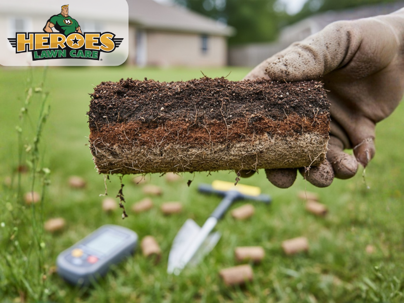
Soil compaction relief treatments are specifically designed to counteract these effects by restoring the structural integrity of the soil. Lawn core aeration services play a critical role in this process by extracting small cores of soil, creating channels that allow air, water, and nutrients to penetrate more effectively. This intervention significantly enhances the grass root oxygenation process, promoting deeper root development and improving overall turf health improvement services. Over time, these improvements contribute to a more stable and resilient lawn that can withstand environmental pressures.
Advanced Aeration Techniques and Applications
Advanced aeration techniques build upon traditional core aeration by incorporating methods that address compaction at multiple soil depths and improve overall soil functionality. Deep soil aeration treatment, for example, penetrates beyond the surface layer to alleviate compaction throughout the entire root zone. This ensures that the benefits of aeration extend deeper into the soil, providing a more comprehensive solution to structural limitations.
Professional turf aeration programs often integrate multiple approaches, combining core aeration with yard soil loosening services and soil conditioning techniques. These combined methods improve water infiltration, enhance nutrient distribution, and create a more uniform environment for root development. By addressing both surface and subsurface compaction, these advanced applications form the foundation of effective lawn revitalization services.
Combining Aeration with Overseeding
Aeration becomes significantly more effective when paired with overseeding, a process that introduces new grass seed into existing turf to improve density and coverage. Lawn aeration and overseeding work synergistically to address both structural and visual aspects of lawn health, filling in thin areas while strengthening the overall turf system.
The channels created during aeration provide ideal conditions for seed-to-soil contact, increasing germination rates and promoting uniform growth. This integration not only enhances the appearance of the lawn but also contributes to its long-term durability, making it a key component of comprehensive turf health improvement services.
Seasonal Timing and Aeration Efficiency
The effectiveness of aeration is closely tied to timing, as the process must align with periods of active grass growth to maximize results. Seasonal lawn aeration service strategies are designed to ensure that aeration is performed when the lawn can recover quickly and fully utilize the improved soil conditions. In northwest Austin, this typically corresponds to growth cycles that support rapid root expansion and increased nutrient uptake.
Proper timing allows the lawn to take full advantage of the grass root oxygenation process, ensuring that roots can expand into newly created channels and access essential resources more effectively. This alignment between aeration and growth cycles is critical for achieving consistent and long-lasting improvements in turf performance.
Long-Term Soil Improvement and Turf Performance
Aeration contributes to long-term soil improvement by creating a more balanced and functional soil environment that supports sustainable growth. Improved soil structure enhances water retention and nutrient distribution, reducing the likelihood of runoff and ensuring that resources are available where they are needed most. This leads to stronger root systems, improved drought resistance, and more consistent turf density.
Over time, repeated aeration treatments help maintain soil balance by preventing compaction from reoccurring. This ongoing maintenance is essential for preserving the benefits of aeration and ensuring that the lawn remains stable under varying environmental conditions. By integrating aeration into a long-term maintenance strategy, property owners can achieve continuous improvements in lawn performance.
The Role of Professional Aeration Programs
Professional turf aeration programs provide a structured and data-driven approach to maintaining soil health and optimizing lawn performance. These programs include regular assessments, customized aeration schedules, and the integration of complementary treatments such as overseeding and nutrient management.
By leveraging professional expertise, property owners can ensure that aeration is applied with precision and consistency, maximizing both immediate results and long-term benefits. This level of planning and execution is essential for achieving high-quality, sustainable outcomes.
Building a Sustainable Lawn Care System
A sustainable lawn care system integrates aeration with other essential practices, including irrigation management, mowing techniques, and nutrient application. Aeration serves as a foundational component that enhances the effectiveness of these practices by improving soil accessibility and resource distribution.
By combining these elements into a cohesive strategy, property owners can create a lawn that is not only visually appealing but also structurally resilient and capable of adapting to environmental stress. This integrated approach ensures that lawn care efforts produce lasting and meaningful results.
Conclusions
Advanced aeration methods for lawns in the northwest area of downtown Austin provide a comprehensive solution for addressing soil compaction and improving overall turf performance. By integrating deep soil aeration treatment, lawn core aeration services, and professional turf aeration programs, property owners can create a balanced and efficient soil environment that supports long-term growth.
This approach enhances the grass root oxygenation process, improves water and nutrient distribution, and ensures that lawns remain healthy and resilient under varying environmental conditions. When applied strategically, aeration becomes a central component of effective lawn care, delivering both immediate improvements and sustained performance over time.