
Set It and Forget It: How Smart Irrigation Installation Is Changing Cedar Park, TX Lawns | Heroes Lawn Care of Cedar Park
Irrigation installation is changing quickly in Cedar Park because homeowners no longer have to choose between a healthy lawn and a sprinkler system that runs on a rigid schedule regardless of weather. Modern systems can respond to seasonal conditions, separate turf from planting beds, reduce unnecessary watering, and give homeowners much greater control over how water moves across the property. The real advantage is not simply automation. It is the ability to deliver the right amount of water to the right area without forcing every part of the landscape onto the same schedule.
A well-designed irrigation installation also solves a problem that older systems often create: inconsistency. One area may be oversaturated while another remains dry, especially when spray heads are mismatched, zones are poorly arranged, or watering times are based on convenience rather than actual plant needs. Smart equipment can help correct these problems, but the technology works best when the physical system underneath it is properly designed. Heroes Lawn Care of Cedar Park approaches irrigation as a complete water-delivery system rather than treating the controller, valves, pipes, and sprinkler heads as unrelated components.
The strongest irrigation installation plans begin with the property itself. Sun exposure, soil behavior, slope, turf type, planting beds, hardscape, and water pressure all affect how a system should be configured. A smart controller cannot compensate indefinitely for weak hydraulic design, missing coverage, or poorly positioned heads. Cedar Park homeowners get better long-term results when automation is combined with thoughtful zoning, accurate precipitation rates, reliable valves, and irrigation coverage that reflects how the landscape actually uses water.
Smart Controllers Are Only as Good as the System They Control
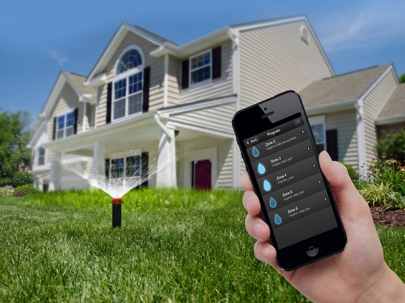
Automated Wi-Fi smart sprinkler controller installation is often the most visible upgrade because it gives homeowners immediate access to scheduling, monitoring, and system adjustments from a phone or connected device. Modern controllers can make it easier to pause watering, modify seasonal schedules, and manage individual zones without standing beside a garage-mounted control box. For busy homeowners, that convenience alone can transform how irrigation is managed.
The larger benefit, however, is adaptability. A conventional controller may continue watering according to a preset calendar even when landscape conditions change. Smart controls can support more responsive scheduling, particularly when paired with weather-related sensors and properly designed zones. That means the system can be adjusted more intelligently as temperatures rise, rainfall changes, or plant water requirements shift through the year.
Heroes Lawn Care of Cedar Park treats controller upgrades as one part of a larger irrigation strategy. Before automation delivers its full value, the system still needs correctly operating valves, suitable sprinkler heads, reliable piping, and balanced zones. Installing sophisticated controls on top of inefficient coverage can automate the inefficiency rather than solve it.
Better Sprinkler Hardware Can Reduce Water Waste at the Source
High-efficiency pop-up spray heads and rotor nozzles can improve the way water is distributed across turf areas when they are selected and positioned correctly. Traditional spray patterns may create misting, overspray, or uneven watering if pressure and spacing are not appropriate. More efficient nozzles can deliver water at a controlled rate, helping the landscape absorb moisture more effectively instead of sending water onto driveways, sidewalks, or low areas.
Water-conserving sprinkler head precipitation rate tuning is equally important. Different nozzles can apply water at different rates, and placing mismatched equipment within the same zone can create inconsistent results. One section may receive too much water before another gets enough. Matching precipitation rates helps create more uniform watering, which means the system can operate efficiently without compensating for dry spots through excessive runtime.
Head-to-head uniform sprinkler coverage design adds another layer of consistency. Sprinkler heads are typically most effective when their spray patterns are planned to overlap appropriately, allowing one head to help cover the area around the next. Poor spacing often produces visible dry arcs or stressed patches between sprinklers. Good design distributes water more evenly across the lawn instead of relying on longer runtimes to overcome gaps.
Why Multi-Zone Design Matters More Than a Single Watering Schedule
Custom multi-zone lawn sprinkler system design allows different parts of a property to be managed according to their actual needs. A full-sun lawn should not necessarily receive the same watering schedule as a shaded side yard. Likewise, turf, flower beds, shrubs, and newly planted areas can require different amounts and delivery methods. Separating these areas into logical zones creates much greater control.
This is especially valuable in Cedar Park landscapes where exposure can change dramatically from the front yard to the backyard. Trees, fences, buildings, patios, and slopes can alter both sunlight and evaporation. A zone that is appropriate for one part of the property may be excessive or inadequate just a few yards away.
A thoughtful zone layout also makes future maintenance easier. When each section of the landscape is organized logically, adjustments can be made without disrupting the entire property. That becomes important when beds are redesigned, sod is replaced, or new outdoor living spaces are added later.
Sensors Help the System Respond Instead of Simply Following a Clock
Rain and freeze sensor automatic shut-off installation adds an important safeguard to smart irrigation. A sprinkler system that continues operating immediately after significant rainfall is wasting water, while a system that runs during unsuitable freezing conditions can create avoidable problems. Sensors provide another layer of control by helping interrupt scheduled watering when environmental conditions make irrigation unnecessary or undesirable.
The value of sensors increases when they are integrated into an already efficient system. A sensor cannot repair broken heads, poor coverage, or leaking lines, but it can help prevent routine scheduling from overriding current weather conditions. Combined with smart controls, the system becomes more responsive rather than simply automated.
This distinction matters. Automation means the system runs without constant manual input. Smart irrigation means that automation is supported by information, correct system design, and the ability to adapt. Cedar Park homeowners benefit most when these features work together instead of relying on a single device to manage an otherwise inefficient irrigation network.
Pipes, Valves, and Manifolds Determine Whether Automation Works Reliably
Much of the most important irrigation infrastructure is underground, where homeowners rarely see it. Irrigation mainline trenching and lateral pipe fitting create the pathways that deliver water from the supply point to individual zones. Proper routing, appropriate connections, and careful installation are essential because leaks, pressure loss, and poorly organized lines can undermine the performance of the entire system.
Master valve and solenoid manifold box setup is equally important for system control. Zone valves determine where water flows and when, while the manifold organizes those connections so they can be operated and serviced efficiently. A reliable system depends on these components responding correctly every time the controller calls for water. Smart software offers little benefit if the underground hardware cannot execute those commands consistently.
Backflow protection is another critical component. Underground backflow preventer RPZ valve installation, when the specific system design and applicable requirements call for that equipment, should be handled according to local requirements and by appropriately qualified professionals. Backflow devices help protect the potable water supply from unwanted reverse flow, making this part of irrigation design more than a convenience feature.
Drip and Micro-Spray Systems Give Planting Beds More Precision
Flower bed micro-spray drip line layout allows landscape beds to be watered differently from turf. Grass may perform well with properly spaced spray or rotor heads, while flowers, shrubs, and ornamental plantings often benefit from water being delivered more directly to the root area. Separating these methods can reduce overspray and help keep unnecessary water off walkways, walls, and hardscape.
Drip and micro-spray layouts can also be adjusted around plant density and bed design. A newly planted bed may need different coverage from a mature landscape, and a sunny ornamental area may behave differently from a shaded foundation planting. Treating all of these areas as one irrigation zone typically creates compromise rather than efficiency.
This is where smart irrigation becomes a design discipline rather than simply a technology upgrade. The system should reflect what is growing in each area, how much sunlight it receives, how quickly the soil dries, and how water can be delivered with the least waste.
Designing for Long-Term Efficiency Instead of Short-Term Convenience
A successful irrigation installation should still make sense years after the initial project is complete. Controllers can be replaced, plants mature, turf areas change, and outdoor spaces evolve. The underlying system should therefore be organized so zones can be adjusted, valves can be accessed, and sprinkler heads can be serviced without unnecessary disruption to the yard.
Good irrigation installation also considers what happens when a property changes. A new patio may eliminate part of an existing turf zone. A flower bed may expand into an area once covered by spray heads. Trees can create more shade as they mature. Building flexibility into the design makes these changes easier to accommodate without rebuilding the entire irrigation network.
Heroes Lawn Care of Cedar Park approaches irrigation installation with this longer horizon in mind. Smart controls, efficient nozzles, carefully planned zones, sensors, valves, and bed irrigation should work together as one adaptable system. The goal is not simply to make watering automatic, but to make the landscape easier to manage while using water more intentionally.
Conclusions
Smart irrigation installation is changing Cedar Park lawns because it replaces rigid watering routines with a more coordinated approach. Automated Wi-Fi controllers, high-efficiency sprinkler heads, precipitation-rate tuning, weather sensors, multi-zone planning, and drip irrigation can all contribute to better control, but their effectiveness depends on sound design beneath the technology. A smart system is only truly smart when every component supports even, reliable, and appropriate water delivery.
For homeowners planning irrigation installation, the strongest approach is to think beyond the controller on the wall. Pipe layout, valves, backflow protection, sprinkler spacing, planting-bed irrigation, pressure, and future landscape changes all influence long-term performance. When those elements are designed together, smart irrigation becomes more than a convenience feature. It becomes a practical way to maintain healthier lawns, support diverse planting areas, and reduce unnecessary water use throughout the property.