
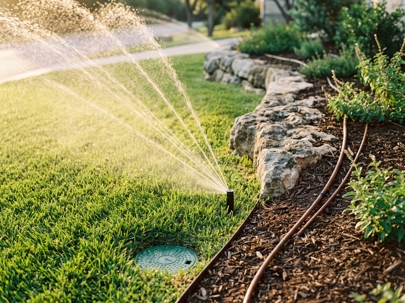
The Slope, the Slab, and the Sprinkler: Leander, TX Irrigation Installation for Yards That Fight Back | Heroes Lawn Care of Cedar Park
Some yards cooperate. The ground is flat, the soil takes water evenly, and a basic system with a few spray heads does the job. Plenty of yards in Leander, TX are not like that. The lot tilts toward the street, the limestone sits a foot below the grass, the clay around the foundation opens cracks every August, and the front slope sheds water faster than the soil can drink it. These are yards that fight back, and a generic sprinkler layout loses the fight within a season.
Good irrigation installation in this part of Williamson County is built around three things: the slope that moves water where it should not go, the slab that moves when the clay under it dries out, and the sprinkler layout that has to answer to both. Heroes Lawn Care of Cedar Park designs irrigation around the problems a property actually has rather than the layout a catalog suggests, and the sections below follow that order of thinking, from the permit through the trench, the heads, the drip lines, the controller, and the safeguards that protect the system when something goes wrong.
Why Leander, TX Yards Resist Ordinary Irrigation
Rock, Clay, and Grade in the Same Lot
Leander sits where the Hill Country meets the Blackland clay, and many lots contain a bit of both. Limestone shelves lie close to the surface in some neighborhoods, leaving a thin layer of topsoil that dries quickly. Elsewhere, deep clay holds water well but cracks and swells with the seasons. Add a rolling landscape where many lots are cut into slopes, and a single yard may include dry rocky edges, soggy low corners, and a front hill that sheds water like a roof.
An irrigation system that treats all of these conditions the same wastes water in some areas and leaves others thirsty. The first job of design is to sort the property into zones that behave differently and to give each zone the right equipment.
What Goes Wrong With a Generic Layout
The common failures are predictable. Spray heads on a slope deliver water faster than the soil absorbs it, and the excess runs onto the sidewalk. Heads in the shade of a house wall overwater and breed moss. Turf beside the driveway bakes while the bed next to it stays soggy. Foundation soil dries and shrinks away from the slab, while the lawn twenty feet away gets more than it needs. These are not equipment failures. They are design failures, and they show up in water use as well as in the look of the yard.
Start With the Plan: Licensing, Design, and Permitting
TCEQ Licensed Irrigator CAD Design and Permitting
In Texas, irrigation systems are regulated, and the first step of a legitimate project is paperwork. TCEQ licensed irrigator CAD design and permitting means that a state-licensed irrigator prepares a scaled plan of the system, usually in CAD, showing the zones, the head placement, the pipe sizes, the water source connection, and the backflow protection. The plan is submitted to the city, reviewed, and approved before work begins, and the installation is inspected afterward.
The plan is more than a formality. A scaled drawing forces decisions to be made on paper, where changes are simple, instead of in the yard, where they are disruptive to make. It shows overlap between heads, confirms that the pressure and flow available at the property can run the zones planned, and gives the homeowner a record of what is buried and where. Future repairs and changes become much easier when an accurate plan exists.
What the Plan Should Show
Heroes Lawn Care of Cedar Park walks the property with the plan in hand before any pipe is cut, comparing the drawing with the slope, the rock outcrops, and the foundation line so that the paper design and the actual yard agree.
A useful plan includes the layout of each zone, the type of head or emitter in each zone, the pipe routes, the valve locations, the controller location, the backflow assembly, and the sensor placements. It also notes the soil and slope conditions that influenced the design. When a plan is specific about these details, the finished system tends to match the intent. When it is vague, field improvisation fills in the gaps.
Getting Through the Ground
Mechanical Rock Saw Trenching Through Leander Limestone Bedrock
Burying pipe is straightforward in soft soil and difficult in Leander limestone. A shovel or standard trencher stalls against rock, and the temptation is to shallow up the pipe or reroute it far from the best path. Mechanical rock saw trenching through Leander limestone bedrock solves the problem by cutting a narrow, clean channel through the stone using a heavy-duty blade. The trench is just wide enough for the pipe and tubing, which keeps the disturbance to the yard small.
The advantage of this method is control. The channel follows the planned route, the pipe sits at the proper depth, and the surrounding surface stays largely intact. There is no need for large excavations that scar the lawn, and the cut can be backfilled with clean material that protects the pipe from sharp rock. Pipe laid at the right depth stays protected from lawn activity and from the temperature swings near the surface.
Backfill and Protection
Leander yards often have utilities, tree roots, and old fence footings that complicate the route. Locating them before cutting avoids surprises, and a saw that cuts a narrow path can work around obstacles that a wide excavation would have to remove entirely.
How a trench is closed matters as much as how it is cut. Pipe that rests on sharp stone can wear through over the years, so a bed of fine material is placed beneath and around it before the rock and soil go back in. Settling is expected, and the surface is checked after the first rains and topped as needed. A yard that has been trenched carefully can look as if nothing happened within a few weeks.
Dealing With the Slope
Pressure-Regulating Spray Bodies (PRS-40) With Built-In Check Valves
On a slope, small details in the heads make a big difference. Pressure-regulating spray bodies (PRS-40) with built-in check valves address two of the most common problems. The built-in regulator holds the pressure at the head to a consistent level, usually 40 psi, so the spray pattern stays tight and does not turn into a fine mist that blows away in the wind. The check valve holds water in the line and stops the head from draining when the zone shuts off.
Without check valves, water in the pipe runs downhill after each cycle and spills out of the lowest head, creating soggy spots at the bottom of a slope and dry ones at the top. With them, the line stays charged, the heads pop up fully watered, and the system uses less water to do the same work. Consistent pressure also helps nozzles throw the distance they were designed for, which protects the uniformity of coverage.
High-Efficiency Multi-Stream Rotary Nozzles for Sloped Turf Runoff Reduction
Sloped turf needs a gentler, slower application than flat ground. High-efficiency multi-stream rotary nozzles for sloped turf runoff reduction send out several thin streams that rotate across the area. The application rate is much lower than that of a standard spray head, which gives the soil time to absorb the water instead of letting it skate downhill.
The nozzles also have good distance control and wind resistance, so the coverage stays even. On a hillside, a zone with multi-stream nozzles can run a little longer with far less runoff, and the cycle can be broken into shorter intervals that let water soak in between passes. The result is a deeper wetting of the root zone and a lawn that stays greener on the high side of the slope.
Protecting the Slab
Foundation Perimeter Drip Line Hydration System for Expansive Clay
The clay around a Leander foundation is a quiet force. When it dries, it shrinks and pulls away from the slab, and when it takes on moisture, it swells and pushes. Seasonal swings can crack walls, stick doors, and shift brick. A foundation perimeter drip line hydration system for expansive clay helps keep the soil moisture near the slab more consistent, which reduces the extremes that cause movement.
The system consists of drip tubing placed a short distance from the foundation, usually just below the surface or under mulch, and controlled by its own zone so that it runs on a schedule suited to the soil and the season. The goal is not to soak the soil but to maintain steady moisture. A good design considers the slope, the drainage, and the location of the plumbing, and it avoids placing water directly against the foundation. A balanced approach protects the structure without creating a different problem.
Subsurface Pressure-Compensating Inline Drip Emitter Tubing
The tubing that makes a foundation system possible is a specific kind. Subsurface pressure-compensating inline drip emitter tubing has emitters built into the tube at regular spacing, and each emitter releases the same amount of water regardless of its position along the line. Pressure compensation matters on slopes and on long runs, where ordinary tubing would deliver more water at the low end and less at the high end.
Buried below the surface, the tubing is protected from sun and foot traffic, and water goes straight to the root zone instead of evaporating from the surface. The same tubing can irrigate planting beds, narrow strips beside driveways, and hard-to-reach areas where spray heads would overspray onto pavement. In a place where every gallon counts, the efficiency gains are significant.
Letting the Weather Do the Scheduling
Evapotranspiration (ET) Weather-Based Smart Irrigation Scheduling
A fixed schedule waters the same amount whether the week was cool and cloudy or hot and windy. Evapotranspiration (ET) weather-based smart irrigation scheduling adjusts the watering to match what the plants actually lose. The controller receives weather data, calculates how much water the lawn and beds have used since the last cycle, and waters only to replace it. A mild week produces short or skipped cycles, and a scorching one triggers more.
The controller also accounts for the details of each zone, including the soil type, the slope, the plant material, and the sprinkler's application rate. Rain delays, freeze protection, and seasonal adjustments are handled automatically. For a household that does not want to adjust the schedule every month, smart scheduling takes that work off the list.
City of Leander Drought Restriction Hydrozone Water Budgeting
Cities across Central Texas use drought stages to limit outdoor watering when supply tightens, and an irrigation system needs to function inside those limits. City of Leander drought restriction hydrozone water budgeting organizes the property into hydrozones, which are areas grouped by how much water the plants in them need. Turf, shrub beds, native plantings, and foundation drip each form their own zone with their own schedule.
The approach helps in two ways. In normal weather, each zone gets what it needs and nothing more. When restrictions tighten, the system can reduce or reschedule the thirstiest zones while protecting the most valuable plantings. Programming the controller with the allowed days and times means the system follows the rules without anyone watching the calendar. Homeowners should confirm the current rules with the city, since stages and schedules change.
Safeguards That Protect the Water and the System
Flow Sensor Monitoring for Automatic Mainline Leak Shut-Off
A broken pipe underground can run for days before anyone notices. Flow sensor monitoring for automatic mainline leak shut-off watches how much water is moving through the system and compares it to what the zone should use. If the flow is much higher than expected, because a head has been sheared off or a pipe has split, the controller closes the master valve and stops the water.
The sensor also records usage over time, which shows trends and flags slow leaks. For a family that travels or a property with a long mainline, the safeguard prevents damage to the yard and saves a great deal of water. It is a small addition during installation and a significant protection afterward.
Subterranean Double Check Valve Assembly (DCVA) Vault Installation
Irrigation systems are connected to the drinking water supply, and backflow protection keeps irrigation water from flowing backward into it. A subterranean double check valve assembly (DCVA) vault installation places the backflow device in a buried box with a lid, protecting it from damage, tampering, and freezing while keeping it accessible for annual testing.
The vault must drain properly so that it does not fill with water, and the assembly needs the correct clearances for testing and service. In Texas, backflow devices are tested by certified testers, and the results are reported. The vault keeps the device out of the way of lawn activity, which also makes the front yard look cleaner than it would with an exposed assembly.
Keeping the System Working
Seasonal Adjustments and Checks
An installed system needs attention a few times a year. In spring, each zone is run to check head alignment, coverage, and pressure. In summer, the schedule is reviewed for any adjustments. In fall, the system is tuned for cooler weather, and before the first hard freeze the exposed components are protected. A lawn care service that understands the irrigation layout can spot problems such as a clogged nozzle or a sunken head during regular visits.
When Repairs Come Up
Even a well-built system needs repair from time to time. A head struck by a vehicle, a nozzle clogged by debris, or a valve that sticks open are ordinary events. Prompt sprinkler repair prevents small issues from wasting water or damaging turf, and irrigation system repair is much easier when the original plan shows what is buried and where. Heroes Lawn Care of Cedar Park keeps the as-built plan for each installation so that future service starts with information instead of guesswork.
Choosing Equipment That Matches the Yard
Matching Components to Conditions
A property with a long front slope, a shaded north side, a sunny south exposure, and a clay-bound foundation might use all of these tools at once, each in its own zone. The skill of the installer lies in knowing where each belongs and in setting the controller so the zones work together instead of competing for pressure and flow.
The best irrigation system is the one whose components answer the specific conditions of the property. Pressure-regulated bodies for slopes and windy exposures, rotary nozzles for large turf areas, drip tubing for beds and foundations, a smart controller for scheduling, and sensors for protection form a complete system. Each part addresses a specific problem, and together they produce a yard that stays healthy with less water.
Questions Worth Asking
Before work begins, a few questions reveal how carefully a system is planned. Is the installer licensed, and will a scaled plan be provided? How will the trenching be handled in rocky areas? What is the plan for the slope? How will the foundation be protected? How does the controller adjust to weather and to city restrictions? What safeguards are in place for leaks and backflow? Clear answers point to an installer who has thought the project through.
Yards That Fight Back Deserve a System That Fights Smart
A yard in Leander, TX with a slope, a slab, and a limestone shelf is not a bad yard. It is a demanding one, and it rewards a system built for it. Licensed design, careful trenching, the right heads for the grade, drip lines for the foundation, a controller that follows the weather, and safeguards against leaks and backflow add up to a landscape that stays green and a structure that stays steady.
For homeowners across Leander, TX ready to build that kind of system, Heroes Lawn Care of Cedar Park provides irrigation installation that begins with the problems on the property and ends with a yard that handles the slope, the clay, and the heat. The best place to start is a walk across the lot, with the grade, the foundation, and the stone in view.