The Complete Guide to Paver Patio Installation in Cedar Park, TX: Materials, Patterns, and What Actually Lasts in Texas Heat
Central Texas backyards are not forgiving. Between the region's shifting clay soil, triple-digit summers, and sudden downpours, an outdoor surface either holds up to the elements or it doesn't. That is exactly why paver patio installation has become one of the most researched home improvement projects among Cedar Park, TX homeowners over the past few years. A patio built the right way, with the right materials and the right foundation, can outlast decades of Texas weather. One built without that knowledge often cracks, sinks, or fades within a couple of summers.
This guide walks through what actually determines whether a paver patio holds up in Cedar Park, TX — from soil preparation to material selection to the patterns and layouts that make the most sense for how a family actually uses its backyard. Much of this information mirrors the same questions Heroes Lawn Care fields regularly from homeowners across the area who are trying to separate genuinely useful advice from generic, one-size-fits-all guidance that doesn't account for Central Texas conditions.
There is no shortage of installation guides online, but most of them are written for a different climate entirely. A patio approach that works well in the Pacific Northwest or the Midwest can fail quickly in Central Texas, where soil movement and heat exposure are simply more extreme. Understanding those regional differences before a single stone is laid is what separates a patio that holds up for decades from one that needs to be redone within a few short years.
Why Paver Patio Installation Looks Different in Central Texas
Homeowners who move to Cedar Park, TX from other parts of the country are sometimes surprised to learn that a patio project here isn't quite the same as it would be elsewhere. The soil, the sun exposure, and the rainfall patterns all play a role in how a backyard patio paver construction project needs to be approached from day one.
Unlike sandy or loamy soils found in other regions, Central Texas sits on top of expansive clay. This soil type has a well-earned reputation among contractors for causing more structural headaches than almost any other variable in residential construction.
The Clay Soil Problem Every Cedar Park Homeowner Should Understand
Clay soil expands when it absorbs moisture and contracts sharply as it dries out. In a region that swings between heavy spring rains and bone-dry summer heat, that expansion-and-contraction cycle repeats constantly throughout the year. A patio surface sitting directly on undisturbed clay, without the right preparation underneath, will almost always show signs of movement — uneven pavers, gaps that widen over time, or a surface that no longer sits flat.
This is one of the most overlooked factors in custom paver patio installation projects. It has little to do with the pavers themselves and everything to do with what happens below them.
How a Proper Base Layer Prevents Shifting and Cracking
A base layer built from compacted crushed stone, typically several inches deep, acts as a buffer between the unstable clay below and the paver surface above. When installed correctly, this base allows water to drain rather than pool, and it distributes weight evenly so that no single paver bears more pressure than its neighbors.
Skipping or under-building this stage is the single most common reason paver patios fail early in Central Texas. A patio that looks flawless on installation day can begin shifting within twelve to eighteen months if the base wasn't compacted to the right depth and density. This is also why patio remodeling with pavers so often becomes necessary for homeowners who initially chose a lower-cost installation approach without proper site preparation.
Choosing Materials Built for Cedar Park's Climate
Not every paver material performs the same way once summer arrives. Surface temperature, UV resistance, and long-term color retention all vary significantly depending on what the patio is made from, which makes material selection one of the more consequential decisions in any decorative paver installation services project.
Comparing Concrete, Natural Stone, Brick, and Porcelain Pavers
Concrete pavers remain the most commonly chosen option for Cedar Park, TX backyards, largely because they offer a wide range of colors, textures, and finishes while holding up reasonably well to heat and UV exposure. Manufactured concrete pavers can also be engineered with added strength, which helps them resist the stress caused by shifting clay soil beneath the surface.
Natural stone, including limestone, travertine, and flagstone, brings a more organic, high-end look and tends to stay cooler underfoot than darker concrete options. It typically requires more careful handling and a longer installation timeline during a brick and stone patio installation, since natural stone pieces vary slightly in thickness and shape.
Brick pavers offer a traditional, classic aesthetic and have a long track record of durability, though their smaller size means more joints, which can allow more movement over time if the base isn't properly compacted. Porcelain pavers are a newer entrant to the Texas outdoor market — extremely dense, highly resistant to staining, and available in styles that mimic wood or natural stone, though they demand precise installation technique to perform well long-term.
There isn't a single material that outperforms the others in every category. The right choice generally comes down to balancing visual goals against how much heat exposure, foot traffic, and soil movement a specific area of the yard will actually experience, which is part of why a walkthrough of the space itself tends to matter more than any general material ranking found online.
Why Lighter Colors Perform Better Underfoot
Surface temperature is a genuine, practical concern in Central Texas, not a minor aesthetic detail. Darker pavers absorb significantly more heat than lighter ones, and on an uncovered patio in July, that difference can mean the surface becomes uncomfortably hot to walk on barefoot by early afternoon. Lighter-toned concrete, tan limestone, and warm travertine tones tend to stay noticeably cooler, which matters for a family that actually plans to use the space during the hottest months of the year rather than just look at it.
Patterns and Layouts That Define a Cedar Park Backyard
Material selection is only half of the equation. The way pavers are arranged has a real impact on both the visual character of the space and, in some cases, its structural performance. This is where interlocking paver patio services and thoughtful outdoor living patio design come together.
Running Bond, Herringbone, and Basket Weave Explained
Running bond is one of the simplest and most popular layouts, with rows offset like brickwork. It reads as clean and understated, and it is relatively straightforward to install, which can help keep a project on schedule.
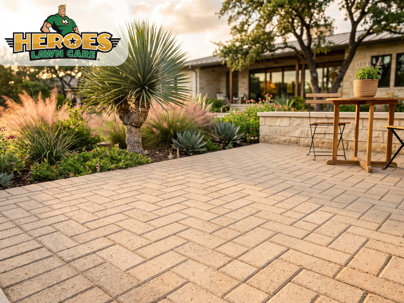
Herringbone patterns, arranged at interlocking right angles, are widely regarded as one of the more structurally resilient layouts because the interlocking geometry helps resist shifting under weight and foot traffic. This makes herringbone a strong choice for driveways or high-traffic patio areas near an outdoor kitchen or dining set.
Basket weave patterns pair pavers in alternating horizontal and vertical sets, creating a woven visual texture that works particularly well in more traditional or formal backyard designs. It tends to suit smaller, more intimate patio spaces rather than sprawling entertainment areas.
Matching a Pattern to How the Space Will Be Used
The right pattern often comes down to function as much as style. A patio built primarily for outdoor dining and entertaining benefits from a layout that can visually anchor furniture groupings, while a patio that connects a home to a pool or garden path often looks best with a simpler, more continuous pattern that doesn't compete with the surrounding landscape. Homeowners planning a larger hardscape patio construction project, one that might eventually include a fire pit, outdoor kitchen, or pergola, should think about pattern selection in the context of that full vision rather than the patio alone.
Drainage, Rainfall, and the Realities of Long-Term Durability
Central Texas rainfall tends to arrive in short, intense bursts rather than steady, gentle showers. That pattern puts real stress on any outdoor hardscape patio construction project, and drainage planning is where a lot of otherwise well-built patios eventually run into trouble.
Preventing Pooling, Erosion, and Paver Shift After Heavy Rain
A properly built patio should have a slight slope, generally a couple of percent grade, directing water away from the home's foundation rather than allowing it to pool on the surface or seep beneath the pavers. Polymeric sand between the joints, when installed and maintained correctly, helps lock pavers in place while still allowing some water to pass through rather than pushing it toward the edges where erosion is more likely to occur.
Homeowners in Cedar Park, TX who notice standing water on a patio after a storm, or who see sand washing out from between pavers, are often looking at an early warning sign rather than a cosmetic nuisance. Left unaddressed, that kind of drainage issue tends to accelerate the same shifting and settling problems caused by unstable clay soil underneath.
Grading becomes especially important on properties where the patio sits close to the home's foundation, since water directed the wrong way can create problems that extend well beyond the patio itself. A thoughtful drainage plan takes the entire slope of the yard into account, not just the patio surface in isolation, which is why this stage is often best handled alongside the initial excavation rather than added as an afterthought once the pavers are already down.
Hiring Professional Installation vs. Taking the DIY Route
Given how much of a paver patio's long-term performance depends on what happens beneath the surface, the decision between a DIY approach and hiring residential paver patio contractors is worth thinking through carefully.
Where DIY Paver Projects Tend to Go Wrong
DIY paver installation can be a reasonable option for very small, low-traffic areas like a walkway or a modest garden nook. Where it tends to run into trouble is scale and soil preparation. Excavating to a consistent depth, compacting a base layer properly across a large area, and calculating the correct slope for drainage all require equipment and experience that most homeowners don't have on hand. A patio that looks acceptable immediately after a weekend DIY project can begin showing problems within a year if those foundational steps weren't done correctly.
Renting a plate compactor for a weekend is not the same as understanding how many passes a given soil type needs to reach proper density, or how to read subtle grade changes across a yard that isn't perfectly flat. Excavation depth also tends to be underestimated on DIY projects, since a shallow base might look fine on installation day but leaves little room for the crushed stone layer that actually does the structural work of resisting Central Texas clay movement. Small errors at this stage compound over time rather than staying static, which is why problems from a rushed base often don't show up until well after the project is finished and the yard has been through a full cycle of wet and dry seasons.
Professional patio paving services bring not just labor but also an understanding of how Central Texas soil and weather specifically affect long-term outcomes. Heroes Lawn Care has worked directly with Cedar Park, TX homeowners on outdoor living projects that account for the region's clay soil, drainage demands, and seasonal temperature swings from the ground up, rather than treating patio installation as a one-size-fits-all process. That kind of localized experience is difficult to replicate through a weekend DIY effort, no matter how much research goes into it beforehand.
Maintenance That Keeps a Patio Looking New for Years
Even a well-built patio benefits from a small amount of routine upkeep. The good news for Cedar Park, TX homeowners is that paver surfaces generally require far less maintenance than poured concrete, since individual pavers can be lifted, releveled, or replaced without disturbing the surrounding surface — something that isn't possible with a single continuous concrete slab.
Sanding, Sealing, and Seasonal Care
Polymeric sand in the joints between pavers should be checked periodically, particularly after heavy rain events, since erosion can gradually wash sand out and leave gaps that allow weeds to take hold or individual pavers to shift. Refreshing the sand every few years is a simple task that goes a long way toward preserving the interlock that keeps the whole surface stable.
Sealing is optional rather than mandatory for most paver materials, and it comes with tradeoffs worth understanding. A sealant can enhance color and add a layer of stain resistance, but it also starts a maintenance cycle of its own, since sealed surfaces typically need to be reapplied every few years to keep performing as intended. Some homeowners prefer to skip sealing altogether and simply enjoy the natural texture and slightly muted color of unsealed pavers, which tends to age gracefully in a way that requires less ongoing attention.
Seasonal Checks Worth Building Into a Routine
A quick seasonal walkthrough, checking for low spots where water pools, joints where sand has washed away, or pavers that have shifted slightly out of alignment, can catch small issues long before they become expensive repairs. Addressing a single loose paver early is a far simpler fix than waiting until an entire section of the patio has shifted out of level.
Bringing It All Together: Patios as Part of a Larger Outdoor Living Vision
A well-executed paver patio rarely exists in isolation. Many Cedar Park, TX homeowners eventually connect their patio to a broader outdoor living design that might include a pergola for shade, integrated landscaping, or an outdoor kitchen. Planning the patio with that bigger picture in mind, even if those additional elements come later, tends to produce a more cohesive result than treating the patio as a standalone project disconnected from the rest of the yard.
Heroes Lawn Care approaches these projects with that long-term view in place, helping homeowners think through how today's patio might connect to tomorrow's shade structure, lighting plan, or garden bed rather than designing in isolation.
Conclusion
Central Texas is not an easy environment for outdoor hardscaping, but it is a predictable one once the variables are understood. Clay soil, intense heat, and sudden heavy rainfall all interact with a patio surface in specific, well-documented ways, and building around those realities from the start is what separates a patio that lasts twenty years from one that needs to be redone within five.
For homeowners in Cedar Park, TX weighing their options, understanding these fundamentals is the first step toward a backyard that holds up under real Texas conditions. The details covered here — base preparation, material selection, pattern choice, drainage, and ongoing maintenance — are not separate decisions made in isolation. Each one influences the others, and a patio built with all five in mind tends to perform far better over time than one where only the visible, surface-level choices receive attention.
Heroes Lawn Care brings that regional understanding to every paver patio installation project, treating soil preparation, material selection, and drainage planning as the foundation of a space built to last, not an afterthought. A patio designed around Central Texas conditions from the very first stage of planning is far more likely to still look and perform the same way a decade from now as it did on the day it was finished.