
Florence, TX Paver Patio Installation: The Build-Up Sequence That Separates a Ten-Year Patio From a Two-Year One | by Heroes Lawn Care of Cedar Park
Two patios can use the exact same pavers, installed on the exact same day, by two different crews, and end up telling completely different stories within a few years. One stays flat, tight, and stable through a decade of Central Texas seasons. The other starts shifting, settling, and separating at the joints before its second summer is even over. The pavers themselves were never the difference. Everything beneath them was.
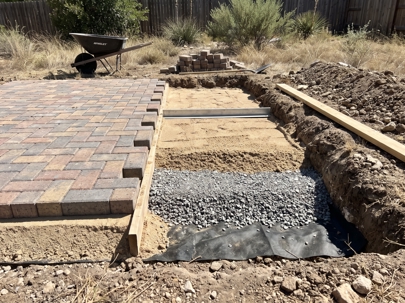
A paver patio installation in Florence, TX is really a sequence of layers stacked on top of each other, each one doing a specific job the layers above depend on. Skip or rush any single layer in that sequence, and the finished surface inherits a weakness no amount of careful paver placement can compensate for.
Heroes Lawn Care of Cedar Park treats this build-up sequence as the actual project, with the visible pavers representing only its final, most visible step, since the layers a homeowner never sees are what genuinely determine whether the finished patio holds up for years or begins showing problems within its first couple of seasons.
The Build-Up Sequence Behind Every Florence, TX Paver Patio Installation
The visible surface, the actual pavers a homeowner walks on, represents the smallest and least consequential part of what determines a patio's long-term performance.
Why the Visible Pavers Are the Least Important Layer
Every layer beneath the surface pavers exists to do one job: keep the ground underneath stable enough that the pavers above it never have to move. A high-quality paver installed over an inadequate base performs worse over time than a modest paver installed over a properly built foundation, since the base, not the paver material itself, is what actually determines long-term stability.
This is a genuinely counterintuitive point for most homeowners evaluating a proposed installation, since paver material and pattern are the details most readily visible and comparable across different contractor proposals. Two quotes describing the exact same paver product can represent dramatically different underlying builds, one following the full layered sequence properly, the other cutting corners in ways that won't show up until well after the project is complete and the crew has moved on to other work.
Layer Zero: Grading and Slope Before Anything Gets Poured
Before any excavation or base material gets involved, the underlying grade and slope of a property needs to be understood and planned around.
Florence Acreage Patio Slope Grading
Florence acreage patio slope grading accounts for a property's natural elevation changes before construction begins, establishing the drainage direction a finished patio will rely on for the rest of its service life. A patio built without this initial grading assessment risks trapping water against the surface or channeling runoff in a direction that erodes the base material supporting the pavers above it, undermining the entire structure from below regardless of how well every subsequent layer gets built.
Heroes Lawn Care of Cedar Park walks every Florence, TX property before finalizing a grading plan, since acreage lots in this area often present more varied elevation changes across a single proposed patio footprint than a typical suburban lot would, making a generic grading assumption considerably riskier to apply here than in a more uniform, already-graded neighborhood setting.
The Layer Nobody Sees: Subgrade Fabric and Bedding Sand
Once grading and drainage direction are established, the first physical layers of the installation go in, layers that disappear entirely once the project is finished but continue doing essential work for as long as the patio exists.
Woven Geotextile Paver Subgrade Fabric
Woven geotextile paver subgrade fabric separates the compacted base material above it from the native soil below, preventing the two from gradually mixing together as the ground shifts and settles over years of use. Without this separation layer, fine soil particles migrate upward into the base material over time, degrading its load-bearing capacity and creating the kind of soft spots that eventually show up as uneven settling at the paver surface.
This migration process happens slowly and invisibly, which is exactly why its absence doesn't produce an obvious problem on installation day. Water moving through the base material during rain events is what actually drives this soil migration over time, carrying fine particles upward through gaps that a proper fabric layer would have blocked entirely. A patio built without this fabric can look and perform perfectly well for its first year or two, right up until enough soil migration has occurred to genuinely compromise the base beneath it.
Coarse Bedding Sand Leveling Layer
Coarse bedding sand leveling layer sits directly beneath the pavers themselves, providing the final leveling surface that allows each individual paver to sit flush and consistent with its neighbors. This layer needs to be screeded to a precise, uniform depth across the entire patio footprint, since any inconsistency here telegraphs directly up through the pavers as visible unevenness once the surface is complete.
Compaction: The Step Most Often Rushed
Between the base material and the bedding sand, proper compaction determines whether everything installed above actually stays where it was placed.
Vibratory Plate Compactor Paver Setting
Vibratory plate compactor paver setting uses mechanical vibration to eliminate air gaps within the base material and, after final placement, within the paver surface itself, seating everything into a genuinely stable, consolidated mass rather than loose material that simply happens to be arranged in the right shape. Skipping or rushing this compaction step is one of the most common shortcuts in paver installation, since an uncompacted base can look identical to a properly compacted one on installation day, with the difference only becoming apparent months later as the material settles unevenly under normal use and weather exposure.
Compaction needs to happen at multiple points throughout the build-up sequence, not just once at the very end. Base material typically gets compacted in lifts, thin layers compacted individually rather than one thick layer compacted all at once, since attempting to compact too much depth in a single pass often leaves the lower portion of that material inadequately consolidated even though the surface appears solid. This lift-by-lift approach takes more time than a single-pass shortcut, which is precisely why it's one of the first steps to get compressed or skipped entirely on a rushed installation timeline.
Edge Restraint and Border: Containing the System
A paver patio's edges need their own dedicated structural solution, since without proper containment, lateral forces gradually push the entire field of pavers outward over time.
Concrete Bond Beam Edge Restraint Installation
Concrete bond beam edge restraint installation creates a rigid, continuous border around a patio's perimeter, anchoring the outermost pavers in place and preventing the slow, creeping lateral movement that eventually opens gaps and irregularities across an entire paver field. This edge restraint carries a disproportionate share of the responsibility for a patio's long-term dimensional stability, since it's specifically the perimeter pavers that experience the greatest outward pressure as the interior field settles and shifts under normal use.
A concrete bond beam offers meaningfully more resistance to this lateral pressure than a lighter plastic or aluminum edging strip, particularly across a larger patio footprint where the cumulative outward force from the entire paver field concentrates against a comparatively small perimeter length. This added rigidity matters most precisely where it's least visible, buried along the patio's edge, which is why edge restraint quality is another detail that's easy to shortcut without any immediate visual consequence. A homeowner walking a finished patio has no practical way of visually distinguishing a properly poured bond beam from a lighter, less substantial edging product hidden beneath the same visible border.
Raised Paver Patio Retention Border
Raised paver patio retention border options serve double duty on properties where a patio's elevation needs to transition against an adjacent grade change, combining the structural edge restraint function with a visible, finished border detail. This kind of border requires more substantial engineering than a purely decorative edge, since it's managing both lateral paver containment and a genuine retaining function simultaneously.
The Pavers and Details That Actually Show
With every layer beneath now addressed, the pavers themselves and the finish details around them become the visible expression of everything built underneath.
Belgard Interlocking Concrete Patio System
Belgard interlocking concrete patio system products offer a manufactured, engineered paver option with consistent dimensional tolerances and a wide range of finish and color choices, designed specifically to interlock securely once properly set into a correctly prepared base. The interlocking geometry these systems rely on only functions as designed when the base beneath it is genuinely stable, which is precisely why premium paver products still fail prematurely when installed over inadequate preparation.
This is worth emphasizing directly, since it's tempting to assume that upgrading to a premium, engineered paver system alone solves the durability question. A manufactured interlocking system genuinely does offer real advantages over a more generic paver option, tighter dimensional consistency, more secure interlocking geometry, but none of those advantages compensate for a base that wasn't properly graded, fabric-separated, and compacted before the pavers ever went down.
Custom Bullnose Paver Step Coping
Custom bullnose paver step coping addresses the transition points where a patio surface meets a step, pool edge, or other elevation change, rounding the exposed edge for both a finished appearance and a safer, less sharp transition underfoot. These transition details require the same base preparation discipline as the main patio field, since a coping edge sitting on inadequately compacted base material will settle independently from the surrounding surface, creating exactly the kind of uneven transition it was meant to smooth over.
Step edges and coping details also experience concentrated, repeated point loading in a way that a flat patio field doesn't, every step taken on a stair edge applies force at essentially the same spot over and over, which means these transition areas benefit from, if anything, more attentive base preparation than the surrounding field rather than less. Treating coping as a purely decorative finishing touch, applied after the more structural work is already complete, overlooks how much functional demand these specific areas actually experience over years of regular use.
Locking It All Together: Joint Sand and Sealer
The final layers in the sequence lock the finished paver field together and protect it from the elements it will face for years to come.
Polymeric Sand Joint Stabilization Locking
Polymeric sand joint stabilization locking fills the narrow gaps between individual pavers with a sand-polymer blend that hardens after activation with water, locking each paver against its neighbors and resisting the erosion that ordinary sand experiences under rainfall and regular foot traffic. This joint stabilization also plays a meaningful role in limiting weed growth and insect activity between pavers, since the hardened joint material offers far less opportunity for either to establish compared to loose, unstabilized sand.
Proper application technique matters as much as the material itself here. Polymeric sand needs to be swept into fully dry joints, then activated with a carefully controlled amount of water, since too little water leaves the polymer bond incomplete while too much can wash the material out of the joints before it has a chance to properly harden. This narrow window for correct application is another detail easy to rush on a tight installation schedule, with consequences that don't become apparent until the first heavy rain tests joints that never actually cured correctly.
Gloss-Finish Paver Color Enhancement Sealer
Gloss-finish paver color enhancement sealer protects the paver surface from staining and UV fading while deepening and enriching the material's natural color, producing a noticeably richer finished appearance compared to an unsealed surface. Sealer application timing matters considerably, since applying it before the base and joint sand beneath have had adequate time to settle and stabilize can trap moisture in ways that cause problems the sealer itself was meant to prevent.
A proper waiting period between installation and sealer application allows the polymeric joint sand to fully cure and the base material to complete its initial settling before a sealer locks the surface's appearance in place. Sealing too early doesn't just risk trapping moisture; it can also seal in minor surface irregularities that would have otherwise settled out naturally during that initial curing period, permanently preserving a flaw that patience alone would have resolved.
Heroes Lawn Care of Cedar Park builds every layer of this sequence deliberately for Florence, TX properties, starting with slope grading and subgrade fabric long before the first paver ever gets set, rather than treating base preparation as a formality to move through quickly on the way to the more visually satisfying installation steps. Vibratory plate compactor paver setting gets applied at each appropriate stage of the build-up, not compressed into a single pass at the end of the project, since proper compaction needs to happen incrementally as each layer goes in rather than all at once after everything is already in place.
This layer-by-layer discipline is what actually produces the ten-year difference referenced at the outset. Two patios built with visually identical pavers can age in dramatically different ways depending entirely on whether every layer beneath that surface received the same level of attention as the pavers themselves, and Florence, TX properties, with their own specific soil and grading considerations, benefit from this discipline as much as any other Central Texas installation.
None of these individual layers is particularly complicated in isolation. Fabric gets rolled out, sand gets screeded, a compactor gets run over the surface, edge restraint gets set. What separates a durable result from a disappointing one isn't the difficulty of any single step; it's whether every step actually happened correctly, in the right sequence, without shortcuts taken anywhere along the way.
Conclusion
The pavers a homeowner sees and walks on are the last and least consequential decision in a properly built paver patio installation. Everything that actually determines whether that patio lasts two years or ten happens in the layers beneath, the slope grading, the subgrade fabric, the bedding sand, the compaction, the edge restraint, each one supporting the layer above it in a sequence that only works when every step receives genuine attention rather than a rushed pass on the way to the finished surface.
This is ultimately why comparing two paver patio proposals by paver selection alone tells an incomplete story. Two proposals featuring the identical Belgard product line can still describe two entirely different underlying builds, not simply two variations on the same finished result. Asking specifically about subgrade fabric, compaction method, and edge restraint material, rather than focusing the conversation purely on paver color and pattern, is what actually reveals whether a proposal represents the ten-year build or the two-year one.
Heroes Lawn Care of Cedar Park builds every paver patio installation in Florence, TX around this complete sequence, treating each layer as equally essential to the finished result rather than prioritizing the visible pavers over the foundation supporting them. Understanding this build-up sequence, and insisting on it from any contractor, remains the most reliable way to end up with a patio that's still performing exactly as well a decade from now as it did on its first day.