
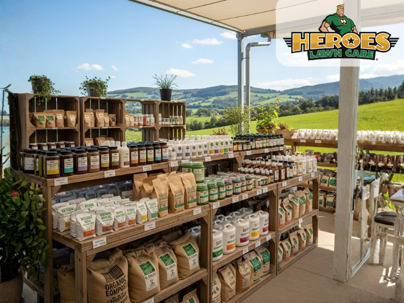
Affordable Lawn Fertilizer Options in Northwest of Downtown Austin
Maintaining a healthy, dense, and visually consistent lawn in the northwest area of downtown Austin requires more than occasional feeding—it demands a strategic approach to fertilizer selection that balances cost, efficiency, and long-term soil performance. Many property owners assume that achieving high-quality turf requires premium-priced inputs, yet the reality is that affordability is not defined by the lowest price point but by how effectively nutrients are utilized over time. Poorly chosen fertilizer can lead to repeated applications, nutrient waste, and inconsistent growth, ultimately increasing overall costs rather than reducing them.
In this region, where clay-heavy soils, heat stress, and irregular precipitation patterns directly influence nutrient availability, a well-informed fertilizer strategy becomes essential. Affordable solutions must account for how nutrients interact with soil structure, water retention, and root development. By prioritizing efficiency and sustainability, homeowners and property managers can achieve fertilizer for healthy turf without unnecessary financial strain, ensuring that each application contributes meaningfully to long-term landscape performance.
Understanding What “Affordable” Means in Fertilizer Selection
Affordability in fertilizer should be evaluated through a performance-based lens rather than focusing solely on upfront cost. Lower-priced products that require frequent reapplication or fail to integrate with soil conditions often result in higher cumulative expenses. Effective garden and lawn fertilizer programs emphasize nutrient efficiency, ensuring that each application delivers measurable improvements in turf density, color consistency, and root strength.
Fertilizer application services often highlight the importance of aligning product selection with soil composition and seasonal growth cycles. In northwest Austin, slow-release fertilizer for grass is frequently recommended because it provides sustained nutrient delivery, reducing the need for repeated applications while improving absorption rates. This approach minimizes waste, stabilizes growth patterns, and ultimately reduces long-term maintenance costs. When affordability is approached from this perspective, it becomes a function of consistency and efficiency rather than short-term savings.
Organic vs. Synthetic: Cost and Performance Balance
The decision between organic lawn fertilizer products and synthetic alternatives plays a central role in determining both cost and performance outcomes. Organic fertilizer contributes to soil health by enhancing microbial activity, improving structure, and increasing nutrient retention over time. These eco-friendly fertilizer options create a more resilient soil environment, reducing the need for frequent corrective treatments and supporting steady, predictable growth patterns.
Synthetic fertilizer, particularly high-nitrogen fertilizer blends, offers a more immediate and often lower initial cost solution. These products are designed for rapid nutrient delivery, making them effective for correcting deficiencies or improving lawn appearance quickly. However, without careful management, reliance on synthetic inputs can lead to nutrient imbalances, increased dependency, and higher long-term costs.
Blended Strategies for Cost Efficiency
A hybrid approach often provides the most cost-effective solution by combining the strengths of both organic and synthetic fertilizer. Organic lawn fertilizer products can be used to build and maintain soil health, while targeted applications of high-nitrogen fertilizer address immediate turf needs.
Professional fertilizer treatments frequently integrate slow-release fertilizer for grass within these blended strategies, ensuring that nutrient delivery remains consistent and efficient. This approach reduces variability in lawn performance and minimizes the need for repeated interventions, making it a practical and financially sustainable solution for long-term lawn care.
Bulk Fertilizer for Lawns and Large Properties
For larger properties or expansive turf areas, bulk fertilizer for lawns represents a significant opportunity to reduce per-unit costs while maintaining consistent nutrient supply. Purchasing fertilizer in volume allows property owners to standardize their application schedule and avoid the markup associated with smaller packaging formats. However, the effectiveness of bulk purchasing depends on proper storage, handling, and application techniques.
Fertilizer application services play a critical role in ensuring that bulk fertilizer is distributed evenly and applied at appropriate rates. Without proper calibration, bulk applications can lead to uneven growth, localized nutrient excess, or deficiencies that compromise overall turf quality. When managed correctly, bulk fertilizer becomes a cornerstone of an affordable and scalable fertilization strategy, particularly for properties requiring consistent maintenance across large areas.
Fertilizer for Flower Beds and Mixed Landscapes
Fertilizer for flower beds introduces additional complexity, as ornamental plants have distinct nutrient requirements compared to turfgrass. Garden and lawn fertilizer programs must be adapted to account for differences in plant species, root depth, and bloom cycles. Applying turf-focused fertilizer to flower beds without adjustment can lead to imbalances that affect both plant health and visual appeal.
Eco-friendly fertilizer options are often preferred in mixed landscapes because they support gradual nutrient release and improve soil structure across diverse planting areas. These products enhance microbial activity, allowing nutrients to be distributed more evenly and retained more effectively. Integrating fertilizer for flower beds into a broader fertilization strategy ensures that both turf and ornamental plants benefit from consistent nutrient availability without competing for resources.
Role of Fertilizer Application Services in Cost Control
One of the most critical yet often overlooked factors in maintaining affordability is application precision. Fertilizer application services ensure that nutrients are delivered in the correct quantities and at the appropriate times, reducing waste and preventing costly overapplication.
Professional fertilizer treatments align nutrient delivery with seasonal growth patterns, maximizing absorption and minimizing inefficiencies. This level of precision not only improves turf performance but also stabilizes maintenance costs by reducing the need for corrective treatments and repeated applications.
Building a Long-Term Affordable Fertilizer Plan
A sustainable and affordable fertilization strategy is built on consistency, adaptability, and informed decision-making. Organic lawn fertilizer products contribute to long-term soil improvement, while slow-release fertilizer for grass ensures steady nutrient availability throughout the growing cycle.
By integrating these elements with targeted applications of high-nitrogen fertilizer and structured scheduling, property owners can create a balanced system that supports fertilizer for healthy turf without unnecessary expense. Over time, this approach enhances soil resilience, reduces variability in lawn performance, and establishes a stable foundation for ongoing landscape maintenance.
Conclusions
Affordable lawn fertilizer options in the northwest area of downtown Austin are defined by their ability to deliver consistent, efficient, and sustainable results rather than simply minimizing upfront costs. A well-structured fertilization strategy considers soil conditions, nutrient delivery methods, and seasonal timing to ensure long-term effectiveness.
Whether utilizing organic lawn fertilizer products, synthetic blends, or bulk fertilizer for lawns, the key to affordability lies in informed selection and precise application. When supported by fertilizer application services or professional fertilizer treatments, these strategies lead to stronger root systems, improved soil structure, and a resilient landscape capable of maintaining high performance throughout the year.