Concrete Patio vs. Paver Patio in Cedar Park, TX: The Trade-off Nobody Explains Clearly
Most comparisons between a concrete patio and a paver patio boil down to a simple list: concrete costs less upfront, pavers cost more but last longer. That list isn't wrong, but it skips the actual mechanics driving that tradeoff, which means homeowners end up choosing based on a surface-level summary rather than understanding what's really happening beneath either surface once Cedar Park's soil and climate start testing it.
That gap between the simple list and the actual underlying mechanism is what this comparison aims to close, walking through not just what each material tends to do, but specifically why it behaves that way once real soil movement, heat, and rainfall are involved.
A concrete patio and a paver patio solve the same basic problem, an outdoor hard surface, using two fundamentally different structural approaches, and that structural difference is what actually explains why one option tends to cost less at the start while the other tends to cost less over time.
Heroes Lawn Care of Cedar Park walks homeowners through this exact comparison regularly, since most people arrive at the conversation already having read a handful of generic online comparisons that list the same surface-level pros and cons without ever explaining the mechanism underneath them.
The Real Tradeoff Behind Every Concrete Patio vs. Paver Comparison
The tradeoff between these two options isn't really about material quality or installation skill. It's about how each system responds to the same underlying condition: soil that moves.
Why Upfront Cost Isn't the Full Story
Poured concrete patio upfront cost tends to run lower than a comparable paver installation, largely because concrete requires fewer individual units, less on-site labor for placement, and a faster overall installation timeline. That lower initial investment is real and often the deciding factor for homeowners comparing quotes side by side. What that comparison frequently leaves out is how each system is expected to age differently over the years that follow, which is where the second half of the cost picture actually lives.
This isn't a criticism of comparing initial investment as a starting point. It's a genuinely important factor for many households. The issue is treating that number as the complete comparison rather than the opening chapter of a longer story that includes how each surface behaves five, ten, and twenty years down the road, once soil movement, weather exposure, and ordinary wear have all had time to test the initial installation.
Poured Concrete Patio Upfront Cost vs. What Comes Later
A poured slab is a single, continuous, rigid surface. When the clay soil beneath it swells and shrinks with the seasons, that rigid surface has nowhere to flex, which is precisely why concrete patios in expansive clay regions tend to develop cracking over time regardless of installation quality. Backyard patio return on investment calculations that stop at the initial number miss this longer arc entirely, since a lower starting investment can be offset by repair and resurfacing needs that accumulate as the slab ages.
Why Cedar Park's Clay Soil Changes the Cracking Conversation
Central Texas clay soil is expansive, meaning it absorbs moisture and swells, then contracts as it dries, cycling through this movement every season. This single fact explains most of the practical difference between how concrete and pavers actually perform in Cedar Park, TX specifically.
Paver Base Settling vs. Slab Cracking: Two Different Failure Modes
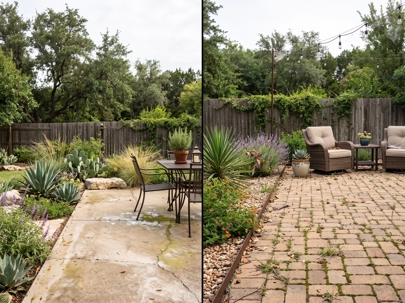
Paver base settling vs slab cracking describes two structurally different responses to the same underlying soil movement. A paver patio, built from individual interlocking units set into a compacted base, can shift and settle slightly at the joint level without breaking, since each paver is free to move independently within the overall system. A concrete slab, by contrast, has no such flexibility built in, which means the same soil movement that causes a paver system to settle gently causes a concrete slab to crack, since the rigid material has to fracture somewhere in order to accommodate the ground shifting beneath it.
This distinction explains why two patios built on the same property, one concrete and one pavers, can age so differently even though they're exposed to identical soil and weather conditions. The pavers absorb that movement through countless small, largely invisible adjustments at the joint level. The concrete slab has no equivalent mechanism, which means the same total amount of soil movement eventually has to express itself as a visible crack somewhere across the surface.
Interlocking Paver Repair Flexibility Explained
Interlocking paver repair flexibility is the direct practical benefit of this structural difference. A single paver damaged or displaced by settling can be lifted, releveled, or replaced without disturbing the surrounding surface, restoring a small section rather than requiring a full-surface repair. Stained and sealed concrete patio surfaces don't offer this same isolated repair option, since a crack in one section of a continuous slab typically requires patching or resurfacing that's visible against the surrounding original surface, even with careful color matching.
This repair asymmetry compounds over a patio's lifespan in a way that's easy to underestimate at the outset. A paver patio that develops three or four settling issues over a decade can be addressed as three or four small, contained repairs, each barely noticeable once complete. A concrete patio that develops the same number of crack locations over the same decade accumulates visible patches that, however carefully executed, rarely blend seamlessly with a slab that has weathered and aged differently in the years since its original pour.
Heat, Drainage, and the Details Most Comparisons Skip
Beyond cracking and repair, two additional factors shape how each option actually performs through a Central Texas summer and the rainfall that follows it.
Central Texas Heat-Resistant Patio Paving Considerations
Central Texas heat-resistant patio paving is a genuine consideration for both materials, though the two respond differently. Concrete's continuous mass absorbs and holds heat across its entire surface, while a paver surface, particularly in lighter tones, can offer somewhat more manageable surface temperatures depending on the specific material and color selected. Neither option is automatically cooler than the other; the actual performance depends heavily on color and finish choices made within each category.
This is a detail worth confirming directly during material selection, since a dark stained concrete patio and a light-toned porcelain paver represent two very different heat experiences, even though both fall under their respective broad material categories. Assuming an entire category performs one way, without considering the specific color and finish actually being proposed, overlooks the variable that matters most for how comfortable the finished surface actually feels underfoot during Central Texas summer months.
Permeable Paver Drainage vs. Concrete Runoff
Permeable paver drainage vs concrete runoff highlights a meaningful functional difference between the two systems. A paver patio's joints allow at least some water to filter through to the base below, rather than shedding it entirely off the surface, while a poured concrete slab is essentially impermeable, directing all surface water to whatever grade and drainage plan handles runoff at the patio's edges. This difference can matter for how a patio interacts with surrounding landscaping and how much additional drainage infrastructure a specific property actually needs.
This distinction becomes especially relevant on properties where the patio sits close to planting beds or a section of yard that already struggles with drainage. A permeable paver surface can reduce the volume of concentrated runoff reaching those areas, while a concrete surface directs its full runoff volume to whatever edge or drain the design accounts for, which sometimes means additional grading or drainage work is needed specifically to manage water a permeable surface would have partially absorbed on its own.
The Maintenance Tradeoff: Sealant vs. Sand
Ongoing maintenance looks different enough between the two options that it deserves its own direct comparison, separate from the structural cracking and repair question already covered.
Polymeric Sand vs. Concrete Sealant
Polymeric sand vs concrete sealant represents the core ongoing maintenance task for each system. Paver joints benefit from polymeric sand that locks individual units together and resists erosion, typically needing refreshing every few years depending on wear and exposure. Stained and sealed concrete patio surfaces need periodic resealing to maintain both appearance and some protection against staining and moisture intrusion, a maintenance task with a different rhythm and technique than paver joint maintenance but a comparable overall time commitment across the years.
Neither maintenance task is particularly burdensome on its own, which is part of why this comparison point often gets glossed over in favor of the more dramatic cracking and repair discussion. Both, however, represent a recurring commitment that a homeowner should factor into realistic expectations for either surface, rather than assuming either material is genuinely maintenance-free once installed.
Patio Surface Weed Growth Prevention
Patio surface weed growth prevention differs meaningfully between the two systems as well. A paver patio's joints, if not properly filled and maintained, can allow weed growth between individual units over time, though correctly applied polymeric sand significantly reduces this risk. A concrete slab has no equivalent joint structure for weeds to establish in, though cracks that do develop over time can eventually become their own vulnerable points for vegetation to take hold if left unaddressed.
This means the weed-resistance advantage often attributed broadly to concrete only really holds true for an uncracked slab. Once a concrete patio develops even minor cracking, it begins to share some of the same vulnerability to vegetation establishment that paver joints have always carried, which somewhat narrows the practical difference between the two options on this specific point once either surface has had several years to age.
Weighing Long-Term Value: Maintenance Expenses and Return on Investment
Bringing the structural, climate, and maintenance factors together produces a more complete picture than any single comparison point offers on its own.
Long-Term Hardscape Maintenance Expenses Compared
Long-term hardscape maintenance expenses tend to favor pavers over an extended timeframe, largely because isolated repairs remain possible throughout a paver patio's service life, while a concrete patio's maintenance needs can escalate more sharply once cracking begins in earnest, sometimes requiring more extensive resurfacing or replacement rather than a small, targeted fix. This doesn't mean concrete is a poor choice; it means the maintenance expense curve looks different for each option, front-loaded and relatively predictable for concrete initially, potentially escalating later, versus more evenly distributed and generally more manageable for pavers throughout.
Understanding this shape of the maintenance curve, rather than just its eventual total, helps homeowners plan realistically for either option. A concrete patio's maintenance needs may stay minimal for a decade or more before a significant repair becomes necessary, which can create a false sense that the lower initial investment was simply the better overall value, right up until that first major crack repair changes the calculation considerably.
Backyard Patio Return on Investment Considerations
Backyard patio return on investment considerations extend beyond simple maintenance costs into how each option is perceived by future buyers, should the property ever be sold. Interlocking paver patios are often viewed favorably in real estate contexts for their durability reputation and premium appearance, while a well-maintained concrete patio, particularly one with a quality stain or decorative finish, still holds genuine appeal, especially for homeowners prioritizing a clean, minimalist aesthetic over paver texture and pattern.
This perception factor is worth weighing alongside the more concrete durability and maintenance considerations already covered, even though it's inherently a softer, more subjective element of the overall comparison. A homeowner planning to stay in a property for decades has less reason to prioritize resale perception than one who anticipates selling within a few years, which is one more reason the right choice depends so heavily on individual circumstances rather than a single universal answer.
Which Option Actually Fits a Cedar Park, TX Backyard
Neither option is universally correct. The right choice depends on which side of the tradeoff actually matters more for a specific household's priorities and timeline.
Questions That Clarify the Right Choice
Useful questions include how long a homeowner realistically plans to stay in the current home, how much ongoing maintenance attention feels reasonable to commit to, and how much weight should be placed on lower initial investment versus more manageable long-term upkeep. Heroes Lawn Care of Cedar Park walks through these tradeoffs honestly with every homeowner comparing the two options, since the right answer genuinely varies based on individual priorities rather than one material being categorically superior to the other.
A few additional questions round out the picture: how much value is placed on a completely uniform, seamless surface appearance versus the textured, patterned look pavers offer, how tolerant a household is of visible patch repairs if cracking eventually occurs, and whether drainage considerations elsewhere on the property make permeability a meaningful factor or a relatively minor one. Working through these questions honestly, rather than defaulting to whichever option a quick online search ranks first, tends to produce a choice a homeowner remains satisfied with years after installation.
Heroes Lawn Care of Cedar Park installs both concrete and paver patios to the same quality standard, accounting for Cedar Park, TX clay soil in either system's base preparation regardless of which surface material a homeowner ultimately selects. Central Texas heat-resistant patio paving performance, drainage planning, and long-term maintenance realities all get discussed clearly during the initial consultation, so the decision reflects genuine tradeoffs rather than a sales preference for one material over the other.
For homeowners who expect to stay in a Cedar Park, TX home for many years and want to minimize the disruption of future repairs, interlocking paver repair flexibility tends to weigh heavily in the final decision. For homeowners prioritizing a lower initial investment and a clean, uniform look, a properly built and sealed concrete patio remains a genuinely solid option, provided expectations around eventual cracking and repair visibility are set accurately from the start rather than discovered as a surprise years later.
Conclusion
The tradeoff between a concrete patio and a paver patio in Cedar Park, TX ultimately comes down to how each system responds to the same expansive clay soil moving beneath it: concrete resists that movement rigidly until it cracks, while pavers absorb it flexibly at the joint level. Understanding that underlying mechanism, rather than relying on a surface-level cost comparison alone, is what actually clarifies which option fits a specific household's priorities and timeline.
Neither material is objectively superior across every category covered here. Concrete offers a lower initial investment and a clean, uniform appearance that some homeowners genuinely prefer over paver texture. Pavers offer structural flexibility, isolated repairability, and better long-term drainage performance. The right choice depends on which of these tradeoffs actually matters most for a specific household, not on which option a generic comparison list happens to rank first.
Heroes Lawn Care of Cedar Park helps homeowners work through this full comparison honestly, building either a concrete patio or a paver patio to genuinely account for Cedar Park's soil, heat, and drainage conditions rather than treating the decision as a simple upfront comparison alone. Understanding the real tradeoff, not just the surface-level pros and cons list, remains the most reliable way to choose the option that will still feel like the right choice years down the road.