
The Landscaping Mistake Driving Up Water Bills for Liberty Hill, TX Homeowners
A rising water bill often gets blamed on the weather, a longer summer, or simply the cost of living somewhere hot. In a lot of Liberty Hill, TX yards, the real driver is sitting in plain sight: a lawn and landscape plan built for a different kind of soil and a different climate than the one actually surrounding the house. Landscaping decisions made without accounting for Hill Country conditions tend to quietly demand far more water than most homeowners realize, month after month, long after the initial installation is finished and forgotten.
This isn't a story about any single bad habit. It's a pattern rooted in how many yards in this part of Central Texas were originally planted, and why that original plan often works against the property rather than with it.
Homeowners moving to Liberty Hill, TX from other parts of Austin or from outside Texas altogether often bring landscaping expectations shaped by different soil and different rainfall patterns. A lawn care routine that worked well in a previous home, or that simply matches what a neighbor is doing, doesn't automatically translate to a property sitting on Hill Country limestone and caliche. That mismatch is where a meaningful share of unnecessary water use tends to begin.
Even homeowners who have lived in the area for years can inherit this mismatch without realizing it, particularly if a property changed hands with an existing landscape plan already in place. A yard planted by a previous owner, or installed years earlier under different assumptions about water availability and soil conditions, doesn't automatically get reevaluated simply because ownership changed — which means the same water-wasting patterns can persist for years under new ownership before anyone thinks to question them. A fresh set of eyes on an inherited landscape often turns up opportunities for improvement that go unnoticed simply because the yard has always looked the same way to the people living there.
The One Landscaping Choice Quietly Inflating Water Bills Across Liberty Hill, TX
The single biggest factor behind inflated water bills in this part of the Hill Country is usually the turf itself — specifically, a reliance on thirsty, non-native grass varieties planted without much consideration for the soil sitting just beneath them.
Why Standard Turf Lawns Struggle in Hill Country Conditions
St. Augustine and similarly water-hungry turf varieties are common across Central Texas, largely because they're familiar and widely available. In deeper, more forgiving soil, they can perform reasonably well with moderate watering. In Liberty Hill, TX, where shallow limestone and caliche sit close to the surface across much of the area, that same turf often needs significantly more frequent watering just to stay green, since the soil beneath it can't hold moisture the way deeper, richer soil elsewhere in the region does.
How Caliche Soil Changes Water Absorption and Runoff
Caliche is a hard, calcium-carbonate-rich layer that forms close to the surface in much of the Hill Country, and it behaves very differently from the black clay soil found in flatter parts of Central Texas. Water applied to a caliche-heavy yard tends to run off quickly rather than soaking in, especially on any kind of slope, which means a large share of a typical irrigation cycle can end up in the street rather than reaching plant roots. A landscape design and installation approach that doesn't account for this reality often results in more frequent watering cycles simply to compensate for how much is being lost to runoff in the first place.
Heroes Lawn Care evaluates soil depth and composition at multiple points across a property before recommending an irrigation plan, since caliche depth can vary noticeably even within a single yard. A watering schedule built around an assumption of uniform soil conditions often overwaters some zones while underwatering others, which compounds the water waste problem rather than solving it.
Misreading What “Established” Landscaping Actually Needs
A second contributing factor is less about the original planting choices and more about how those choices are maintained, or rather, left unexamined, once a yard is a few years old.
The Myth That Mature Landscaping No Longer Needs Adjustment
A common assumption is that once a lawn or garden bed is “established,” its water needs settle into a fixed, predictable pattern that doesn't require revisiting. In reality, irrigation systems drift out of calibration, soil compacts over time, and root systems change as trees and shrubs mature and begin competing with turf for the same water. Landscape renovation and maintenance that treats an irrigation schedule as a one-time setup, rather than something that needs periodic reassessment, tends to allow water waste to creep in gradually rather than all at once.
This gradual creep is part of what makes the problem so easy to overlook. A water bill that climbs by a small margin each season doesn't set off the same alarm a sudden spike would, even though the cumulative effect over several years can be substantial. By the time the increase becomes noticeable enough to prompt action, the underlying inefficiency has often been compounding quietly for multiple seasons.
Signs a Yard Is Being Overwatered Without Realizing It
Standing water after irrigation cycles, fungal patches in turf, and a spongy feel underfoot are all signs that a yard is receiving more water than it can actually use. These signs are easy to miss because they don't necessarily look like a problem at first glance — the lawn is green, after all — but they typically indicate that a meaningful share of the water being applied is going to waste rather than supporting healthier growth.
How Irrigation System Drift Adds Up Over Time
Sprinkler heads shift out of alignment, timers fall out of sync with actual seasonal needs, and zones originally calibrated for young plants often keep running on the same schedule years later, long after root systems have matured and water needs have changed. Heroes Lawn Care checks irrigation calibration as a standard part of ongoing service, since a system that was correctly set up initially can still drift into significant inefficiency within just a couple of seasons without anyone noticing.
The Native Plant Alternative Most Homeowners Overlook
Once the underlying soil and irrigation issues are understood, the most direct way to reduce water demand is reconsidering what's actually planted in the yard.
Why Native and Adapted Plants Cut Water Needs Dramatically
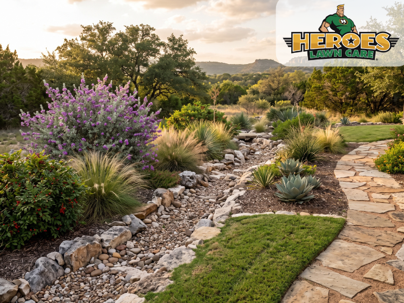
Plants that evolved in Hill Country conditions, including agarito, Texas sage, and various native grasses, are adapted to caliche soil and long dry stretches in a way that imported turf and ornamental plants simply aren't. Garden planning and development built around these species from the start typically requires a fraction of the irrigation that a conventional, non-native landscape demands, without necessarily sacrificing color or visual interest throughout the growing season.
This doesn't mean replacing every plant on a property at once. A phased transition, converting the highest-water-demand zones first while leaving established, healthy plantings elsewhere in place, tends to be both more practical and easier to manage than a complete overhaul. Identifying which specific zones of a yard are driving the most water use is usually the more efficient starting point, rather than assuming the entire landscape needs to change at the same time.
Front-facing beds along the hottest, most sun-exposed side of a property are often the highest-impact place to start, since they typically receive the most direct heat and lose moisture the fastest. Converting these zones first tends to produce a noticeable reduction in irrigation demand relatively quickly, which can make the case for continuing the transition to other areas of the property in subsequent seasons.
Deer-Resistant Choices That Don't Sacrifice Curb Appeal
Liberty Hill, TX and the surrounding Hill Country deal with consistent deer pressure, which adds another layer to plant selection beyond simple water needs. Fortunately, many drought-tolerant native species also happen to be naturally deer-resistant, since the same tough, aromatic, or textured qualities that help them survive with minimal water also make them less appealing to browsing deer. Property curb appeal enhancements built around this overlap tend to hold up better over time than plantings that require constant replacement after deer damage, in addition to using meaningfully less water.
Homeowners who skip this consideration often end up in a frustrating cycle: planting attractive but tender ornamentals, watching deer strip them within a season, replanting the same vulnerable species, and repeating the process while water use remains high the entire time. Selecting for both drought tolerance and deer resistance from the outset breaks that cycle rather than addressing water use and deer damage as two separate, unrelated problems.
How Hardscape and Drainage Design Reduce Water Waste
Plant selection is only part of the picture. How much of a property is planted at all, and how water moves across it, plays an equally significant role in overall water demand.
Blending Hardscape and Softscape to Cut Irrigation Zones
Reducing the total turf footprint by incorporating stone patios, permeable pavers, or gravel pathways naturally shrinks the area that needs regular irrigation in the first place. Hardscape and softscape solutions designed together, rather than as separate afterthought decisions, allow a property to maintain strong curb appeal while meaningfully cutting down on the square footage that requires ongoing watering. This approach also tends to reduce erosion on sloped caliche sections, since hardscaped areas don't lose topsoil to runoff the way exposed turf on a slope often does.
Permeable materials in particular offer an advantage specific to Hill Country conditions. Unlike solid concrete, permeable pavers and certain gravel installations allow rainwater to filter down toward the root zones of nearby plantings rather than shedding it entirely off the property, which means a well-designed hardscape section can actually support the irrigation needs of adjacent plant beds rather than simply reducing the total planted area.
Drainage Solutions That Work With Hill Country Rock Instead of Against It
French drains, dry creek beds, and strategically graded planting beds all help direct water where it's actually useful rather than letting it run off caliche-heavy soil before plants have a chance to absorb it. Custom outdoor environment design that incorporates these drainage elements from the beginning tends to make every subsequent irrigation cycle more efficient, since water is guided toward root zones instead of being lost to surface runoff on the property's first heavy rain or irrigation pass.
Dry creek beds in particular serve a dual purpose in Hill Country landscapes, functioning as both a drainage solution and a design feature that fits naturally with the region's rocky, sloped terrain. Rather than fighting against a yard's natural drainage patterns with a flat, uniform planting plan, working with those patterns through strategically placed dry creek beds or graded beds tends to reduce both erosion and the amount of supplemental irrigation needed to keep plantings healthy through dry stretches.
What a Water-Smart Landscape Plan Actually Looks Like in Liberty Hill, TX
Bringing these pieces together points toward a fairly consistent conclusion: reducing water waste in this part of the Hill Country starts with understanding the specific soil and climate conditions of a given property, rather than applying a generic landscaping approach borrowed from flatter, deeper-soil parts of Central Texas.
Starting With an Irrigation and Soil Assessment
An assessment of existing soil composition, irrigation zone coverage, and current plant water needs is the most direct starting point for identifying where water is being wasted. Residential landscape services built around this kind of assessment can typically identify specific zones where switching to native or adapted plants, adjusting irrigation timing, or reducing turf footprint would meaningfully cut water usage, rather than recommending a blanket, one-size-fits-all overhaul. Commercial landscaping solutions for properties with larger common areas or shared green space benefit from the same underlying assessment, since the same caliche and runoff issues affecting a single-family yard scale up across larger properties as well.
A thorough assessment typically walks the property zone by zone, noting where soil depth changes, where slope directs runoff, and which existing plantings are already thriving versus which are struggling despite regular watering. That zone-by-zone approach tends to reveal a clearer, more actionable picture than a single blanket recommendation applied uniformly across the entire property.
Heroes Lawn Care approaches every Liberty Hill, TX property with this kind of assessment before recommending changes, since the specific combination of soil depth, slope, and existing plant material varies meaningfully even between neighboring properties in the same part of the Hill Country. Lawn and landscape maintenance services that account for these property-specific details tend to produce far more meaningful water savings than generic seasonal maintenance visits that treat every yard the same way regardless of its underlying soil and drainage conditions.
Outdoor living space improvements, when planned alongside this kind of water-conscious approach, don't have to come at the expense of a lush, attractive yard. A thoughtfully designed landscape that blends native plants, reduced turf footprint, and smart drainage can look just as inviting as a conventional lawn, while asking considerably less of the property's water supply and, by extension, its monthly water bill.
This balance between visual appeal and water efficiency is often where homeowners are most surprised. The assumption that water-wise landscaping means a sparse, rock-only yard doesn't hold up once native plant options are actually explored. Flowering perennials, ornamental grasses, and structural shrubs native to the Hill Country can provide the same layered, colorful look homeowners associate with a traditional lawn and garden bed combination, just built around species that don't require constant supplemental watering to survive a Central Texas summer.
Conclusion
The landscaping mistake quietly inflating water bills across Liberty Hill, TX isn't a single obvious error — it's the accumulated result of turf and plant choices made without accounting for caliche soil, Hill Country runoff patterns, and the specific water needs of non-native species trying to survive in conditions they weren't built for. Correcting it doesn't require abandoning a green, attractive yard, but it does require rethinking which plants are doing the work and how water moves across the property before it ever reaches their roots.
The good news is that none of these corrections require starting over completely. A phased approach, addressing the highest-water-use zones first, recalibrating irrigation timing, and incorporating drainage improvements where runoff is worst, tends to produce noticeable results without the disruption of a full property overhaul. Small, targeted changes compound over successive seasons in a way that often surprises homeowners who expected water savings to require a much larger commitment. What starts as a single corrected irrigation zone or one converted planting bed often becomes the template for the rest of the property over the following seasons, rather than remaining an isolated fix.
Heroes Lawn Care works with Liberty Hill, TX homeowners to identify exactly where water is being lost to the wrong plant choices, inefficient irrigation, or unaddressed runoff, then builds a landscaping plan around native and adapted species, smart hardscape integration, and drainage designed specifically for Hill Country soil. Addressing the root cause, rather than simply watering harder to compensate for it, is still the most reliable way to bring a rising water bill back under control.