
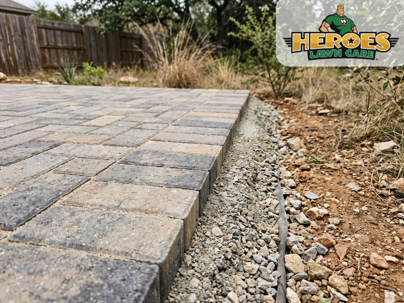
What Cedar Park's Clay Soil Means for Your Paver Patio Installation — And Why Most Guides Get It Wrong
Search "how to install a paver patio" and the results look almost identical no matter where they were written. Dig a trench, lay a base of crushed stone, compact it, set the pavers, add joint sand. That advice isn't wrong, exactly, but it was written with a generic soil profile in mind, and generic advice applied to Cedar Park, TX backyards is one of the most common reasons local paver projects run into trouble years after installation. Central Texas soil doesn't behave like the soil most national guides are describing, and the gap between the two is where a lot of patios quietly start failing.
This article looks at the specific misconceptions that show up most often in generic paver patio installation guides, and what actually holds true once expansive clay, seasonal rainfall, and Texas heat are factored into the equation.
None of this is a criticism of installation guides in general. Most of them are written honestly and accurately for the regions their authors are most familiar with. The issue is that a national audience means national advice, and national advice tends to average out regional differences that actually matter a great deal once a project breaks ground. A homeowner in Cedar Park, TX following a guide written for a market with sandy, well-draining soil is starting the project with a set of assumptions that don't match the ground they're actually building on.
The Clay Soil Myth Most Paver Patio Installation Guides Repeat
The assumption baked into most installation content is that soil is a fairly neutral, stable surface to build on top of. That assumption holds up reasonably well in regions with sandy or loamy soil. It does not hold up in Cedar Park, TX, where the ground underneath most yards is expansive clay.
What Generic Installation Guides Assume About Soil
A typical national guide will tell a homeowner to excavate, add a base layer, compact it, and move on. What it usually won't mention is that soil composition changes how much base is actually needed, how it should be compacted, and how the finished patio will behave over its first few years. Treating soil as an afterthought rather than the starting point of the project is precisely the gap between advice that works everywhere and advice that works specifically in Central Texas.
Why Central Texas Clay Behaves Differently
Expansive clay absorbs water and swells, then contracts as it dries — sometimes by a noticeable margin across a single season. This is fundamentally different from how sandy soil behaves, since sand drains quickly and holds its shape regardless of moisture. A base layer that would perform perfectly well over sandy soil in another region can be entirely inadequate over Central Texas clay, which is exactly why so many transplant homeowners in Cedar Park, TX are caught off guard when a patio installed using instructions written for a different climate starts shifting within a year or two.
The practical consequence is that soil type should be one of the first questions addressed in any installation plan, not a detail left for the excavation crew to figure out on-site. A patio designed around the specific clay content and drainage characteristics of a given lot starts from a fundamentally different set of assumptions than one built from a generic checklist, and that difference tends to show up clearly once the project has been through a few full seasons of Central Texas weather.
Myth #1 — “Any Compacted Base Will Do”
This is probably the most repeated, and most misleading, piece of advice found in general paver installation content. Compaction matters, but compaction alone doesn't solve the underlying issue if the base itself isn't thick enough or built from the right material to handle soil movement.
The Truth About Base Depth in Expansive Clay
A base depth that might be sufficient in a region with stable soil often falls short over expansive clay, where the constant swelling and shrinking cycle puts far more stress on the structure above it. Contractors familiar with Central Texas conditions typically build a deeper, more heavily compacted base specifically to counteract that movement, rather than relying on a one-size-fits-all depth pulled from a general installation guide.
What Happens When Base Depth Is Miscalculated
An undersized base doesn't usually fail immediately. The problem tends to surface gradually — a paver here and there starting to sit slightly uneven, joints that widen almost imperceptibly at first, then more noticeably after a full cycle of wet and dry seasons. By the time the problem is visually obvious, correcting it usually means pulling up a significant portion of the patio surface rather than making a small repair, which is a far more involved project than getting the base right the first time.
Why This Myth Persists Despite Being Widely Repeated
Part of the reason this misconception spreads so easily is that a shallow, under-compacted base doesn't fail on a predictable schedule. Two identical-looking patios built with the same shortcut can perform very differently depending on subtle differences in drainage, sun exposure, or how much rain a given yard happened to receive in its first year. That inconsistency makes it easy for a homeowner or even a contractor unfamiliar with expansive clay to conclude the shortcut worked, right up until the year it doesn't. Heroes Lawn Care builds every base layer around worst-case soil movement rather than best-case conditions, which is part of why the same shortcut that sometimes gets away with itself elsewhere in the country is treated as a non-starter locally.
Myth #2 — “Sealing Pavers Prevents All Movement”
Sealant is often marketed as a cure-all for paver longevity, but its actual function is more limited, and misunderstanding what it does can lead homeowners to skip the steps that actually matter most.
What Sealing Actually Does (and Doesn't Do)
A sealant primarily affects the surface of the pavers themselves, enhancing color and adding some resistance to staining and moisture penetration at the top layer. It does nothing to address what's happening beneath the surface, where soil movement, base compaction, and drainage are doing the real structural work. A beautifully sealed patio sitting on an inadequate base will still shift and settle over time, since the sealant never interacts with the layers actually responsible for stability.
This distinction matters because sealing is often positioned in generic guides as a near-final step, something that locks in the quality of the entire project. In reality, it's closer to a cosmetic finishing touch than a structural safeguard. A homeowner who invests in a premium sealant while skipping proper base preparation has effectively polished the surface of a problem rather than solved it, and the underlying issue will still surface on its own timeline regardless of how well-maintained the top layer looks in the meantime.
Sealant timing is also frequently misunderstood. Applying it too soon after installation, before the base and joint sand have had adequate time to settle, can trap moisture beneath the surface rather than protect against it — turning a well-intentioned maintenance step into a contributor to the very problems it was meant to prevent.
Myth #3 — “Drainage Only Matters for Flood-Prone Yards”
Drainage tends to get treated as a concern only for properties with obvious water problems, but in Central Texas, rainfall arrives in short, heavy bursts rather than slow, steady patterns, which makes drainage planning relevant to nearly every yard in the region regardless of how it looks on a dry day.
How Terrain Across Communities Northwest of Downtown Austin Adds a Drainage Variable
Communities northwest of downtown Austin, including Cedar Park, TX, sit across a mix of gently sloped and relatively flat terrain, and that terrain interacts directly with how quickly water moves off a property after a storm. A yard that looks perfectly dry most of the year can still direct a surprising volume of water toward a patio surface during a single intense rain event, and a hardscape patio construction project that doesn't account for that reality is vulnerable to erosion and paver shift regardless of how well the base was compacted.
Reading Your Yard's Natural Slope Before Installation
Before any excavation begins, understanding which direction water naturally moves across a specific property is essential groundwork. A patio built without that information can end up sitting in the path of runoff it was never designed to handle, which tends to show up as pooling, sand washout, or gradual paver shift near the lowest point of the surface.
Grade assessment is often skipped entirely in generic installation content because it assumes relatively flat, evenly draining ground as a baseline. Properties across Cedar Park, TX and the surrounding communities northwest of downtown Austin rarely fit that baseline exactly, since even subtle elevation changes across a single backyard can redirect a meaningful volume of water during a heavy storm. A patio positioned without accounting for that natural flow can end up functioning almost like a dam, holding water against its edges rather than letting it pass by, which accelerates erosion and joint sand loss far faster than steady, gentle rainfall ever would.
Myth #4 — “All Paver Patterns Perform the Same on Clay”
Pattern selection is usually framed as a purely visual decision, but on soil that moves as much as Central Texas clay does, the geometry of a layout can genuinely affect how well a surface resists shifting over time.
Why Pattern Choice Interacts With Soil Movement
Interlocking layouts distribute pressure across a wider network of connection points, which can help a surface resist minor shifting better than patterns with long, uninterrupted joint lines running in a single direction. This doesn't mean every yard needs the same layout, but it does mean pattern selection deserves more consideration in a backyard patio paver construction project built over expansive clay than it might in a region with more stable ground.
Larger paver units with fewer joints can behave differently than smaller units laid in a tight, complex pattern, and neither is automatically the better choice — the right answer depends on the specific soil movement expected in a given yard, the size of the patio, and how much foot traffic it will see. A pattern chosen purely for its appearance, without any consideration of how it will interact with seasonal ground movement, is a decision made with incomplete information, even if the final result looks appealing on the day it's finished.
Myth #5 — “A Patio That Looks Level on Installation Day Is Done Right”
Visual inspection on the day pavers go down is one of the least reliable ways to judge whether an installation will hold up long-term, yet it's often the only test a generic guide recommends.
Why Day-One Appearance Doesn't Predict Year-Three Performance
A newly installed patio can look completely flat and uniform regardless of whether the base beneath it was compacted to the correct depth, because the visible surface has not yet been exposed to a full cycle of soil expansion and contraction. The real test of an installation happens gradually, across multiple seasons of Central Texas weather, not in the hours immediately after the last paver is set. This is one of the reasons Heroes Lawn Care evaluates installation quality against how a project is expected to perform three, five, and ten years out rather than treating a clean installation-day appearance as confirmation that the work was done correctly.
What Actually Works: Building for Cedar Park's Soil From the Ground Up
Correcting these misconceptions points toward a fairly consistent conclusion: a paver patio built to last in Central Texas needs to be designed around the region's soil and rainfall patterns from the very first planning conversation, not adjusted after the fact once a problem shows up.
A Realistic Installation Timeline Rooted in Local Conditions
Projects that account for soil testing, adequate base depth, proper compaction, and a drainage plan tailored to the specific property tend to take a bit more time upfront than a rushed, generic installation. That additional planning time is what prevents the far more disruptive process of tearing out and rebuilding a patio a few years later. Heroes Lawn Care approaches every custom paver patio installation project in Cedar Park, TX with that regional reality built into the process from day one, rather than applying the same generic playbook used in markets with entirely different soil conditions.
This approach also tends to reveal problems before they become expensive ones. A brief soil assessment at the start of a project can flag areas where the clay content is especially high, or where natural drainage patterns will require extra grading attention, long before a single stone is set. Catching those details early is far less costly, in both time and materials, than discovering them after installation is already complete and a section of patio needs to be addressed retroactively.
Signs a Patio Was Built Around Generic Advice Instead of Local Conditions
A handful of warning signs tend to show up earlier in patios built without accounting for Central Texas soil specifically: joints that widen unevenly rather than uniformly, low spots that develop near one edge of the patio rather than distributed evenly, or individual pavers that rock slightly underfoot in isolated spots rather than the surface moving as a cohesive unit. None of these issues are necessarily catastrophic on their own, but together they usually point to a base that wasn't built with the region's clay soil in mind, and they tend to get more pronounced with each passing season rather than resolving on their own.
Conclusion
Most paver installation advice circulating online wasn't written with Central Texas soil in mind, and applying it without adjustment is a quiet but significant risk for homeowners in Cedar Park, TX. Clay soil, concentrated rainfall, and intense summer heat all interact with a patio surface in ways that generic guides simply don't account for, which is exactly why so many of the most repeated tips — compact the base and move on, seal the pavers and you're covered, drainage only matters in low-lying yards — fall apart once they meet real Central Texas conditions.
None of these misconceptions are the result of bad intentions on the part of the guides that repeat them. They simply weren't written with expansive clay, concentrated seasonal rainfall, or triple-digit summer heat as a starting assumption. Recognizing which pieces of generic advice hold up locally, and which ones need to be adjusted or replaced entirely, is what separates a paver patio that performs reliably for decades from one that requires costly correction within the first few years.
Heroes Lawn Care treats these regional factors as the starting point of every paver patio installation project rather than an afterthought, helping homeowners across Cedar Park, TX and the broader communities northwest of downtown Austin avoid the costly corrections that generic advice so often leads to. Getting the fundamentals right from the beginning is still the simplest way to end up with a patio that performs the way it looks — for years, not just for the first season.