
After the Freeze and the Dry Spell: A Cedar Park, TX Landscaping Reset for Shrubs, Grasses, and Beds That Took a Beating | Heroes Lawn Care of Cedar Park
Central Texas weather does not ease a landscape into maturity. It tests it. A hard freeze arrives after a mild winter and blackens the shrubs. A long dry spell follows a wet spring and cracks the beds. A string of triple-digit days stresses the turf, then a storm washes mulch into the street. By the end of a rough stretch, many yards in Cedar Park, TX look worn down: brown stems where evergreen foliage used to be, grasses gone ragged, borders slumped, paths rutted, and soil that seems to repel water instead of absorbing it.
That condition is not a failure of the original plan. It is a signal that a reset is due. Landscaping that has taken a beating usually needs a sequence of repairs, done in the right order, rather than a wholesale replacement. Heroes Lawn Care of Cedar Park approaches these yards as a restoration project, starting with the soil and structure and working outward to the plants, which is the order that tends to produce lasting results.
Why Cedar Park, TX Yards Take a Beating
Weather Swings That Outrun the Plants
The Texas Hill Country edge is known for sudden shifts. A freeze can drop temperatures twenty degrees below the seasonal norm in a single night, and a week later the weather may be back in the seventies. Plants that responded to warm spells by pushing new growth are caught unprepared. In summer, extended heat and drought drive roots to their limits, and the first cold front brings winds that dry the foliage further.
Plants adapted to the region cope with these swings far better than imported choices, but even natives show damage after extremes. The question after a harsh season is not whether damage happened, but which parts of the landscape are recoverable and which need replacing.
Rocky Ground That Hides the Problem
Heroes Lawn Care of Cedar Park begins each restoration by probing the soil in several places across the yard, because the depth to rock, the level of compaction, and the amount of organic matter vary from one side of a lot to the other. That survey decides where aeration will help, where beds need amending, and where a plant is struggling because of the ground rather than the weather.
Beneath many Cedar Park lawns and beds sits limestone, often only a few inches below the surface. The soil above it is thin, alkaline, and prone to compaction, which means it drains unevenly and holds little organic matter. When weather is mild, plants get by. When weather turns harsh, the weakness of the ground shows up in the plants.
Start Below the Surface: Restoring the Soil
Core Aeration and Organic Compost Topdressing for Rocky Limestone Soil
Compacted soil is one of the most common hidden problems in the area. Core aeration and organic compost topdressing for rocky limestone soil addresses it in two steps. A machine pulls small plugs of soil from the turf, opening channels for air, water, and roots. A thin layer of finished compost is then spread over the surface and worked into the holes, feeding the soil and improving its structure.
The benefits build over time. Water that once ran off compacted turf begins to soak in, roots grow deeper, and the soil gains the organic matter that limestone ground naturally lacks. Warm-season grasses respond best when aeration is timed for their active growing season, and the compost layer is kept thin so it does not smother the grass. For beds, a similar topdressing around established plants adds nutrients without disturbing roots.
Organic Soil Revitalization and Mycorrhizal Root Zone Inoculation
Healthy soil is a living system, and stress can thin it out. Organic soil revitalization and mycorrhizal root zone inoculation restores the biology that helps plants thrive. Mycorrhizal fungi form partnerships with plant roots, extending the reach of the root system and improving access to water and nutrients. Applying an inoculant at the root zone when planting or renovating introduces those fungi where they may have declined.
Organic amendments, such as compost and natural fertilizers, feed the soil community instead of overriding it. Heavy use of synthetic fertilizers can discourage the very fungi that inoculation is intended to support, so a balanced approach works best. Over several seasons, plants in revitalized soil tend to show stronger growth, better drought tolerance, and faster recovery after stress.
Rebuilding the Frame: Edges, Borders, and Paths
Precision Commercial-Grade Steel Landscape Edging Installation
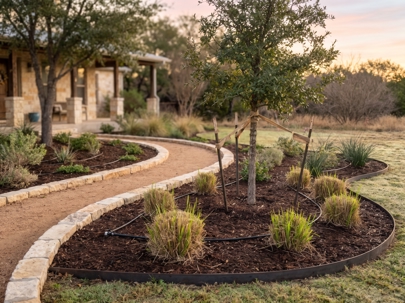
Edges define a landscape, and they are often the first element to look tired. Plastic edging lifts, bends, and fades. Precision commercial-grade steel landscape edging installation replaces it with a thin, strong line that stays in place. Steel strips are driven into the ground and connected, creating a clean separation between turf and bed that resists roots, heat, and foot traffic.
The finished look is crisp but understated, since only a thin line of metal is visible above the surface. Curves are formed smoothly, joints are staked securely, and the top edge is set slightly above the soil line so mulch and soil stay in the bed. Steel also holds up to the freeze and thaw cycles that disturb softer materials, which makes it a good match for the climate.
Dry-Stack Native Limestone Boulder Edging and Tier Border Installation
For a more natural, substantial edge, dry-stack native limestone boulder edging and tier border installation uses local stone stacked without mortar. Each piece is selected and fitted to its neighbors, with the weight of the stone and the care of placement holding it together. The result is a border that reads as part of the Hill Country landscape and that can handle uneven ground.
Tiered borders are useful on gentle slopes, where one or two low steps of stone create level planting shelves and slow runoff. The stone holds soil in place after storms and gives the garden a permanent structure that outlasts any one season of planting. Because the wall is dry-stacked, water drains through it, avoiding the pressure that can build behind mortared walls.
Compacted Decomposed Granite Garden Trail and Pathway Installation
Paths wear out quickly when they are just trampled ground. Compacted decomposed granite garden trail and pathway installation builds a surface that stays firm and looks natural. The path is excavated to a consistent depth, edged to contain the material, and filled with decomposed granite in thin layers, each of which is compacted before the next is added. The result is a hard, slightly textured surface that drains well and feels solid underfoot.
Decomposed granite blends naturally with the colors of local stone, and it shapes easily into curves that follow the landscape. A properly compacted path resists washing out in storms and stays in good shape with an occasional raking and top-up. Edges for the path itself can be steel or stone, which keeps the granite from migrating into the beds. Paths also have a practical role in a reset, because they give a gardener or maintenance crew a clean route through the beds without crushing plants.
Reviving the Plants
Seasonal Ornamental Grass Cutbacks and Freeze-Damaged Shrub Restoration
Plants tell their own story after a freeze. Seasonal ornamental grass cutbacks and freeze-damaged shrub restoration begins with patience and a careful eye. Ornamental grasses are cut back in late winter, before new growth starts, to remove dead foliage and make room for fresh blades. Cutting them to a few inches above the crown keeps the clump tidy and healthy.
Shrubs require more judgment. Frost-burned leaves and stems often look dead long before the plant actually is. Pruning too early can remove tissue that would have recovered and stimulates tender growth that the next cold snap could damage. A better approach is to wait until the weather has warmed and new growth shows, then cut back to live wood. A gentle scratch on a stem with a thumbnail shows green tissue underneath if the branch is alive. Plants that fail to leaf out after a full growing season can be removed and replaced with hardier choices. Perennials that froze to the ground often return from the roots, so patience is usually rewarded, and a gardener who waits for the plants to show their intentions tends to save more of them than one who clears everything at the first sign of brown.
Native Hill Country Specimen Tree Planting and Structural Staking
A reset is also a chance to add the anchors of the landscape. Native Hill Country specimen tree planting and structural staking places strong, regionally adapted trees where they will shape the yard for decades. Live oak, cedar elm, Texas red oak, and Mexican plum all suit the area, each with its own size, form, and seasonal character.
Planting depth is the first detail, since the root flare, where the trunk widens at the base, should sit at or slightly above the soil line. A wide, shallow planting hole encourages roots to spread into native ground. Staking is used where wind or a heavy canopy could move the root ball, and the ties are kept loose so the trunk can flex and build strength. Stakes are removed after the tree has established, typically within a year or so, because leaving them in place can weaken the trunk and girdle the bark.
Rethinking the Turf and the Water
Turfgrass-to-Xeriscape Conversion and Local Water Conservation Retrofitting
Some areas of turf never recover well, particularly in shade, on slopes, or on thin soil. Turfgrass-to-xeriscape conversion and local water conservation retrofitting replaces those struggling areas with drought-tolerant plantings, mulch, and stone. The existing turf is removed or smothered, the soil is amended, and a layered planting of natives and ornamental grasses takes its place.
The conversion fits naturally into a landscape reset. It reduces the area that needs frequent watering, aligns the yard with Central Texas conditions, and creates planting beds with more visual interest than a patch of thin grass. Retrofitting also includes adjusting the existing irrigation to match the new layout, so that the remaining turf and the new beds are each watered according to their needs. Cedar Park has water restrictions that apply during drought stages, so a yard designed to thrive on less water stays attractive when limits tighten.
Subsurface Drip Irrigation Conversion for Ornamental Planting Beds
Spray heads are a poor match for beds. Water lands on foliage, evaporates in the heat, and drifts onto pavement. Subsurface drip irrigation conversion for ornamental planting beds swaps them for tubing that delivers water directly to the root zone. Emitters are spaced to match plant needs, and the tubing is buried or covered with mulch, keeping the surface dry and protecting the line from sun.
Plants respond to the deeper, steadier moisture with stronger roots, and weeds have less water to germinate. The system can be zoned separately from turf, so beds can be watered on their own schedule. Because the lines are covered, the landscape looks cleaner, and there is less to damage during routine care.
Staying in Good Standing
Cedar Park HOA Architectural Review Board (ARB) Landscape Remediation
Many Cedar Park neighborhoods have homeowners associations with an architectural review board that oversees exterior appearance, and a worn-down landscape can draw attention. Cedar Park HOA architectural review board (ARB) landscape remediation means bringing a yard back into line with community standards. Notices commonly cite dead plants, bare patches, damaged edging, overgrown beds, or a deteriorated appearance from the street.
A remediation plan addresses each cited item, documents the corrections, and often goes to the board for review before work starts. Replacing dead shrubs, restoring turf, repairing borders, and refreshing mulch are typical steps. Following the community's approved plant list, color guidelines, and material standards helps the submittal move smoothly. Photos taken before and after provide a clear record that the issues have been resolved. Owners should confirm the specific requirements and deadlines with their association.
Putting the Reset in Order
A Practical Sequence
Phasing helps when the list is long. A reset does not have to happen in a single month. Safety and structural items, such as drainage corrections and path repairs, come first. Soil improvement and irrigation changes follow, since they affect everything planted afterward. Planting is saved for the window when weather favors establishment, and finishing touches such as mulch and edging detail close out each phase. Dividing the work this way spreads the effort across the year and lets each stage settle before the next begins.
A reset works best when the steps happen in a sensible order. Assessment comes first, walking the yard to identify what is damaged, what is dormant, and what is gone. Soil work follows, with aeration, topdressing, and inoculation. Structural repairs come next, including edging, borders, and paths. Irrigation changes and turf conversions come before planting so the new plants are placed into the final layout. Then trees, shrubs, and grasses go in, and mulch finishes the beds.
The Seasonal Calendar for Recovery
Timing matters. Late winter is for cutting back grasses and assessing shrubs. Spring is for aeration, topdressing, and pruning to live wood once growth has shown itself. Fall is for planting trees and shrubs, converting turf, and building borders, since the weather favors root growth. Spreading the work over the right seasons produces better results than trying to do everything at once.
Care That Keeps the Reset Working
Ongoing Attention
Watering habits deserve a second look after a reset. Deep, infrequent watering trains roots to reach down instead of staying near the surface, and a rain gauge or a smart controller keeps the schedule honest. In Cedar Park, TX, where drought stages can change the rules on short notice, a landscape that already runs efficiently adapts without drama.
A restored landscape needs follow-through. New plants need consistent watering until established, mulch needs refreshing as it breaks down, and edging and borders need an occasional check. A lawn care service that understands the layout can coordinate turf care, bed maintenance, and seasonal cleanup so each task supports the design instead of undoing it. Heroes Lawn Care of Cedar Park pairs restoration work with a seasonal care plan, so the yard continues to improve after the initial repairs are finished.
Planning for the Next Extreme
Preparation can be simple. Before the first freeze, tender plants can be covered or moved, beds can be mulched to insulate roots, and irrigation lines can be checked for exposed fittings. Before summer, mulch depth and drip emitters can be inspected. A small amount of seasonal preparation reduces the amount of repair work the following season.
The best protection against the next freeze or drought is a landscape built to handle both. Native and adapted plants, healthy soil, efficient irrigation, and sturdy structure mean the next hard season causes less damage and recovery is faster. A yard that has been through a reset once is better prepared for the next one.
A Reset Is a Fresh Start
A yard that took a beating is not a lost cause. With attention to the soil, a rebuilt frame of edging and paths, careful treatment of plants, thoughtful use of water, and a clear plan for review boards and rules, it can come back stronger and more resilient than before.
For homeowners across Cedar Park, TX looking at a tired yard and wondering where to begin, Heroes Lawn Care of Cedar Park delivers landscaping restoration that works from the ground up, from soil and structure to shrubs, grasses, and trees. The best place to start is a walk through the yard to see what survived, what can recover, and what is ready for a new beginning.