
Nobody Told You Your Deck's Direction Matters More Than Its Material | Heroes Lawn Care
Ask most homeowners planning a new deck what they've spent the most time researching, and the answer is almost always material: composite versus wood, which brand, which color. Almost nobody spends that same energy on a decision that actually has a bigger effect on whether the finished deck gets used comfortably through a Round Rock, TX summer: which direction it faces.
This imbalance in research effort is understandable but ultimately backwards. Material comparisons are widely available, heavily marketed, and easy to research from a phone or laptop before ever speaking with a contractor. Orientation, by contrast, requires actually understanding a specific property's sun exposure patterns, which isn't something a homeowner can simply Google their way through the same way they can compare composite brands.
A deck builder who understands this tends to bring up orientation early in the planning conversation, before material samples ever get pulled out, because getting this one structural decision wrong can undermine even the best material choice available.
This isn't a minor oversight in most planning conversations. It's a genuine blind spot, since orientation doesn't come with a sample to hold or a catalog page to browse. It has to be actively considered by someone who understands how the sun actually moves across a specific property, which means it's easy for the conversation to skip straight to material without anyone raising the question at all.
The Question Most Deck Builder Conversations Skip Entirely: Which Way Will This Face?
Orientation determines how many hours of direct afternoon sun a deck actually receives, which turns out to matter more for daily comfort than almost any material-level decision made afterward.
Why Material Gets All the Attention and Orientation Gets None
Custom deck builder services tend to spend the bulk of a planning conversation walking through composite samples, color swatches, and railing styles, all decisions a homeowner can see and touch directly. Orientation, by contrast, isn't something a homeowner can hold in their hands or compare side by side, which makes it easy to skip past in favor of decisions that feel more concrete and immediate, even though orientation ultimately has a larger effect on how the finished deck actually feels to use.
The Sun's Path Across a Round Rock, TX Backyard
Backyard deck construction that doesn't map how the sun moves across a specific property throughout the day is essentially guessing at one of the most consequential variables in the entire project. A deck positioned without this mapping can end up facing directly into several consecutive hours of the day's most intense sun, regardless of how carefully the material itself was selected to handle heat.
Heroes Lawn Care walks every Round Rock, TX property at the specific time of day a proposed deck would see the most use, tracking exactly how sun and shadow move across the yard before any orientation decision gets finalized, rather than relying on a generic assumption about which direction tends to work best.
West-Facing Decks: The Layout Choice That Undermines Everything Else
Among the four cardinal directions a deck might face, west tends to produce the most difficult combination of heat and glare, for reasons that have less to do with total sun exposure and more to do with timing.
Why Afternoon Sun Is the Worst Kind of Sun
A west-facing deck catches direct sun precisely during the hottest part of the day, late afternoon into early evening, when ambient air temperature is already at its daily peak and a homeowner is most likely to actually want to be outside relaxing after work. Patio and deck construction oriented toward the east instead typically receives its most direct sun earlier in the day, when temperatures are still climbing rather than already at their highest point, producing a meaningfully more comfortable experience during the hours most households actually want to use the space.
Heroes Lawn Care flags west-facing orientation directly with homeowners during initial planning, explaining specifically what that orientation means for afternoon comfort rather than leaving the tradeoff implicit or discovered only after the deck is already built and in daily use.
How Even Heat-Resistant Composite Can't Fully Compensate for Bad Orientation
Heat-resistant composite decking genuinely reduces surface temperature compared to older, uncapped composite products, but that improvement operates within limits that orientation can easily overwhelm. Composite decking for hot climates engineered with reflective cap technology still absorbs meaningfully more heat during four or five consecutive hours of direct west-facing exposure than the same material would during a shorter, less intense exposure window created by a more favorable orientation. Material improvements and orientation improvements aren't interchangeable; they're compounding factors that work best addressed together rather than as a substitute for one another.
This distinction is worth understanding clearly, since it's tempting to assume that simply upgrading to a premium heat-resistant product solves the entire heat problem regardless of orientation. In practice, the same premium material performs meaningfully differently depending on how many hours of direct exposure it actually receives, which means a homeowner facing a difficult orientation decision shouldn't assume material alone can fully offset that structural choice.
Airflow, Board Spacing, and How a Deck Actually Sheds Heat
Beyond which direction a deck faces, how air moves across and beneath the deck surface plays a real role in how quickly it cools once direct sun exposure ends for the day.
Why Gap Width Affects Surface Temperature More Than Homeowners Expect
UV-resistant decking materials installed with tighter-than-recommended gaps between boards trap more heat at the surface, since less air can circulate beneath and between individual boards to help dissipate accumulated warmth. Sun-resistant deck surface materials installed with proper manufacturer-specified gap widths allow meaningfully better airflow, which translates into a surface that cools down faster once direct exposure decreases, even without any change to the underlying material itself.
Gap spacing sometimes gets compressed slightly during installation, either as an aesthetic preference for a tighter, more seamless-looking surface or simply as an installation shortcut. Both motivations produce the same unintended consequence: reduced airflow that keeps the deck warmer for longer into the evening than a correctly spaced installation would, regardless of how heat-resistant the material itself was marketed to be.
Elevated Decks vs. Ground-Level Decks: Different Heat Behavior
A raised, elevated deck typically benefits from airflow moving freely beneath the entire structure, which helps draw heat away from the underside of the boards throughout the day. Durable composite decking for high sun exposure installed at ground level, directly against a solid base with limited air circulation underneath, tends to retain heat longer into the evening than the same material installed as an elevated structure with open air movement below it. This distinction matters for anyone weighing whether to build low to the ground or raised, independent of whatever material ends up getting selected.
Neither approach is universally correct, since ground-level decks offer their own advantages around accessibility and integration with surrounding landscaping. The point isn't that elevated decks are always the better choice, but that the heat retention difference between the two approaches deserves to be part of the conversation, particularly for a homeowner specifically prioritizing evening comfort during the hottest months of the year. Weighing this tradeoff deliberately, rather than defaulting to whichever style happens to be more common in a given neighborhood, tends to produce a result better matched to how the space will actually be used.
Designing Shade Into the Deck Itself, Not Bolting It On Later
Orientation and airflow both help, but neither fully solves the heat problem on their own in a climate as intense as Round Rock's summer sun. Shade, planned into the deck's original structure rather than added afterward, closes the remaining gap.
Integrated Pergola Sections and Structural Shade Planning
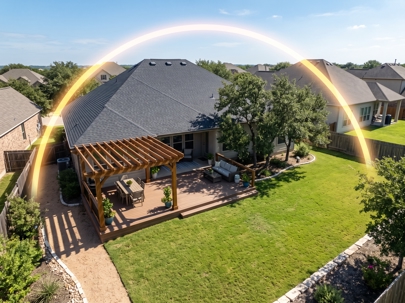
Deck design and build services that incorporate a partial pergola section or built-in shade structure directly into the original deck plan produce a meaningfully more usable result than a deck built first and shaded later as an afterthought. Outdoor living space builders who plan structural shade alongside orientation and material selection, rather than treating it as a separate future project, avoid the awkward retrofit of adding posts and structural support to an already-completed deck that wasn't originally engineered to carry that additional load.
Retrofitting shade onto a finished deck almost always involves compromises that wouldn't exist if shade had been part of the original design. Post placement gets constrained by where the existing structure can actually support additional weight, sightlines and traffic flow have to work around posts positioned for structural convenience rather than aesthetic intention, and the finished result often reads as an addition rather than an integrated feature. Planning shade from the outset avoids all of these compromises simply by having the freedom to design the entire structure as one cohesive system.
This freedom extends beyond just structural convenience. A shade element planned from the start can be sized and positioned specifically around where the sun actually falls hardest at the times the deck sees the most use, rather than fitted awkwardly into whatever space happens to remain available once the deck itself is already finished and its layout locked in.
What to Ask a Deck Builder Before Orientation Gets Locked In
Bringing orientation, airflow, and structural shade together into a single planning conversation produces a meaningfully more comfortable finished deck than optimizing for material alone.
Questions That Reveal Whether Orientation Was Actually Considered
Asking directly which direction a proposed deck will face, what time of day it will receive its most intense sun exposure, and whether board spacing and elevation have been planned with airflow in mind tends to separate residential deck contractors who think through the full picture from those focused narrowly on material and aesthetics. Professional deck installation that addresses orientation as a named, deliberate decision, rather than an accident of wherever the back door happens to face, produces a deck that performs meaningfully better through the hottest months of the year.
A useful follow-up question asks a contractor to walk through, specifically, what the deck will feel like to use at the time of day the household actually plans to use it most. A contractor who has genuinely thought through orientation can answer this concretely, describing expected sun exposure and comfort at that specific time rather than offering a generic assurance that the deck will “work great” regardless of when it's actually used. That level of specificity is difficult to fake convincingly, which makes it a genuinely useful test of how seriously a contractor has thought through the full picture.
Heroes Lawn Care maps sun exposure and orientation for every Round Rock, TX deck project before finalizing material selection, since starting with the more fixed variable, which direction the structure will actually face, produces better-informed decisions about material, gap spacing, and shade than starting with material alone. Custom backyard deck solutions planned this way treat orientation, airflow, and structural shade as connected decisions rather than separate, unrelated choices made independently of each other.
Residential deck contractors experienced with Zone 8b deck design considerations understand that outdoor decking for Zone 8b climates needs to account for the region's specific combination of sun intensity and extended exposure windows, a combination that orientation planning directly addresses by controlling how many of those intense hours a given deck actually faces head-on. UV-resistant materials for outdoor decks still matter considerably, but they perform best as part of a broader plan that also gets orientation and airflow right, rather than as a single variable expected to compensate for poor decisions made elsewhere in the design.
This regional context matters because a deck orientation strategy that works reasonably well in a milder climate zone may not translate directly to Round Rock's specific conditions. A slight orientation compromise that would be barely noticeable in a shorter, less intense summer season becomes considerably more consequential across the extended, high-intensity exposure windows typical of a full Central Texas summer, which is exactly why orientation deserves more deliberate attention here than it might in a less demanding climate.
Low-maintenance decking for warm climates paired with thoughtful orientation planning tends to produce a deck that genuinely gets used throughout the summer, rather than one that looks appealing in photos but sees limited use during exactly the months a Round Rock, TX household most wants functional outdoor space. Weather-resistant deck materials for Zone 8b installed on a well-oriented, properly ventilated structure with integrated shade perform noticeably better in practice than the same material installed on a west-facing deck with no shade planning at all.
The gap between these two outcomes, a well-planned deck versus one built without orientation in mind, tends to become most obvious during exactly the months a deck is supposed to earn its keep. A homeowner who invested in premium, low-maintenance materials expecting years of comfortable summer use can end up disappointed not because the material failed, but because the underlying structural decisions never gave that material a fair chance to perform as intended.
Deck replacement and renovation projects addressing an existing deck that's simply too uncomfortable to use during peak summer months often reveal that orientation, not material, was the original planning gap. Wood and composite deck installation on an existing west-facing structure can sometimes be improved through added shade or a material upgrade, but a full understanding of the underlying orientation issue helps set realistic expectations about how much improvement those changes can actually deliver without addressing the structural layout itself.
For an existing deck where orientation can't reasonably be changed without a full rebuild, shade retrofitting and material upgrades still offer meaningful improvement, just not the same level of comfort that correct orientation from the start would have provided. Understanding this distinction helps homeowners set realistic expectations for a renovation project, rather than expecting a material swap alone to fully resolve a problem that orientation is actually driving.
Conclusion
Material selection matters, but it's not the decision that most determines whether a finished deck actually gets used comfortably through a Round Rock, TX summer. Orientation, largely settled before a single board gets ordered, has an outsized effect on how many hours of intense afternoon heat a deck absorbs, and no amount of heat-resistant composite fully compensates for a structure facing directly into the worst part of the day's sun.
This doesn't mean material selection is unimportant, only that it deserves to be considered alongside orientation rather than as the primary decision everything else revolves around. A well-oriented deck built with a mediocre material choice will often outperform a poorly oriented deck built with the most expensive heat-resistant product available, simply because orientation controls how much heat the material ever has to contend with in the first place.
Heroes Lawn Care treats orientation as a foundational decision in every deck builder project in Round Rock, TX, mapping sun exposure before material selection and integrating airflow and structural shade planning into the design from the very beginning. Getting this often-overlooked decision right from the start remains the most reliable way to end up with a deck that stays genuinely comfortable to use, not just attractive to look at, throughout the hottest months of the year.