
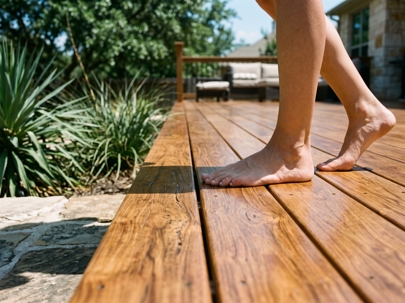
Your Composite Deck Is Probably Too Hot to Walk On — Here's the Fix | Heroes Lawn Care
Step outside barefoot on a July afternoon in Cedar Park, TX, and a standard composite deck can feel less like an outdoor living space and more like a stovetop. Independent testing has found that composite decking in direct sun can run anywhere from 34 to 76 degrees hotter than the surrounding air temperature, which means a pleasant 90-degree afternoon can translate into a deck surface pushing past 140 degrees. That gap between expectation and reality is one of the most common sources of disappointment homeowners run into after a deck project is already finished.
Heroes Lawn Care raises this exact heat performance issue with every Cedar Park, TX homeowner during initial material selection, since it's a detail that's far easier to address before a deck is built than to correct once a homeowner realizes their new outdoor space is too hot to actually enjoy during summer.
The right deck builder addresses this heat problem directly during the material selection conversation, rather than letting a homeowner discover it the hard way on the first scorching afternoon after installation.
This gap between expectation and reality shows up often enough in backyard deck construction across Central Texas that it deserves to be addressed head-on, rather than treated as an unfortunate surprise that simply comes with choosing composite over wood. Homeowners who understand this tradeoff before materials are ordered are in a far better position to make an informed choice than those who discover it only after the first uncomfortably hot afternoon on a finished deck.
What a Cedar Park, TX Deck Builder Should Tell You About Composite Heat — But Often Doesn't
Composite decking's reputation for durability is well earned, but that same reputation sometimes overshadows a real, physical limitation: dense composite material absorbs and holds heat far more aggressively than most homeowners expect walking into the material selection conversation.
How Hot Composite Decking Actually Gets in Direct Sun
Custom deck builder services that fail to mention surface temperature during material selection are leaving out one of the most consequential comfort factors in the entire project. Standard composite decking, particularly in darker colors, can reach temperatures that make bare feet genuinely uncomfortable within minutes of direct sun exposure, a reality that's easy to overlook when evaluating material samples indoors under normal lighting rather than in the conditions the deck will actually face.
Why This Catches So Many Homeowners Off Guard
Wood and composite deck installation decisions are often made by comparing material samples in a showroom or against online photos, neither of which conveys anything about how a specific board will actually perform once installed and exposed to hours of direct Central Texas sun. A material that looks and feels perfectly reasonable held in the shade can behave completely differently once it's spent an entire summer afternoon absorbing direct sunlight across an unobstructed deck surface.
This showroom disconnect is compounded by the fact that most sample displays are small, handheld pieces rather than a full-scale representation of an actual deck surface. A single board sample, even held briefly in direct sunlight, doesn't replicate the cumulative heat buildup that occurs across a large, continuous deck surface over the course of several consecutive hours of exposure, which means the sample experience systematically understates how hot the finished product will actually feel underfoot.
The Science Behind “Cool” Composite Technology
Not all composite decking performs the same way in heat, and understanding why requires a basic grasp of what's actually changed in composite manufacturing over the past several product generations.
Reflective Cap Layers and How They Actually Work
Heat-resistant composite decking relies on an engineered outer cap layer designed to reflect a meaningfully larger share of incoming solar radiation than older, uncapped composite products ever could. This reflective technology, now offered across several major manufacturer product lines, can keep a deck surface measurably cooler, sometimes by as much as 30 degrees, compared to older-generation composite boards finished in a similar color. Composite decking for hot climates that incorporates this reflective cap technology addresses the heat problem at its source, rather than relying entirely on color choice or shade structures to compensate for a material that wasn't designed with heat performance in mind.
Heroes Lawn Care stocks and recommends specific reflective-technology product lines for Cedar Park, TX projects rather than defaulting to whichever standard composite happens to be most readily available, since the difference in actual usability during peak summer months is substantial enough to justify that added specificity in material selection.
Why Color Still Matters More Than the Technology Label
Even with reflective cap technology, color remains one of the single biggest factors determining how hot a specific deck surface actually gets. UV-resistant decking materials in darker finishes still absorb substantially more heat than lighter-toned boards from the same product line, which means color selection deserves just as much attention as the underlying technology when heat performance is a genuine priority. Sun-resistant deck surface materials chosen in lighter, more reflective tones consistently outperform darker boards in direct comfort testing, regardless of which specific cap technology a given manufacturer uses.
This creates a genuine design tension worth acknowledging directly: darker, richer tones are often the more visually striking option in a showroom display or a rendering, while the lighter tones that perform better in direct Central Texas sun can initially feel like a compromise on the intended aesthetic. Homeowners who understand this tradeoff upfront are better positioned to make a deliberate choice between visual preference and heat performance, rather than discovering the consequences of that choice only after the deck is already built and in daily use.
Zone 8b Specifically: Why Cedar Park's Climate Tests Decking Differently
Marketing materials describing decking as “heat-resistant” or “built for hot climates” are rarely tested against the specific combination of conditions that define Cedar Park's actual climate zone.
Sun Intensity, Humidity, and Long Exposure Windows
Zone 8b deck design considerations differ meaningfully from what a product might be tested against in a milder or shorter-summer climate zone. Central Texas combines intense, sustained UV exposure with long daily periods of direct sun and humidity levels that affect how quickly a heated surface actually cools once shade or evening arrives. Outdoor decking for Zone 8b climates needs to be evaluated against this specific combination, since a product performing adequately in a shorter, less intense summer season elsewhere in the country may not hold up the same way across a full Central Texas summer.
The length of the exposure window matters as much as peak intensity. A deck surface in a climate with shorter, more moderate summer days has more opportunity to cool between exposure periods than one in Cedar Park, TX, where extended daylight hours and consistently high temperatures across several consecutive months mean less recovery time between heat cycles. This cumulative, sustained exposure pattern is precisely what separates genuine Zone 8b performance from marketing claims tested under more forgiving conditions elsewhere.
Installation Details That Affect Heat Performance and Longevity
Material selection is only part of the equation. How a deck is actually installed affects both its heat performance and how well that performance holds up over the years the deck remains in use.
Thermal Expansion Gaps and Why They Matter as Much as Material Choice
Durable composite decking for high sun exposure still expands and contracts as it heats and cools throughout the day, a physical reality that proper installation needs to account for through carefully calculated gaps between boards and at board ends. Professional patio paving and deck installation that skips or under-specifies these expansion gaps risks warping, buckling, or board damage over time, even when the underlying material itself was correctly selected for heat performance. A heat-resistant board installed without accounting for thermal movement is still vulnerable to problems that have nothing to do with the material's inherent quality and everything to do with how it was physically installed.
Gap specifications aren't a fixed, one-size-fits-all number either. The correct spacing depends on the specific board length, material composition, and the range of temperature swings a given installation will actually experience, which means a contractor following manufacturer-specific guidelines for the exact product being installed produces meaningfully better long-term results than one applying a generic spacing rule across every composite product regardless of its specific thermal expansion characteristics.
UV Cap Layer Integrity and Long-Term Fade Resistance
UV-resistant materials for outdoor decks depend on that protective cap layer remaining fully intact across the board's entire surface, which means installation technique, particularly around cuts, fastener placement, and edge details, needs to avoid compromising that protective barrier. Professional deck installation that handles cuts and fastener placement carefully preserves the cap layer's UV protection at every point across the deck, rather than inadvertently creating small gaps where the underlying core material becomes exposed to direct sun and moisture over time.
Cut ends deserve particular attention, since any point where a board is trimmed to length exposes the uncapped core material at that specific edge, regardless of how well-protected the rest of the board's surface remains. Manufacturers typically specify end-cap treatments or sealing techniques specifically to address this vulnerability, and skipping that step at cut points creates a localized weak spot where moisture intrusion and accelerated wear can begin, even on an otherwise correctly selected and installed deck.
Choosing the Right Deck Builder for a Zone 8b Climate
Bringing material science and installation technique together points toward a fairly direct conclusion: heat performance deserves to be a specific, named consideration during the hiring and material selection process, not an afterthought discovered only once the deck is already built.
Questions That Reveal Whether Heat Was Actually Considered
Asking directly which specific composite product line is being proposed, whether it includes reflective cap technology, and how lift-off surface temperature compares between different color options tends to separate residential deck contractors who've genuinely thought through Zone 8b performance from those defaulting to whatever material happens to be readily available. Outdoor living space builders confident in their material knowledge can typically answer these questions specifically, citing actual product lines and documented performance differences rather than offering vague reassurance that “composite handles heat fine.”
A useful follow-up question asks whether the contractor has direct experience with how a specific proposed product performs across a full Central Texas summer, rather than relying solely on manufacturer marketing claims tested elsewhere. A contractor with genuine local experience can typically describe how a given product line has actually performed on previous projects during peak summer months, which is a meaningfully more reliable indicator than a spec sheet alone. That kind of firsthand, climate-specific track record is difficult to substitute with marketing material alone, regardless of how thorough that material appears on paper.
Heroes Lawn Care specifically evaluates heat-mitigating composite product lines for every Cedar Park, TX deck project, discussing surface temperature performance and color tradeoffs directly with homeowners before a final material decision gets made, rather than treating heat as a secondary detail addressed only if specifically raised. Deck design and build services that account for Zone 8b conditions from the start tend to produce a finished deck that homeowners actually want to use throughout the hottest months of the year, rather than one relegated to early morning or evening use only.
Custom backyard deck solutions built around genuine heat performance also benefit from thinking through shade strategy alongside material selection, since even the coolest available composite still gets warmer in direct, unobstructed sun than the same material would under a pergola or shade structure. Patio and deck construction planned holistically, considering material, color, and shade together rather than any single factor in isolation, produces a more comfortable finished result than optimizing for any one variable alone.
Even partial shade during peak afternoon hours can meaningfully reduce how hot a deck surface gets, without requiring a full shade structure covering the entire space. Strategic placement of a single well-positioned tree, umbrella, or partial pergola section over the most frequently used portion of a deck can address the worst of the afternoon heat for that specific zone, while leaving the rest of the deck open for use during cooler parts of the day.
Weather-resistant deck materials for Zone 8b also need to perform reliably across the full range of conditions the region experiences, not just peak summer heat. Deck replacement and renovation projects addressing an existing deck that's become uncomfortably hot or visibly faded often reveal that the original material simply wasn't selected with this specific climate zone in mind, which is a correctable mistake going forward but a frustrating one to discover only after years of limited deck use.
Fading in particular tends to compound the heat problem in an underappreciated way. As a UV cap layer degrades over years of intense sun exposure, its reflective properties diminish alongside its color retention, which means an aging deck can gradually become both less attractive and measurably hotter than it was when originally installed, even without any change in the surrounding climate. A renovation addressing both concerns simultaneously, selecting a modern reflective-technology product rather than simply matching the original material, tends to produce a more satisfying long-term result than a like-for-like replacement.
Low-maintenance decking for warm climates that combines reflective cap technology, a lighter color selection, and properly executed thermal expansion gaps addresses the full range of factors that determine whether a finished deck actually gets used regularly or becomes an underused space that's simply too uncomfortable to enjoy during the exact months homeowners most want to be outside.
Conclusion
A composite deck that's too hot to walk on barefoot isn't an inevitable tradeoff of choosing composite over wood. It's usually the result of a material and color selection process that didn't specifically account for Zone 8b conditions, paired with an installation that may or may not have gotten the thermal expansion details right. Both of these factors are fully within a homeowner's control during the planning process, provided the right questions get asked before materials are ordered rather than after the deck is already too hot to enjoy.
The barefoot test itself is a useful, if informal, benchmark worth keeping in mind throughout the planning process. A deck a homeowner and their family will actually want to use should be comfortable to walk across without shoes during a typical summer afternoon, not just tolerable for a few rushed steps between shaded areas. Holding material and color decisions to that practical standard, rather than evaluating them purely on appearance, tends to produce a finished deck that gets used far more consistently once summer actually arrives.
Heroes Lawn Care builds every deck builder project in Cedar Park, TX around genuine Zone 8b heat performance, from reflective cap technology and color selection through the installation details that keep a deck structurally sound and comfortable for years. Getting heat performance right from the start remains the most reliable way to end up with a deck that actually gets used all summer long, rather than one that looks great in photos but sits empty during the hottest months of the year.