


CATCH BASIN INSTALLATION IN BELLAIRE, TX
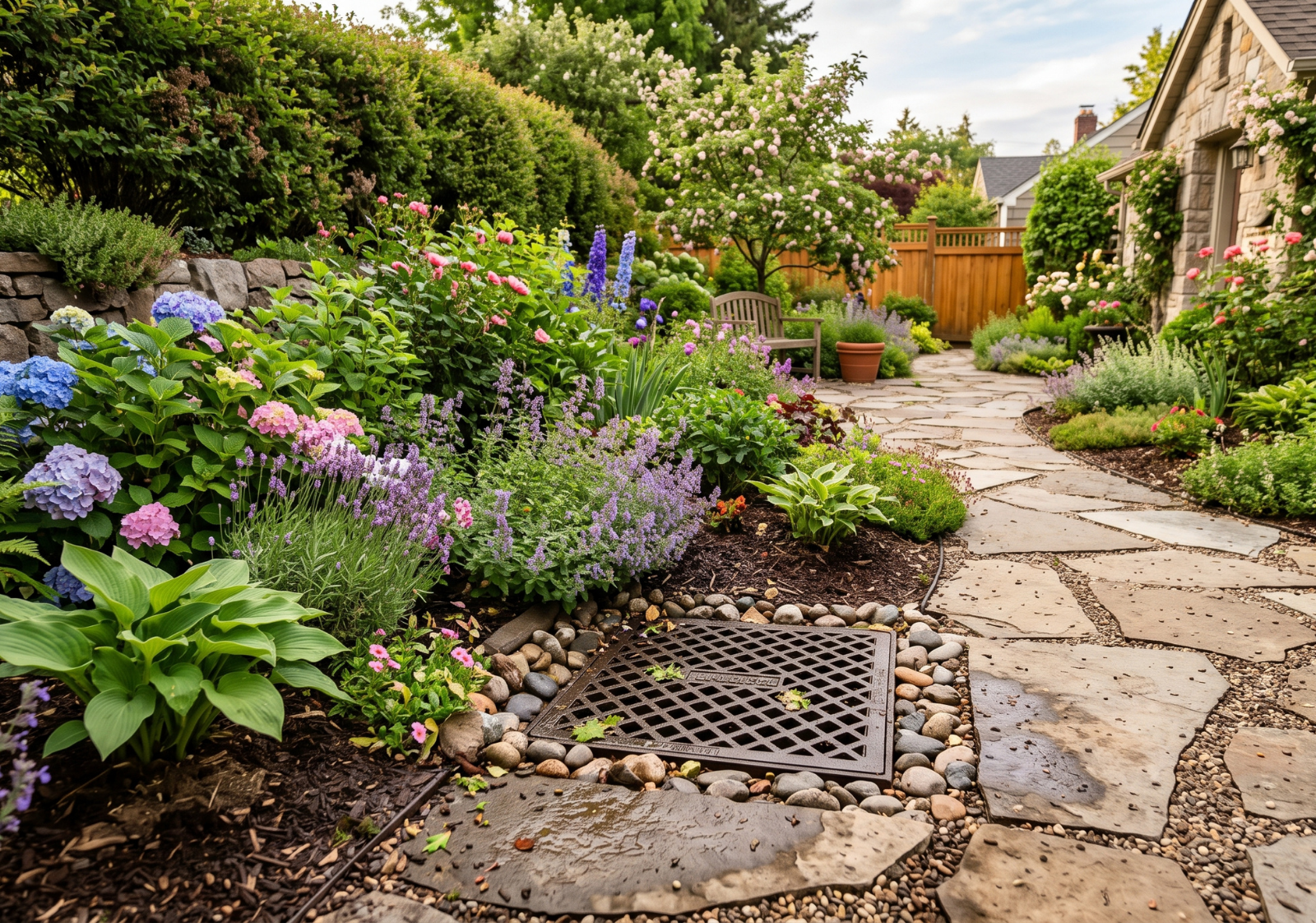
A catch basin is a ground-level collection structure: a grated inlet set flush with the surrounding surface, connected to an underground pipe that carries collected water to a designated discharge point. Unlike French drains that intercept subsurface water movement, or dry creek beds that redirect surface sheet flow, catch basins are designed for concentrated volume — the low spot in a yard that collects water from multiple directions, the patio area that drains toward a back door during heavy rain, the driveway section that backs up and floods the garage approach. These are the high-volume collection points where stormwater drainage catch basin systems perform the work that no surface-only solution can handle.
In Bellaire's rainfall environment — where significant storms can deliver several inches of rain in a few hours — a correctly sized and properly outletted catch basin is one of the most effective single drainage installations a homeowner can make.
What Does Catch Basin Installation Include?
Site Assessment & Collection Point Identification: We evaluate where water concentrates on your property during rain events — low spots in turf, hardscape areas that drain toward structures, yard sections that receive runoff from multiple directions — and confirm the highest-priority collection point for catch basin placement.
Outlet Pipe Sizing & Route Planning: The catch basin's performance is entirely dependent on the underground pipe that carries water from the basin to the outlet. Pipe diameter, slope, and outlet location are specified for the anticipated water volume and for the available grade on Bellaire's flat lots. An undersized or insufficiently sloped outlet pipe produces backflow into the basin during peak events — defeating the installation.
Excavation & Basin Installation: The basin is set at the correct elevation relative to surrounding grade — flush or slightly below — to ensure water flows into the grate rather than around it. The sump portion of the basin below the pipe outlet inlet traps sediment and debris, preventing them from entering and eventually clogging the underground pipe.
Underground Pipe Installation & Outlet Treatment: The outlet pipe is trenched, bedded, and connected from the basin to the discharge point — a pop-up emitter in the lawn, a connection to an existing drainage system, or a daylight outlet at the property edge. The outlet is treated with appropriate energy dissipation to prevent erosion at the discharge point.
Our Catch Basin Installation Process
- Property Drainage Assessment — We walk the property during or immediately after a rainfall event where possible, or evaluate grade and surface flow direction to identify the primary water concentration point and confirm viable outlet locations with adequate pipe slope.
- Basin & Pipe Specification — We specify basin size, grate type, outlet pipe diameter, and pipe slope based on the estimated runoff volume and available outlet grade. Standard residential installations typically use 9x9 or 12x12 inch basin bodies with 4- or 6-inch outlet pipe; higher-volume applications require larger specifications.
- Excavation & Basin Setting — The basin is excavated to the correct depth and set at the proper elevation. Surrounding soil is compacted and graded to direct surface flow toward the grate consistently.
- Pipe Trenching & Installation — The outlet pipe trench is excavated at the correct slope from basin to outlet. Pipe is bedded in gravel, connected to the basin outlet, and backfilled with compacted material to prevent future settlement.
- Outlet Treatment & Surface Restoration — The outlet is finished with a pop-up emitter, riprap energy dissipator, or connection fitting as appropriate. Adjacent turf and landscape are restored, and the basin grate is set flush with the finished surface grade.
- Flow Testing — Where feasible, we test the system with water to confirm drainage direction, outlet function, and basin grate performance before completing the installation.
Where Catch Basins Solve Real Bellaire Drainage Problems
Lawn Low Spots: The most common catch basin application in Bellaire — a persistent low area in turf where water collects after every significant rain event and remains for one to three days. In clay soil, that water has nowhere to go except slowly evaporating or very slowly infiltrating. A yard water management drainage system with a catch basin at the collection point removes that volume actively rather than waiting for the soil to absorb it.
Patio and Hardscape Drainage: Covered patios, outdoor kitchens, and hardscape areas that slope toward the house create concentrated sheet flow toward the foundation during heavy rain. A surface water catch basin installation at the low edge of the hardscape — connected to an underground outlet — intercepts that flow before it reaches the structure. This is one of the most foundation-protective drainage investments available on Bellaire properties with covered outdoor living spaces.
Driveway and Garage Approach: Driveways that slope toward the garage or that collect runoff from adjacent lawn areas can back up water against the garage door threshold during intense rain events. A driveway drainage catch basin installation positioned at the low point of the driveway approach intercepts this flow and directs it underground before it reaches the garage interior.
Inlet Points for Larger Drainage Systems: On properties where a French drain or underground pipe network is the primary drainage system, catch basins serve as surface inlets — collecting water from turf low spots and introducing it into the underground system at controlled collection points. In these applications, the catch basin coordinates with the broader landscape water runoff control system rather than functioning as a standalone installation.
Why Choose Professional Catch Basin Installation?
Outlet Pipe Specification Is Critical: A catch basin that drains into an undersized or improperly sloped outlet pipe will backflow during peak events in Bellaire's rainfall intensity environment. Professional pipe sizing and slope specification — not guesswork — is what makes the system perform when it's needed most.
Sump Depth Prevents System Clogging: The sump section of a catch basin — the volume below the outlet pipe inlet — traps sediment, debris, and organic material before they enter the underground pipe. A basin installed without adequate sump depth, or one that isn't periodically cleaned, clogs the outlet pipe over time and fails progressively. Our installations specify correct sump depth and include maintenance guidance at project completion.
Mosquito Breeding Prevention: A catch basin that isn't draining correctly — due to outlet pipe issues, grate blockage, or insufficient slope — becomes a permanent, grated standing water container: one of the most productive mosquito breeding environments possible on a residential property. Correct installation and outlet specification prevent this. An improperly installed catch basin can create a worse mosquito situation than no drainage intervention at all.
Coordinated System Design: Catch basins work best as part of a full drainage system — coordinated with French drains, channel drains, and outlet locations so the collected water has somewhere appropriate to go. Standalone basin installation without outlet planning produces a system that moves water from the surface into underground storage with no exit — and eventually backs up.
FAQ: Catch Basins
How is a catch basin different from a yard drain or French drain?
A catch basin is a surface collection structure — a grated inlet that captures water from the surface and conveys it underground through a connected pipe. A yard drain is similar but typically smaller and used for less concentrated flow. A French drain is a subsurface system — a gravel-filled trench with perforated pipe — that intercepts water moving through the soil rather than collecting surface volume. Catch basins are the right solution when water volume is too high and too concentrated for subsurface drainage alone to manage. Most complete Bellaire drainage systems use more than one type in combination.
How do I know if my property needs a catch basin versus another drainage solution?
Catch basins are the right call when water concentrates at a specific point in high volume — a low spot that collects water from multiple directions, a hardscape area where sheet flow accumulates, or a driveway approach that backs up during rain. If the problem is slow drainage across a broad area or water infiltrating along a fence line, a French drain or regrading solution is more appropriate. We assess the specific drainage pattern during our property walk and recommend the correct solution — or combination — for your property's actual conditions.
Will a catch basin create a mosquito breeding problem?
Only if it doesn't drain correctly. A properly installed catch basin with an adequate outlet pipe at the right slope empties between rain events and doesn't hold standing water. A basin with an undersized outlet, insufficient slope, or blocked grate can accumulate standing water — and a permanently wet, grated basin is an ideal mosquito breeding environment. Correct installation specification and periodic grate cleaning prevent this. We flag any existing catch basins we observe that are holding water during our drainage assessments and advise on correction.
How often does a catch basin require maintenance?
The grate should be inspected and cleared of debris — leaves, sediment, organic material — at least twice per year in Bellaire's high-debris environment: once before the spring rain season and once in fall after leaf drop. The sump should be cleaned when sediment accumulation reaches the outlet pipe inlet — typically every two to five years depending on the property's sediment load. Neglected basins lose capacity progressively as the sump fills and outlet pipe flow is restricted.
GET STARTED WITH A FREE CATCH BASIN ESTIMATE
Call (346) 436-6286 or Request an Estimate and we'll assess your property's drainage concentration points, specify the right basin and outlet system for Bellaire's rainfall environment, and install a flood prevention catch basin service that removes high-volume surface water before it reaches the places it shouldn't.

-
Eco-Conscious Process
 We utilize environmentally responsible products and techniques to both protect your lawn and the world around it.
 -
World-Class Service
We are committed to providing the highest quality service and support you need to take the hassle out of lawn care.
-
Quality Guarantee
Each member of our lawn care crew is trained to perform on-the-job quality assurance before completing any project.
-
Right-Sized Estimates
Our lawn care and landscaping pros create custom quotes tailored to your property and your goals, so you get exactly what you need at a price that works.





Explore Our Family Of Brands




.2408271112489.png "Groovy Hues")