
Watering Above Lake Travis: What Volente, TX Irrigation Installation Must Do to Keep Runoff Out of the Lake | Heroes Lawn Care of Cedar Park
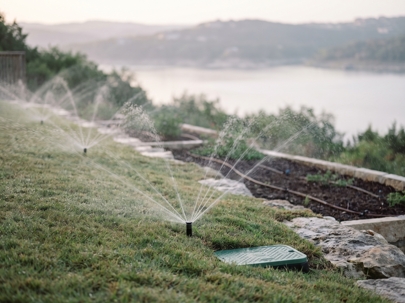
Every gallon applied to a lawn in Volente, TX has somewhere to go. Some of it soaks into the soil and feeds the roots. Some evaporates. And on a steep lakeside lot, some of it runs downhill, picks up fertilizer, soil, and anything else on the surface, and ends up in Lake Travis. That last path is the one that matters most here, because the lake is a drinking water source, a recreation destination, and the reason most people live in Volente in the first place. An irrigation system that sends water to the lake instead of the roots wastes the resource and puts the shoreline at risk.
That is why irrigation installation on this shoreline is a different discipline from irrigation in a flat, inland subdivision. The design has to apply water slowly enough for the ground to absorb it, group plants so that each gets only what it needs, protect the drinking water supply from backflow, withstand the heavy pressure that gravity creates on a slope, and shut itself off the moment something breaks. Heroes Lawn Care of Cedar Park designs systems for lakeside properties with those requirements first, and the sections below explain how each piece contributes to keeping the water where it belongs.
Why the Lake Changes the Design
Slope, Speed, and a Short Distance to the Shore
Most Volente properties fall toward the water. The distance from sprinkler head to shoreline can be short, and the slope between them is often steep. When water is applied faster than the soil can take it, there is little room for it to slow down before it reaches the lake. The thin soil over limestone makes matters worse, since the ground has limited capacity to absorb a heavy application.
A Watershed Under Protection
For a household in Volente, TX, the connection between the yard and the lake is direct and visible. Many properties have a view of the water from the patio, and the same water that is enjoyed from the deck is the water that a careless irrigation system can affect. Designing with that connection in mind is both practical and neighborly.
Lake Travis is part of the Highland Lakes chain, a system managed with water quality in mind. Rules and expectations around runoff, fertilizer, and construction activity near the shoreline exist for good reason. A system designed to limit runoff does more than reduce waste. It supports the standards that protect the lake, and it spares the owner from correcting problems later.
What a Good System Prevents
A well-designed lakeside system prevents three things. It prevents runoff, by applying water at a rate the soil can absorb. It prevents waste, by watering only what needs water, when it needs it. And it prevents failure, by controlling pressure and monitoring flow so a broken line cannot flood a hillside. The components that follow each address one or more of these goals.
Start With the Plan and the Permit
TCEQ Licensed Irrigation Design and Village of Volente Municipal Permitting Compliance
Irrigation in Texas begins with a licensed professional. TCEQ licensed irrigation design and Village of Volente municipal permitting compliance means that a state-licensed irrigator prepares a scaled plan for the system, showing zones, heads, pipe, valves, controller, and backflow protection, and that the plan goes through the permitting process for the village before work begins. Inspection follows installation.
For a lakeside property, the plan carries extra weight. It documents how the system limits runoff, how plants are grouped, and what protects the water supply. It also provides a permanent record of what is buried and where, which matters on a rocky site where lines are difficult to uncover. The requirements that apply depend on the property and the jurisdiction, so confirming them early prevents delays and redesign.
What the Plan Should Show
Heroes Lawn Care of Cedar Park walks a lakeside lot from the street to the shoreline before finalizing any plan, noting the elevation drop, the rock outcrops, the existing plantings, and the places where water already runs during a storm, so the drawing reflects the real ground.
A useful plan identifies each zone and its equipment, the pipe sizes and routes, the elevation changes that affect pressure, the location of the backflow assembly, the controller and sensors, and the areas where water must be kept away from the shoreline. A plan that addresses those items turns the permit into a design tool, not just a requirement.
Getting Pipe Into the Rock
Heavy-Duty Rock Saw and Pneumatic Mechanical Trenching Into Solid Lake Travis Limestone Bedrock
Burying pipe along the lake means dealing with solid limestone. Heavy-duty rock saw and pneumatic mechanical trenching into solid Lake Travis limestone bedrock handles it with the right tools. A rock saw cuts a narrow, clean channel through the stone with a hardened blade. Pneumatic tools break out sections where the saw cannot reach, such as corners, tight spots, and areas near structures.
Narrow trenches matter on a hillside. A wide excavation can destabilize a slope and leave bare soil exposed to erosion. A saw-cut trench disturbs only a small strip, and once the pipe is placed and the trench is backfilled and restored, the surface recovers quickly. Pipe sits at the proper depth, protected from the elements and from activity at the surface, and follows the route in the plan instead of detouring around rock.
Taming Gravity
In-Line Master Pressure-Reducing Valves (PRV) to Mitigate Severe Gravity-Induced Hydrostatic Line Pressure Swings
On a steep lot, pressure is not constant. Water in a pipe gains pressure as it runs downhill, roughly four-tenths of a pound per square inch for every foot of drop. A lot with a long vertical drop can see substantial differences between the top and bottom of the system, and when the supply is shut off, pressure swings can stress fittings and fixtures. In-line master pressure-reducing valves (PRV) to mitigate severe gravity-induced hydrostatic line pressure swings keep those pressures within a safe range.
A pressure-reducing valve is installed on the mainline, set to a chosen outlet pressure, and holds that pressure regardless of changes upstream. It protects pipes, valves, and sprinkler bodies from damage, and it reduces water hammer, the sudden pressure spike that occurs when a valve closes quickly. In a hillside system, a PRV is not an upgrade. It is a basic requirement for long-term reliability.
Pressure-Regulating Spray Bodies (PRS) With Integrated Check Valves to Eliminate Low-Head Drainage on Steep Slopes
At the head, further control is needed. Pressure-regulating spray bodies (PRS) with integrated check valves to eliminate low-head drainage on steep slopes combine two functions in one unit. The regulator holds the pressure at the nozzle to a consistent level, usually 30 or 40 psi, so the spray stays in large droplets that land where aimed instead of misting away.
The check valve prevents water in the line from draining out when the zone shuts off. On a slope, without check valves, every sprinkler body below the highest one leaks after each cycle, and the lowest head becomes a continuous source of runoff. With integrated check valves, the lines stay full, heads stop leaking, and the water that would have trickled toward the lake stays in the system. The savings in water and the reduction in runoff add up across a season, and the lowest part of the lawn, which once stayed soggy, begins to dry out between cycles.
Applying Water Slowly
Matched Precipitation Rate (MPR) Rotary Nozzles Engineered for Slow Application to Prevent Hillside Erosion and Runoff
The most direct way to keep water on the property is to apply it slowly. Matched precipitation rate (MPR) rotary nozzles engineered for slow application to prevent hillside erosion and runoff deliver water in thin streams that rotate across the area, at a rate much lower than conventional spray heads. The soil absorbs the water as it arrives, and nothing is left to flow downhill.
Matched precipitation means that every nozzle in a zone applies water at the same rate per hour, regardless of the arc it covers. A mix of half-circle and full-circle heads using standard nozzles delivers uneven amounts, which leads to overwatering one area to satisfy another. Matched-rate nozzles solve that, producing even coverage with predictable run times. On a slope, short cycles with soak periods between them let each application sink in before the next begins, which further reduces runoff.
Grouping Plants by Need
Subsurface Pressure-Compensating (PC) Drip Hydrozones Tailored for Terraced Gardens and Native Drought-Hardy Plants
Spray is the wrong tool for most planted beds. Subsurface pressure-compensating (PC) drip hydrozones tailored for terraced gardens and native drought-hardy plants deliver water directly to the root zone through tubing with built-in emitters. Pressure compensation keeps the output of each emitter consistent, even along sloped runs, where ordinary tubing would deliver more at the bottom and less at the top.
Terraced gardens suit drip well. Each terrace gets its own line, sized to the plants it holds, and the tubing runs along the contour. Native drought-hardy plants require little water once established, so their zones can be run infrequently and at low volumes. Because the tubing is buried or covered with mulch, evaporation is minimal and no water lands on pavement or stone. Drip is also the gentlest approach for the lake, since the water goes into the ground and stays there.
LCRA Highland Lakes Watershed Protection Compliance With Runoff-Mitigating Hydrozone Segregation
Hydrozone segregation is the principle that holds the design together. LCRA Highland Lakes watershed protection compliance with runoff-mitigating hydrozone segregation separates plants into zones based on their water needs and their position on the slope. Turf areas, drip beds, native plantings, and the slope nearest the shoreline are each assigned their own circuits.
The zones closest to the water are treated most conservatively. They may be planted with native vegetation that needs no regular irrigation, or served by drip only. Turf zones are placed higher on the lot, away from the shoreline. Each zone runs on a schedule that matches its plants, and none is asked to share a valve with a different type of planting. Requirements near the lake depend on the specific property, so compliance should be confirmed as part of design. Segregation by hydrozone gives the owner a structure that is easy to adjust if rules or conditions change.
Protecting the Water Supply
Reduced Pressure Zone (RPZ) Backflow Prevention Assembly Installation and Certified Backflow Testing
Irrigation systems connect directly to the drinking water supply, and a failure could allow irrigation water, with whatever it has picked up, to flow backward into the pipes. Reduced pressure zone (RPZ) backflow prevention assembly installation and certified backflow testing prevents that. An RPZ assembly contains two check valves with a relief valve between them. If pressure conditions change in a way that could cause backflow, the relief valve opens and discharges water to the outside, keeping the supply isolated.
The assembly is installed in an accessible location with the required clearances, and it must be tested by a certified tester, typically once a year, with results reported to the authority that requires them. Testing confirms that the valves seal and the relief valve operates correctly. It is a small task that protects the household and the neighbors, and it is part of keeping the system in good standing.
Letting the System Think
Smart Wi-Fi Evapotranspiration (ET) Weather Controllers With Lake Travis Microclimate Sync and Freeze Shut-Off
Weather around a large lake is its own thing. Temperatures along the shore can differ from those a few miles inland, and breezes, humidity, and evaporation follow the water. Smart Wi-Fi evapotranspiration (ET) weather controllers with Lake Travis microclimate sync and freeze shut-off adjust watering to those local conditions. The controller receives weather data from a nearby source, calculates how much water the plants have lost, and waters only enough to replace it.
Rain delays suspend watering when rain has fallen or is forecast. Freeze shut-off stops the system when temperatures approach freezing, protecting pipes and avoiding ice on walkways. Zone settings account for slope, soil, sun exposure, and plant type, so each zone is scheduled appropriately. The owner can monitor and adjust the system from a phone, and the controller records water use over time. For a lakeside lot, the result is less water applied, fewer cycles, and less opportunity for runoff.
Mainline Master Valve and Digital Ultrasonic Flow Sensor Integration for Immediate Burst and Catastrophic Leak Shutdown
On a steep lot, a broken pipe is more than a waste. Water escaping uphill from the lake can wash out soil, undermine a retaining wall, and carry sediment downhill in minutes. Mainline master valve and digital ultrasonic flow sensor integration for immediate burst and catastrophic leak shutdown is the safeguard against that scenario. The master valve is an electric valve at the beginning of the mainline that opens only when a zone is called. The ultrasonic flow sensor measures the water moving through the pipe with no moving parts.
If the flow exceeds what the active zone should use, because a pipe has split or a head has been sheared off, the controller closes the master valve immediately. Water stops within seconds. Usage records help spot slow leaks early. On a slope above the lake, this is among the most valuable features a system can have.
Keeping the System Tuned
Seasonal Care
Watering habits matter on a Volente, TX slope. Deep, infrequent watering with soak periods builds deeper roots and keeps surface moisture low, which helps both the plants and the shoreline. Mulch over beds and a healthy turf cover slow runoff further, so the irrigation system and the landscape work together to hold water on the lot.
A lakeside system benefits from seasonal attention. In spring, each zone is run and observed for broken heads, clogged nozzles, and runoff. In summer, schedules are reviewed against the weather. In fall, settings are lowered for cooler temperatures. Before the first freeze, exposed components are protected. Annual backflow testing is scheduled. A lawn care service that knows the layout can notice problems during routine visits and report them before they grow.
When Repairs Come Up
Every system needs service eventually. Heads are struck, nozzles clog, and valves wear. Prompt sprinkler repair prevents small problems from wasting water or sending runoff toward the shore, and repair work is far easier when an accurate plan shows what lies underground. Heroes Lawn Care of Cedar Park keeps the as-built plan on file for each installation so service begins with information.
Questions Worth Asking Before Installation
A handful of questions reveals how a lakeside system will be designed. Will a licensed irrigator prepare and submit a scaled plan? How will trenching be handled in rock? How is line pressure controlled on the slope? Are nozzles matched for slow application? How are zones grouped to protect the shoreline? What backflow assembly will be used, and who will test it? How does the controller respond to local weather? What shuts the system off if a pipe breaks? Clear answers show a system built for the lake.
Water That Stays Where It Belongs
A lakeside lawn can be green and healthy without sending a drop to the lake that was not meant to go there. It takes licensed design, rock-cut trenches, controlled pressure, slow application, grouped zones, protected supply, and a controller that watches the weather and the flow. Each part does a small job, and together they keep the water on the property.
For homeowners across Volente, TX ready to build that kind of system, Heroes Lawn Care of Cedar Park provides irrigation installation that starts with the slope, the rock, and the shoreline and ends with a yard that stays green and a lake that stays clean. The best first step is a walk down the lot to the water's edge, to see where the water would go if it were not managed.