
Established Oaks or Brand-New Builds: Winter Landscaping Plans for Every Kind of Missouri City, TX Neighborhood | Heroes Lawn Care of Bellaire
One City, Two Very Different Kinds of Yards
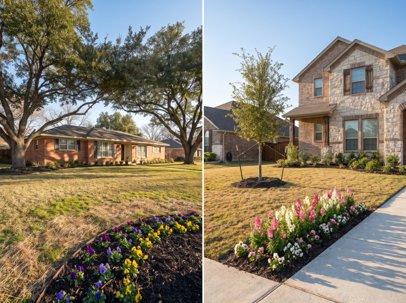
Drive across Missouri City and the landscape changes from one neighborhood to the next. On some streets, live oaks planted half a century ago arch over the road, their roots lifting sidewalks and their shade covering entire front yards. A few miles away, newer communities feature young trees staked beside fresh sidewalks, lawns that were sod on a truck not long ago, and beds still filled with the shrubs that came with the house.
Both kinds of yards can be beautiful, but they need very different care, and winter is when those differences matter most. Mature properties need attention to aging trees, older drainage, and tired beds. Newer properties need help with compacted soil, young plantings, and systems that have never faced a hard freeze. Effective landscaping in Missouri City, TX starts by recognizing which kind of yard is on the table, then using the cool season to address its specific needs before spring arrives.
This guide outlines winter landscaping plans for both, along with the projects that benefit every home in the city.
How Missouri City Grew
Missouri City’s neighborhoods reflect more than half a century of growth in Fort Bend County. Quail Valley, one of the city’s original planned communities, began development in 1969 as a country-club community built around golf, and most of its homes date to the 1970s. Hunters Glen followed in the 1970s and 1980s, Lexington Colony in the 1980s and 1990s, and Lake Olympia grew from the 1980s into the early 2000s with its lakefront homes. Sienna began development in 1997 and continues to add new sections today.
That timeline shaped the landscapes. Older neighborhoods offer tree-lined streets and mature canopies, while newer communities have younger plantings and more recently graded lots. Underneath all of them lie the same demanding soils: heavy Houston gumbo clay and, closer to the river, the alluvial soils of the Brazos. Those soils swell when wet, crack when dry, and drain slowly, which shapes every winter plan regardless of a home’s age.
Why Winter Works for Every Missouri City Yard
The cool season offers advantages for both kinds of properties. Plants installed or renovated in winter face far less heat stress than those installed in late spring. Bare branches on deciduous trees and quieter beds make the structure of each yard easier to evaluate. Winter rains reveal exactly where drainage falls short. And several time-sensitive tasks, most notably pruning live oaks, must happen in the cool months to avoid disease. Using winter well means the yard starts spring ready to grow instead of playing catch-up.
Winter Plans for Established Neighborhoods
Homes in Quail Valley, Hunters Glen, and other older parts of the city share a set of common challenges. Their greatest assets, mature trees and established gardens, also create the most important winter work.
Structural Pruning for Mature Live Oaks
Live oaks that have been growing for decades can carry heavy limbs, crossing branches, and dense sections that catch wind during storms. Dormant-season live oak and hardwood canopy structural pruning addresses those issues at the safest time of year. Oak wilt, a serious fungal disease in Texas, spreads through fresh pruning wounds during its high-risk period from roughly February through June. Live oaks in the area are best pruned from late fall through January, which makes winter the essential window for this work.
Thinning dense sections that create wind resistance, removing dead limbs, and correcting crossing or rubbing branches improve the tree’s health and structure while letting more light reach the lawn and beds below. Professional pruning in this service covers trees up to ten feet tall, which includes younger oaks and ornamental trees. Large, mature canopies that require high-access equipment are best referred to a licensed arborist, and planning that work during the winter window protects these irreplaceable trees.
Aging Drainage That Needs Attention
Drainage systems in established neighborhoods have often been in the ground for decades. Over time, French drains can clog with fine clay particles, catch basins fill with sediment, and decades of additions, patios, and fence lines change how water moves across the lot. Subsurface French drain, catch basin, and swale clearing ahead of heavy winter rainstorms keeps those systems working when they are needed most.
Catch basin grates should be inspected and cleared of debris at least twice a year, and mature trees drop enough leaves in late fall to bury a grate quickly. Inside the basin, sediment that reaches the outlet pipe signals that cleaning is due, typically every two to five years depending on the property. When winter rains reveal water pooling against the foundation or lingering in the same low spots, the cool season is an ideal time to install new French drains, catch basins, yard drains, or regrading before spring plantings go in.
Shade-Worn Turf and Brown Patch Risk
As canopies mature, lawns that once grew in full sun end up in deep shade. Shaded St. Augustine and Zoysia grow more slowly, stay damp longer after rain, and are more vulnerable to brown patch, the fungal disease caused by Rhizoctonia. Dormant turf winterization in older neighborhoods focuses on prevention rather than feeding. A fall preventive fungicide application protects lawns that had disease activity earlier in the year, fall fertilization emphasizes potassium and root development, and nitrogen is held back while the lawn is dormant because it tends to fuel brown patch and winter weeds.
Winter is also the time to identify areas where the shade has simply become too deep for grass. St. Augustine, especially Palmetto, handles moderate shade better than other warm-season grasses, but under the densest canopies, planting beds or other landscape solutions may serve the yard better than another round of struggling turf.
Renovating Tired Beds
Beds planted decades ago often contain overgrown shrubs, crowded perennials, and soil that has been compacted by years of use. Winter is the right time for a renovation: removing overgrown or dead material, reworking the soil, redefining borders so they separate cleanly from the lawn and hardscape, and replanting gaps with plants suited to Houston’s heat, humidity, and clay. Salvia, lantana, Esperanza, and ornamental grasses bring dependable structure and color to refreshed beds once warm weather returns.
Late-Winter Care for Mature Crepe Myrtles
Established neighborhoods are full of crepe myrtles that have been shaped, and sometimes mishandled, for years. Late winter, while the trees are dormant and their branch structure is easy to see, is the ideal time for corrective canopy thinning. Instead of shortening every branch, this approach removes interior limbs that cross, rub, or crowd the center of the tree, improving airflow and light while restoring a natural, graceful form. Removing no more than about a quarter of the canopy in a single session protects the tree from stress, and cleaning tools between trees helps prevent disease from spreading. For crepe myrtles that have been topped repeatedly, a few seasons of careful thinning can gradually rebuild a healthier structure.
Winter Plans for Newer Communities
Homes in newer sections of Missouri City face nearly the opposite set of challenges. Their trees are small, their soil is often compacted from construction, and their landscapes are still establishing roots.
Remediating Compacted Clay and Brazos Alluvial Soil
Construction leaves its mark below the surface. Months of heavy equipment and foot traffic compact the soil, and sod laid over that compacted ground may root only a few inches deep. Off-season Houston gumbo clay and Brazos alluvial soil remediation addresses the problem while plantings are quiet. In areas being renovated, existing vegetation is removed, the soil is tilled to the appropriate depth, and the surface is graded to eliminate low spots.
Amendments are then applied based on what the soil assessment finds, whether that means correcting compaction, adjusting pH, or addressing nutrient shortages. Heroes Lawn Care of Bellaire uses proprietary soil amendment products developed in-house by an owner with two decades of research-and-development chemistry experience. The work is best done during dry stretches between winter fronts, since tilling saturated clay damages its structure.
Protecting Young Plantings With Mulch
Young shrubs and perennials have shallow, developing root systems that are more sensitive to sudden temperature swings. Insulating mulch topdressing helps buffer root zones against sudden Fort Bend County freezes while retaining soil moisture and reducing weeds. A fresh, even layer should surround plants without piling against stems or trunks, and it should never bury the base of a young tree. For new landscapes, a winter mulch refresh is one of the simplest ways to help plantings reach their first spring in good condition.
Winterizing Newer Irrigation Systems and Managing Winter Weeds
Many newer homes have irrigation systems that have never faced a hard freeze. Winterization should happen as temperatures begin to drop, not after a freeze is in the forecast. It begins with a detailed inspection, followed by blowing out and draining water from the lines with air compressors, disconnecting and storing removable parts such as hoses and faucets, and evaluating heads and nozzles so the system is ready for spring.
Newer lawns also tend to have thin spots where winter weeds move in quickly. Poa annua winter weed suppression, along with control of henbit and chickweed, keeps those invaders from spreading through young turf. The fall pre-emergent barrier stops many of them before they sprout, and targeted post-emergent treatments in winter handle the ones that slip through before they flower and set seed.
The Neighborhoods in Between
Not every home fits neatly into the established or brand-new category. Neighborhoods built in the 1980s, 1990s, and early 2000s, such as Lexington Colony and much of Lake Olympia, often show a mix of both sets of needs. Their trees have grown large enough to shade lawns and crowd the original beds, yet their drainage and irrigation systems may not have been updated since the homes were built. For these properties, landscaping in Missouri City, TX usually means a blend of the two winter plans.
Trees that were planted as small saplings may now cast enough shade to thin the lawn beneath them, making winter the right time to evaluate whether turf still belongs there and to prune smaller ornamental trees within the safe window. Irrigation systems approaching their third decade benefit from a thorough inspection during winterization, when worn heads and misaligned nozzles are easy to spot. Lakefront and greenbelt lots often collect runoff that the original grading never fully addressed, and winter rains make those problem areas obvious. Treating these homes as a combination of mature and developing landscapes helps the winter plan target what each part of the yard truly needs.
Winter Color for Every Neighborhood
Whether a home sits beneath fifty-year-old oaks or beside newly planted saplings, cool-season color makes a winter landscape feel cared for. Cool-season winter color bed installations featuring frost-tolerant pansies and snapdragons bring brightness to entries, walkways, and patio edges. Pansies offer a wide range of colors and handle cool temperatures well, while snapdragons add height and vertical spikes of bloom. Planted in fall and maintained through winter, they are later replaced by warm-season choices such as vinca, begonia, and pentas in late spring, with annuals typically refreshed twice a year.
Winter Mistakes to Avoid, by Yard Type
Established yards and newer yards tend to suffer from different winter mistakes. In mature neighborhoods, the most damaging error is pruning live oaks too late. Once February arrives, fresh wounds become an entry point for oak wilt, so any work missed in December or January should usually wait until the next late-fall window. Another common problem is topping crepe myrtles, cutting every branch back to the same height, which weakens the tree and produces clusters of weak shoots. Allowing leaves from large canopies to bury drain grates through the winter is a third, and it often goes unnoticed until a heavy storm sends water toward the house.
In newer neighborhoods, the most frequent mistake is treating young sod as if it were still in its establishment phase. Watering a dormant lawn on a summer schedule keeps clay saturated, encourages disease, and leaves water in irrigation lines when a freeze arrives. Piling mulch or soil against the foundation or the trunks of young trees is another, since it traps moisture where it does not belong. Feeding a dormant lawn with nitrogen in midwinter rounds out the list. It mostly benefits winter weeds and can encourage brown patch rather than helping the grass.
Planning Spring Projects in the Quiet Months
For both established and newer homes, winter is the ideal time to plan larger improvements. A design process that begins with an on-site consultation and a full assessment of drainage, grade, soil quality, sun exposure, and existing plant health can produce a complete plan, often within a week of the site visit. That leaves time to review the design, phase the work if needed, and schedule installation before spring demand peaks. Established homes may focus on reclaiming shaded areas and updating aging beds, while newer homes may prioritize expanding builder beds and correcting drainage the original grading did not anticipate.
One Team for Every Kind of Yard
The difference between a mature landscape and a new one is exactly why experience matters. A team that understands both can recognize what each property needs and plan winter work accordingly. Heroes Lawn Care of Bellaire handles the full range of these services, including tree pruning, drainage solutions, soil remediation, bed renovation, irrigation winterization, weed and disease control, and complete lawn care services, all under one coordinated plan.
Projects are guided by a Texas A&M-trained agronomist with 15 years of landscape design experience across the Houston area, and the same team that designs a project installs it. Roughly 90 percent of the fertilization, weed, insect, and fungal products Heroes Lawn Care of Bellaire applies were developed and registered in-house, and the company is licensed by the Texas Department of Agriculture and the Texas Commission on Environmental Quality. For homeowners in Missouri City, TX, whether their yard is decades old or brand new, that means winter work is planned around the property itself rather than a one-size-fits-all checklist.
Conclusion: The Right Winter Plan for the Right Yard
Missouri City’s neighborhoods span more than five decades, and their landscapes reflect it. Established properties benefit most from winter structural pruning of mature oaks within the safe window, attention to aging drainage, brown patch prevention on shaded turf, and bed renovations. Newer properties need soil remediation for compacted clay, mulch to protect young plantings, irrigation winterization, and winter weed control in thin lawns. Every home benefits from cool-season color and a finished plan before spring. Thoughtful landscaping in Missouri City, TX matches the winter work to the yard, not the other way around.
With experience across every kind of property, Heroes Lawn Care of Bellaire helps homeowners make the most of the cool season so their yards enter spring stronger, healthier, and ready to grow. A winter site assessment is the first step toward a plan built for the neighborhood, the home, and the landscape that surrounds it.