
Don’t Feed a Sleeping Lawn: What a Smart Fertilization Service in Hunters Creek Village, TX Does in Winter Instead | Heroes Lawn Care of Bellaire
The Winter Feeding Mistake That Backfires Every Spring
As temperatures drop and the lawn fades from deep green to a softer straw color, many homeowners feel the urge to do something about it. A bag of fertilizer seems like the obvious answer. If the grass looks tired, surely it needs food. Garden centers often reinforce the idea with products labeled for winter use, and a single weekend application feels like a responsible way to protect the lawn until spring.
For the warm-season grasses that cover most lawns in the Houston area, that instinct usually does more harm than good. St. Augustine and Bermuda are not starving in winter; they are resting. Feeding a dormant lawn wastes nutrients, fuels winter weeds, and can encourage disease. A smart fertilization service in Hunters Creek Village, TX takes a different approach. It finishes its feeding work in fall, uses the winter months to assess and plan, and resumes applications when the lawn is ready to use them again in early spring.
This article explains why dormant lawns should not be fed, what the fall application should already have accomplished, and how the quiet season can be used to set up the strongest possible spring.
Why Hunters Creek Lawns Are Different
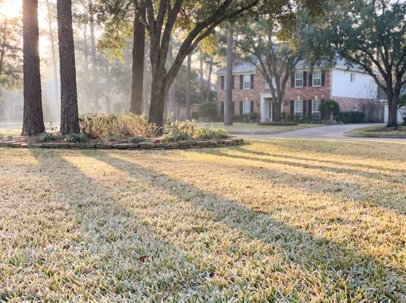
Hunters Creek Village is one of the six Memorial Villages, roughly 10 miles west of downtown Houston, with Buffalo Bayou forming much of its southern border. It is known for generous lots, with a village minimum of 22,500 square feet, and for a heavily wooded landscape where streets and yards sit beneath a canopy of mature oaks and pines.
That setting shapes how lawns behave. Deep shade slows grass growth and reduces how much nitrogen turf can use, even in summer. Leaves and needles from the canopy settle on lawns through late fall and winter. Soils range from heavy gumbo clay to the alluvial soils associated with the bayou, and many are alkaline, which can lock up iron and cause yellowing. Every one of these conditions makes careful timing more important than the amount of fertilizer applied.
What Happens When a Dormant Lawn Is Fed
Warm-season grasses slow dramatically as soil temperatures fall, and St. Augustine typically enters a semi-dormant or dormant state through the coldest part of the Houston winter. Applying fertilizer during that period creates several problems at once.
Nutrients the Grass Cannot Use
A dormant lawn has very little active growth and limited root activity, so it absorbs only a small portion of any fertilizer applied. The rest sits in the soil or washes away with winter rains. On the clay and bayou soils around Hunters Creek, where heavy rain can move quickly across the surface, much of that unused fertilizer ends up in storm drains rather than in the grass.
Fuel for Winter Weeds
The plants that are actively growing in a Houston winter are often weeds. Annual bluegrass, also called Poa annua, henbit, and chickweed germinate in fall and grow through the cool months while St. Augustine rests. Fertilizer applied in winter feeds them, helping them spread and set seed while the lawn itself gains almost nothing.
An Invitation to Brown Patch
Excess nitrogen is one of the main factors that fuels brown patch, the fungal disease caused by Rhizoctonia that is so common in Gulf Coast lawns. Cool, damp weather and shaded turf already favor the fungus. Adding nitrogen to that environment pushes soft, vulnerable leaf tissue that the disease can attack easily. Low-nitrogen dormant turf management, meaning avoiding nitrogen while the lawn is resting, is one of the simplest ways to prevent winter and early-spring brown patch outbreaks. In a neighborhood as shaded as Hunters Creek, that caution matters even more.
Tender Growth Before a Freeze
On mild winter days, a fertilized lawn may push out a bit of new, tender growth. When the next cold front arrives, that soft tissue is more easily damaged than grass that has remained dormant. Instead of protecting the lawn, the winter feeding can leave it more exposed to freeze injury.
Reading the Signs of a Healthy Dormant Lawn
Part of resisting the urge to fertilize is knowing what normal winter dormancy looks like. A healthy dormant St. Augustine lawn turns a fairly even straw or tan color, sometimes with green remaining near the base of the blades and in sheltered spots. The runners stay firmly anchored, and the turf feels springy underfoot. None of that signals a nutrient problem; it is simply the grass conserving energy until warm weather returns.
Certain signs, however, deserve a closer look. Circular or irregular patches with darker, smoky margins can point to brown patch activity. Bright green clumps standing out against dormant turf usually mean winter weeds are taking hold. Turf that lifts easily from the soil like a loose carpet may indicate root damage from grubs, which a professional program addresses with fall grub management. These are problems to diagnose and treat directly, not reasons to spread fertilizer across the entire lawn.
The Winterizer Myth
Much of the confusion comes from the word winterizer. Fall fertilizers marketed under that name were developed largely for cool-season grasses in northern climates, which continue growing in autumn and store energy for winter. Warm-season grasses in the Gulf Coast follow a different cycle. Many products sold as winterizers are relatively high in nitrogen, which is exactly what a resting St. Augustine lawn does not need.
What matters for warm-season turf is not a product label but the timing and balance of the final feeding of the year. That application belongs in fall, while the grass is still active, and it should emphasize potassium and root development rather than top growth.
The Fall Application That Should Already Be in Place
In a well-designed program, the most important cold-weather preparation happens before winter begins. High-potassium fall conditioning helps strengthen St. Augustine and Bermuda as they head into the cool season. Potassium plays a key role in regulating water within plant cells and supporting the grass’s tolerance of cold and stress, which is why a fall application that emphasizes potassium and root development prepares turf far better than a winter dose of nitrogen ever could.
If a lawn missed its fall feeding, the solution is not to make up for it in December or January. Instead, the program resumes at the right moment in spring, with adjustments based on how the lawn came through winter.
What a Smart Fertilization Service Does in Winter Instead
Skipping winter feedings does not mean ignoring the lawn. The cool season is when a thoughtful program gathers information, solves problems that block nutrient uptake, and lines up the spring schedule so every application counts.
Assessing the Lawn While It Rests
Winter offers a clear view of the lawn’s condition. Without summer growth hiding problems, thin areas, bare spots under the canopy, compacted paths, and patches that never fully recovered from summer stress are easy to see. An off-season assessment of gumbo clay and Buffalo Bayou alluvial soils looks at grass type, soil condition, weed pressure, shade patterns, and visible health indicators to establish a baseline before spring.
That baseline guides every decision that follows. A lawn that struggled with yellowing last summer may need iron-focused treatments in the coming season. A heavily shaded front yard may need lighter nitrogen than the sunny back lawn. An area that stays compacted and wet may need aeration before fertilizer can do its job. Planning these details in winter means the first spring application is tailored rather than generic.
Planning Iron Where Yellowing Returns
Many Houston-area lawns turn yellow even when they are well fed, especially on alkaline clay soils. The cause is often iron chlorosis: the soil contains iron, but high pH keeps it locked away from the grass roots. Adding more nitrogen does not fix this problem and can make disease worse. Iron-enriched formulations and micronutrient treatments address the actual cause, restoring color without forcing excessive growth.
Because iron treatments work best while turf is actively growing, winter is the time to identify where chlorosis appeared last year and plan those treatments into the spring and summer schedule, rather than applying them to a lawn that cannot respond.
Building the Soil for Spring
Healthy turf depends on soil that can hold and release nutrients. Compacted clay often struggles to do either. Soil nutrient enhancement treatments introduce organic matter and micronutrient supplements that help the soil retain nutrients and support the living soil community that makes those nutrients available to grass roots. Planning this work during the off-season means it can be timed to support spring green-up rather than competing with it.
Homeowners who prefer a gentler approach can also choose organic lawn feeding, which uses slow-release, naturally derived nutrient sources that feed turf steadily over time. Whichever approach fits the property, the winter assessment ensures the program matches the soil it is meant to improve.
Scheduling Lawn Aeration for the Right Moment
On compacted clay, fertilizer can only work if it reaches the root zone. Lawn aeration solves that problem by creating channels in the soil that help roots absorb water and nutrients and relieve compaction. That is why fertilization is frequently paired with aeration on Houston-area clay soils.
Aeration works best while the lawn is actively growing and able to recover quickly, so winter is the time to identify the areas that need it and schedule it for the right point in the season. Before an aeration visit, irrigation heads should be clearly marked so equipment can work around them.
Keeping Watch on Winter Weeds and Disease
While the grass rests, weeds and fungi do not. Winter is when cool-season weeds become most visible, and targeted post-emergent treatments can stop them before they flower and drop seed for the following year. A fall preventive fungicide application helps protect lawns that had brown patch activity earlier in the year, and ongoing observation through the cool, damp months catches any outbreak early. Combining weed control and disease monitoring with a no-nitrogen winter strategy gives the lawn its best chance to emerge clean and healthy in spring.
Shade, Leaves, and the Hunters Creek Canopy
The tall oaks and pines that define the village also define how its lawns should be fed. Grass growing in shade produces less energy than grass in full sun, so it can use far less nitrogen. Applying the same amount of fertilizer to a shaded front yard as to a sunny back lawn often leads to thin, disease-prone turf in the shade. A thoughtful fertilization service in Hunters Creek Village, TX adjusts each application to the light each area receives, with lighter nitrogen and greater attention to iron and disease prevention where the canopy is heaviest.
Grass selection matters too. St. Augustine handles shade better than any other warm-season grass used in the Houston area, and Palmetto performs especially well in moderate shade. In places where the canopy has grown so dense that no grass can thrive, fertilizer will not solve the problem. Those areas are often better suited to planting beds or other landscape solutions, and the winter assessment is the ideal time to identify them before another season of struggling turf.
Simple Winter Habits That Help
A few homeowner habits support the program between visits. Dormant lawns need far less water, so irrigation schedules should be reduced during the cool months to avoid keeping clay soil saturated, which encourages disease and shallow roots. In a neighborhood with heavy tree cover, thick layers of fallen leaves and needles should not be allowed to mat down on the lawn for weeks, since they block light and hold moisture against the turf. Avoiding heavy foot traffic on frosty grass also prevents unnecessary damage to dormant blades.
Mapping the Spring Program
The winter months end with a clear plan. Most lawns benefit from three to four applications per year, spread across spring, summer, and fall, often delivered as split applications in smaller doses rather than one heavy feeding. The program typically begins by early March, as the lawn starts to emerge from dormancy. Spring applications focus on nitrogen to drive green-up, summer formulations help turf withstand heat stress, and fall applications return to potassium and root development to prepare for the next winter.
Pre-emergent weed control is timed to soil temperature rather than the calendar, and weed and feed programs can combine weed prevention with nutrition when the timing aligns. With the winter assessment complete, each application can be adjusted for the shade, soil, and history of the individual property.
Patience matters at the end of winter, too. A warm stretch in February can make the lawn look ready before it truly is. Feeding too early, while St. Augustine is still only partly green, again sends most of the nitrogen to weeds rather than turf, and a returning cold front can stall growth just as quickly. Waiting until the grass is genuinely emerging from dormancy, and letting the program’s timing rather than a single warm weekend decide the start date, keeps the first application working for the lawn instead of against it.
Why Expertise Makes the Difference
Knowing when not to fertilize is just as important as knowing what to apply. Heroes Lawn Care of Bellaire builds its lawn fertilizer programs around the natural cycle of warm-season turf, with seasonal treatments and custom feeding schedules rather than a fixed calendar. Its iron-enriched formulations address the pH-related chlorosis common in Gulf Coast clay, and its organic options rely on slow-release, naturally derived nutrients.
The products themselves set the program apart. Roughly 90 percent of the fertilization, weed, insect, and fungal products Heroes Lawn Care of Bellaire applies were developed and registered in-house by an owner with two decades of research-and-development chemistry experience. Every program is informed by a Texas A&M-trained agronomist with 15 years of experience across the Houston area, and the company is licensed by the Texas Department of Agriculture and the Texas Commission on Environmental Quality.
For homeowners in Hunters Creek Village, TX, where deep shade, alkaline soils, and bayou conditions make timing especially important, Heroes Lawn Care of Bellaire offers lawn care services that combine fertilization, aeration, weed control, and disease control into one coordinated plan.
Conclusion: Let the Lawn Rest, and Plan for Spring
A dormant lawn is not a hungry lawn. Feeding St. Augustine or Bermuda in the middle of winter wastes nutrients, feeds weeds, invites brown patch, and can expose tender growth to freeze damage. A smart fertilization service in Hunters Creek Village, TX finishes its work in fall with a potassium-focused application, then uses the winter to assess soil and turf, plan iron treatments where yellowing returns, build soil health, schedule aeration, and keep watch on weeds and disease.
When early March arrives, the lawn is ready, and so is the plan. With three to four well-timed applications through spring, summer, and fall, each one matched to the property’s shade and soil, the result is a thicker, greener, healthier lawn all year. Heroes Lawn Care of Bellaire brings the timing, science, and local expertise to make that happen, starting with a winter assessment of the lawn while it rests.