
The Yellow Lawn Myth: Why More Fertilizer Won’t Fix Braeswood, TX Turf — and What a Real Fertilization Service Does Instead | Heroes Lawn Care of Bellaire
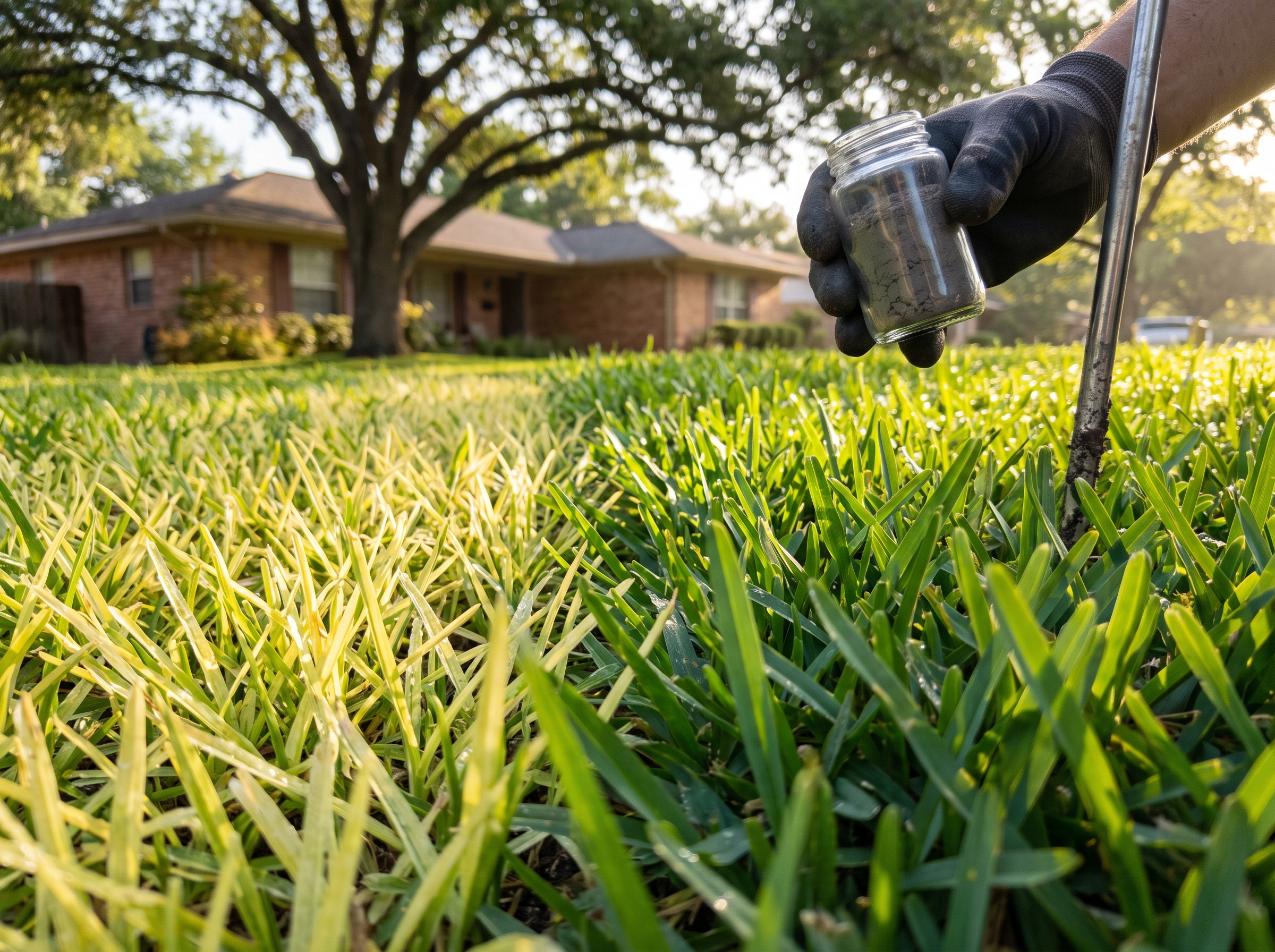
It happens on almost every street sooner or later. A St. Augustine lawn that looked rich and green in spring starts fading to a washed-out lime color by early summer. The first instinct is to grab a bag of fertilizer, spread it generously, and wait for the color to return. Sometimes it does, briefly. More often the lawn stays pale, grows faster and shaggier, and becomes more prone to disease. The homeowner tries again, a little heavier this time, and the cycle repeats.
The belief behind that cycle is simple and widespread: a yellow lawn is a hungry lawn, and the cure is more food. In Braeswood, TX, that belief is wrong far more often than it is right. The soils along Brays Bayou are dense, frequently alkaline, and rich in minerals that turf cannot always reach. Yellowing is commonly a sign that nutrients already present in the ground are locked away, not that the lawn needs another round of nitrogen. A professional fertilization service built on soil science starts by asking why the grass is yellow before deciding what to apply.
This article breaks down what yellow turf is really signaling, why feeding harder can make the problem worse, and how a science-led program restores lasting color while protecting the bayou that runs through the neighborhood.
Why Yellow Rarely Means Hungry
Grass turns yellow when it cannot produce enough chlorophyll, the pigment that makes leaves green and powers photosynthesis. Nitrogen is one building block of chlorophyll, but it is far from the only one. Iron, magnesium, manganese, and sulfur all play essential roles, and a shortage of any of them can drain color from a lawn. The specific pattern of yellowing usually reveals which one is missing.
Reading the Yellow: Iron Chlorosis Versus Nitrogen Shortage
A genuine nitrogen shortage tends to show up as an even, pale yellow-green across the entire lawn, often starting on older leaves, because the plant moves its limited nitrogen toward new growth. Iron chlorosis looks different. The youngest blades turn yellow first, frequently with a striped appearance where the veins stay greener than the tissue between them. St. Augustine is especially prone to this pattern, and it is one of the most common causes of yellow lawns across the Houston area.
The cause is rarely an absence of iron in the soil. Gulf Coast clay usually contains plenty of it. The problem is chemistry. When soil pH climbs above neutral, iron converts into forms that roots cannot absorb. Compacted clay, soggy soil after heavy rain, and cool spring nights make the issue worse by slowing root activity. In that situation, spreading more nitrogen does nothing to unlock the iron, and the yellow stripes persist no matter how much fertilizer goes down.
The Hidden Cost of Feeding Harder
Over-applying nitrogen to a lawn that is not truly nitrogen-deficient creates a chain of new problems. Excess nitrogen pushes soft, rapid top growth that requires more frequent mowing and builds thatch faster. That lush, tender growth is more vulnerable to fungal diseases common in St. Augustine, including gray leaf spot during humid summers and large patch when nights cool in autumn. It also draws more water from the soil, stressing the grass during dry spells.
Then there is the runoff. Fertilizer that the lawn cannot use does not simply disappear. During Houston's frequent downpours, excess nutrients wash across driveways and into storm drains that empty into Brays Bayou. In other words, the habit of feeding harder wastes product, weakens the lawn, and contributes to water quality problems downstream, all while leaving the original cause of yellowing untouched.
Start With the Soil, Not the Bag
Every effective feeding program begins with information. Houston gumbo clay soil nutrient testing and analysis replaces guesswork with measurable data about what the lawn actually needs. A soil sample is collected from multiple spots across the lawn, typically from the top four to six inches where turf roots are most active, then mixed into a single representative sample and sent to a laboratory.
What the Lab Report Reveals
A standard soil analysis reports pH, along with levels of phosphorus, potassium, calcium, magnesium, sulfur, and sodium, and often key micronutrients such as iron, manganese, and zinc. For a property in Braeswood, TX, the results frequently tell a surprising story: phosphorus and calcium are often already adequate or high, potassium may be lower than ideal, and pH is commonly neutral to alkaline. Those findings change the entire strategy. A lawn with alkaline soil and plenty of phosphorus needs a very different program than the generic bag on a store shelf assumes.
Testing every two to three years, or whenever a lawn shows unexplained decline, keeps the program accurate as conditions change. Older neighborhoods with decades of renovations, imported topsoil, and irrigation from alkaline water sources can vary dramatically from one yard to the next, and even between the front and back of the same lot.
Correcting Alkaline pH With Elemental Sulfur
When testing confirms that high pH is limiting nutrient availability, an elemental sulfur soil amendment for alkaline pH correction is one of the most practical tools available. Elemental sulfur is converted by naturally occurring soil bacteria into a mild acid that gradually lowers pH in the root zone. The process takes time, usually months rather than days, and works best when sulfur is applied in modest amounts over several seasons rather than all at once, which can burn turf.
Expectations matter here. Heavy clays that contain free lime resist pH change, so sulfur is best viewed as a steady, long-term correction that improves nutrient availability at the surface where turf roots feed, rather than a quick fix. Paired with the targeted treatments described below, it shifts the lawn from constantly fighting its own soil to working with it.
Unlocking Color Fast: Chelated Iron and Foliar Micronutrients
While sulfur works slowly in the background, the lawn still needs relief in the meantime. A chelated iron treatment for St. Augustine turf chlorosis delivers iron in a protected form that stays available to the plant even in alkaline soil. The chelate acts like a protective shell around the iron molecule, preventing it from binding with soil minerals before the roots can absorb it. Certain chelates hold up far better at high pH than others, which is why product selection matters as much as application.
For the fastest visible results, a foliar micronutrient spray for yellowing turf revitalization feeds the leaves directly. Iron, manganese, and other micronutrients applied as a fine spray are absorbed through the blades, often producing a noticeable deepening of color within days. Because foliar treatments bypass the soil chemistry problem entirely, they are especially valuable during the heat of summer, when heavy nitrogen would invite disease but the lawn still needs to look its best. The effect is temporary, typically lasting several weeks, so foliar feeding works best as one part of a broader schedule rather than a stand-alone cure.
What a Real Fertilization Service Does Instead
A professional program replaces the cycle of reactive feeding with a planned, soil-specific strategy. It applies the right nutrients, in the right forms, at the right times, and in amounts the lawn can actually use. The difference shows up not only in color but in thicker turf, deeper roots, fewer weeds, and better resistance to disease and drought.
A Custom Multi-Step Feeding Schedule for Warm-Season Turf
A warm-season turf custom multi-step feeding schedule follows the natural growth cycle of St. Augustine rather than the calendar printed on a fertilizer bag. In late winter, the focus is weed prevention and soil correction, not feeding, because nitrogen applied before the grass fully greens up mainly benefits weeds. Once the lawn has fully emerged from dormancy in spring, the first nitrogen application supports new growth and recovery.
Early summer brings a steady, slow-release feeding to sustain density through the hottest months. During peak summer heat, the emphasis shifts toward iron and micronutrients that maintain color without forcing excessive growth. As temperatures moderate in late summer, a final measured nitrogen application helps the lawn recover from summer stress. Fall then turns toward potassium and root health in preparation for winter. Each step is adjusted to the soil report, the amount of shade on the property, and how the lawn responded the previous season. Lawns under the heavy oak canopy common in older neighborhoods, for instance, generally need less nitrogen than turf in full sun.
Slow-Release Nitrogen That Feeds Steadily
When nitrogen is needed, the form matters as much as the amount. Slow-release polymer-coated granular nitrogen application wraps each granule in a thin coating that controls how quickly nutrients escape into the soil. Release is driven largely by soil temperature and moisture, so nitrogen becomes available gradually over a period of weeks instead of arriving in a single surge.
That steady supply produces even growth and color rather than a quick flush followed by a crash. It reduces the risk of leaf burn, lowers the amount of nitrogen lost to leaching or runoff during heavy storms, and keeps turf from developing the soft, overgrown tissue that invites disease. For a neighborhood that drains directly toward a bayou, it is also one of the simplest ways to reduce the environmental footprint of a beautiful lawn.
Protecting Brays Bayou With Phosphorus-Free Formulas
Phosphorus is an essential nutrient, but many established Houston lawns already contain more than enough of it. When excess phosphorus washes into waterways, it fuels algae growth that clouds water and depletes oxygen for fish and other aquatic life. Choosing a Brays Bayou watershed-compliant phosphorus-free lawn fertilizer is a responsible default for properties in the watershed, with phosphorus added only when a soil test shows a genuine deficiency, such as when establishing new sod or seed.
Good application practices complete the picture. Granules that land on sidewalks and driveways should be blown or swept back onto the turf, applications should be avoided right before heavy rain is forecast, and a buffer should be maintained along any drainage channel or ditch. A conscientious lawn fertilizer service builds these habits into every visit, so the lawn gets what it needs and the bayou does not receive what it does not.
Feeding the Soil Beneath the Lawn
Healthy turf depends on healthy soil life. Beneath every lawn lives a vast community of bacteria, fungi, and other organisms that break down organic matter, cycle nutrients, and help roots access minerals. In compacted clay, that community is often limited, which is one reason nutrients that are technically present remain out of reach.
A liquid humic acid and cold-water kelp bio-stimulant root drench supports the root zone in two complementary ways. Humic substances, derived from decomposed organic matter, can help clay soils hold and release nutrients more effectively and may improve how well micronutrients such as iron remain available. Cold-water kelp extracts contain natural compounds that can support root development and help turf cope with heat and drought stress. Neither replaces fertilizer, but both can improve how efficiently the lawn uses the nutrients it receives.
Soil microbiome enrichment and liquid organic carbon top-feeding take the same idea further by supplying the food that beneficial soil organisms need to thrive. Carbon sources applied in liquid form feed microbial populations, which in turn help break down thatch, improve soil structure over time, and make nutrients more available to grass roots. The goal is a soil that gradually becomes more productive on its own, reducing the need for heavy inputs in the years ahead.
Preparing for Winter With Potassium
Many homeowners have heard that a fall winterizer is essential, but the details matter for St. Augustine. Heavy nitrogen in autumn can encourage the large patch disease that thrives as nights cool and soils stay damp. A high-potassium late fall lawn winterizer conditioning treatment takes a different approach, focusing on potassium with little or no nitrogen.
Potassium plays an important role in regulating water within plant cells, strengthening cell walls, and supporting tolerance to cold and stress. When a soil test shows that potassium is low or marginal, a fall potassium application helps the lawn enter its dormant season in stronger condition and recover more quickly when spring arrives. As with every other step, the decision is guided by soil data rather than tradition.
Habits That Help Every Application Work Harder
Even the best feeding program depends on what happens between visits. Watering deeply and less often, rather than a short daily sprinkle, encourages roots to grow downward where nutrients and moisture are more stable. Running irrigation in the early morning gives leaves time to dry, which reduces the disease pressure that heavy nitrogen and humid nights can create. Leaving grass clippings on the lawn after mowing returns a meaningful share of nutrients to the soil instead of sending them to the curb.
Mowing height matters too. St. Augustine kept too short loses the leaf surface it needs to produce energy, turns pale under stress, and becomes an easy target for weeds. Keeping blades on the taller side, especially in shade, helps the lawn use each feeding efficiently. Homeowners who pair these habits with a professional program from Heroes Lawn Care of Bellaire typically see faster color recovery and a thicker, more resilient lawn by the second season, because the grass is finally able to absorb and use what it receives.
Why Formulation Expertise Changes the Results
Most lawn care services apply the same mass-market products to every property on the route. Heroes Lawn Care of Bellaire takes a fundamentally different approach. Roughly 90 percent of the fertilization, weed, insect, and fungal products the company applies were developed and registered in-house by an owner with two decades of research-and-development experience as a lawn chemistry specialist. That level of formulation control means nutrient blends can be matched to the specific challenges of Gulf Coast clay, including high pH, slow drainage, and heavy summer heat.
Those formulations include natural, 25(b) minimum-risk, and organic options designed with families and pets in mind. As a general precaution, children and pets should stay off treated grass for four hours after a fertilizer application. Every program is also informed by a Texas A&M-trained agronomist with 15 years of experience across the Houston area, so feeding schedules account for shade, drainage, turf variety, and how each lawn has responded in previous seasons.
For homeowners in Braeswood, TX who are tired of the yellow-then-green-then-yellow cycle, Heroes Lawn Care of Bellaire offers a lawn fertilizer program that starts with soil testing, corrects the underlying chemistry, and feeds the lawn only what it can actually use. It is lawn care built on chemistry rather than habit.
Conclusion: Stop Feeding the Myth, Start Feeding the Soil
A yellow lawn is a message, and in most cases that message is not "add more fertilizer." Across Braeswood, TX, alkaline clay, compaction, and wet-dry swings frequently lock iron and other micronutrients away from St. Augustine roots, leaving homeowners to pour on nitrogen that only fuels disease, thatch, and runoff. A true fertilization service reads the soil first, corrects pH with elemental sulfur, restores color quickly with chelated iron and foliar micronutrients, and builds long-term strength through slow-release nitrogen, phosphorus-free formulas, soil biology, and potassium before winter.
The result is a lawn that stays green because its soil works, not because it was force-fed. For families along Brays Bayou who want deep, lasting color while protecting the waterway that defines their neighborhood, Heroes Lawn Care of Bellaire provides the proprietary science, agronomic insight, and seasonal precision to make it happen. A professional soil test is the first step toward ending the yellow lawn cycle for good.