
Lakes, Creeks, and Lush Lawns: Why Sienna, TX Yards Need In2Care Service More Than Most | Heroes Lawn Care of Bellaire
Few communities in the Houston area are as closely tied to water as Sienna. Homes back onto shimmering lakes, walking trails follow the banks of the Brazos River, and neighborhoods are woven together by green space, ponds, and carefully irrigated landscaping. It is a big part of why families choose to live there. The same features that make the community so inviting, however, also create a long and demanding mosquito season.
Most residents assume the lakes are to blame for the bites they feel on the patio every evening. The reality is more surprising, and more useful. The mosquitoes most likely to bite in a Sienna backyard usually are not coming from the lake at all. They are breeding in small, hidden pockets of water right next to the house, often within the same yard. That is exactly the problem In2Care service was designed to solve. Rather than chasing adult mosquitoes with repeated sprays, it targets the hidden breeding sites that keep producing new ones, using the mosquitoes themselves to carry the treatment.
Understanding why this approach fits Sienna so well starts with a closer look at the community itself and the species that thrive in it.
A Community Built Around Water
Sienna is a large master-planned community in eastern Fort Bend County, roughly 25 miles southwest of downtown Houston and largely within the extraterritorial jurisdiction of Missouri City. It covers about 14 square miles and is home to more than 20,000 residents. Lakes and ponds are scattered through its neighborhoods, Oyster Creek flows through the center of the community, and a trail runs along roughly four miles of Brazos River frontage on its western edge.
Water features in a community like this serve important purposes, from recreation to stormwater management. They also raise local humidity, support dense vegetation along their edges, and create the kind of sheltered, shady corridors where adult mosquitoes rest during the heat of the day. Combine that with the Gulf Coast climate, frequent heavy rain, and lawns and landscape beds that receive regular irrigation, and Sienna, TX offers mosquitoes nearly everything they need for much of the year.
The community has also grown quickly, from roughly 13,700 residents in 2010 to more than 20,000 by 2020. Newer sections bring freshly graded lots, young landscape beds, and new drainage features, and every one of them can hide small pockets of water that go unnoticed until mosquito season is already underway. Established neighborhoods face the opposite challenge: mature trees with holes and crotches that hold rainwater, older gutters, and decades of landscape additions that create shady, humid corners close to the house.
The Lakes Are Not the Main Problem
Large, open bodies of water with moving surfaces, fish, and other natural predators are generally poor nurseries for the mosquitoes that bother people most during the day. The species responsible for many backyard bites in the Houston area prefer something much smaller: the water left behind in a plant saucer, a clogged gutter, a child’s toy, or a drain grate. That changes where the solution needs to focus.
Meet the Asian Tiger Mosquito
The Asian tiger mosquito, known scientifically as Aedes albopictus, is easy to recognize by the bright white stripes on its black body and legs. It is an aggressive daytime biter that tends to attack ankles and legs, often while people are gardening, playing, or relaxing outdoors in the late afternoon. It lays its eggs just above the waterline in small containers, and those eggs can survive dry periods for months, hatching as soon as rain or irrigation refills the container.
This mosquito typically stays close to where it hatched, often within a few hundred feet. In practical terms, the Asian tiger mosquitoes biting in a Sienna backyard were very likely produced on that property or on the lots right next door. That makes Aedes albopictus biological transmission suppression at the property level both possible and highly effective, because the source is close at hand.
Its Cousin, the Yellow Fever Mosquito
Aedes aegypti, often called the yellow fever mosquito, shares many of the same habits. It breeds in small containers near homes, bites during the day, and is considered the primary disease-carrying Aedes species in the Houston area, capable of transmitting dengue, Zika, and chikungunya. Like its striped cousin, it rarely travels far, which again means the most effective control happens right in the yard where it breeds.
Where Mosquitoes Really Breed in a Sienna Yard
Even the most carefully maintained property can hide dozens of tiny breeding sites. Many of them are invisible from a casual walk around the yard, and some are impossible to reach without a ladder or a shovel.
Irrigated Landscapes and Everyday Containers
Regular irrigation keeps Sienna’s lawns and landscape beds green, but it also refills water-holding objects throughout the yard. Plant saucers, decorative pots, birdbaths, wheelbarrows, pool equipment, tarps, and toys can all collect enough water for mosquitoes to lay eggs, sometimes every time the sprinklers run. Dense shrubs and ground cover around the foundation stay cool and humid, giving adult mosquitoes perfect resting spots close to the people they bite.
Drains, Gutters, and Hidden Corners
Many homes in master-planned communities rely on yard drains, catch basins, and gutter systems to move stormwater quickly. When debris collects in a drain grate or a gutter sags slightly, a shallow pool forms that may go unnoticed for weeks. Low spots in the lawn, corrugated downspout extensions, and the bottoms of drain inlets are all common cryptic breeding sites, which is the term for water sources that are hidden, hard to reach, or easily overlooked.
The Brazos River and Flat Bank Creek Corridor Microclimate
Properties near wooded drainage corridors and the river face an additional challenge. The vegetation along the Brazos River and Flat Bank Creek corridor creates a shaded, humid microclimate that shelters adult mosquitoes, while creeks and drainage channels in the area hold water after heavy rain. Homes along these green edges often experience heavier mosquito pressure than homes in more open sections of the community. Brazos River and Flat Bank Creek corridor microclimate mosquito pressure reduction therefore depends on controlling breeding inside each yard, so the local population does not keep multiplying right next to the house.
How In2Care Service Turns the Tables
Traditional treatments focus on the mosquitoes that are already flying. In2Care service focuses on the next generation and on the hidden water no one can find, which is exactly where Sienna’s mosquito problem begins.
Two Active Ingredients, One Delivery System
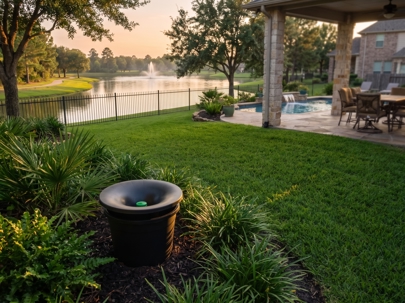
Each In2Care station is a compact container designed to look like an ideal breeding site to an egg-laying female mosquito. Inside, targeted pyriproxyfen and entomopathogenic Beauveria bassiana fungal active delivery work together. Pyriproxyfen is an insect growth regulator, or IGR, that prevents mosquito larvae from developing into biting adults. Beauveria bassiana is a naturally occurring soil fungus, used in organic pest management, that infects insects. The term entomopathogenic simply means it causes disease in insects.
When a female mosquito visits the station to lay her eggs, she picks up both ingredients. The growth regulator stops larvae from becoming adults wherever it lands, and the fungus begins to infect the visiting mosquito, shortening her life. Larvae developing inside the station itself never reach adulthood, so every visit by a mosquito becomes a dead end for the next generation.
Reaching the Sites No Technician Can Find
The real advantage of the system appears after the mosquito leaves. Female Aedes mosquitoes spread their eggs across several water sources rather than laying them all in one place. As a contaminated female moves on to the next clogged drain, hidden saucer, or tree hole, she carries tiny amounts of the growth regulator with her and leaves it behind in the water.
This process is known as autodissemination. In effect, cryptic breeding site larviciding via adult mosquito autodissemination cross-contamination treats the very places that are hardest for people to locate. The mosquito knows exactly where the hidden water is, and she becomes the delivery system for the treatment. For properties with complex landscaping, drainage features, and dense foliage, this is a level of reach that no handheld application can match.
Mapping the Yard: Strategic Station Placement
Results depend on putting stations in the right places. Strategic autodissemination mosquito station mapping begins at the initial visit, when a technician studies the property and maps station placement to provide full coverage at the density the system requires. The layout takes into account where mosquitoes rest, such as dense shrubs, shaded beds, and the cool areas beneath tree canopies, as well as where the family spends time outdoors.
For homes backing onto a lake, a greenbelt, or a drainage corridor, mapping is especially important. Stations can be positioned to intercept mosquitoes moving between those sheltered edges and the patio, play area, or pool deck. Because the stations need no electricity and make no noise, they work quietly in the background while the yard is enjoyed as usual.
Every Visit Counts: Servicing and Breeding-Site Assessment
A station is only as effective as its last service visit. During peak mosquito season, roughly March through October, recurring visits are scheduled at 21-day intervals, with year-round monitoring outside that window. At each visit, technicians service the stations, refilling the biological agents and assessing how well each station is performing.
Every visit also includes a property-specific breeding site assessment, the backbone of an integrated approach to mosquito management. The technician walks the yard to identify new or changing breeding sites, such as tree holes, clogged gutters, plant saucers, hidden containers, low spots, and drainage depressions, then eliminates or directly treats the standing water found. Because yard drainage zones so often produce recurring problems, these walks can reveal where a drain, a low area, or a downspout needs attention. Heroes Lawn Care of Bellaire also offers drainage solutions, including French drains, catch basins, yard drains, and downspout extensions, so persistent wet spots can be corrected at the source rather than treated again and again.
Timing the Program Around Sienna’s Weather
Mosquito populations in Fort Bend County rise and fall with temperature and rainfall. Warm spells in late winter can wake overwintering eggs earlier than many residents expect, and spring storms quickly refill every container in the yard. Starting service around early March, before the first major hatch, gives the stations time to attract egg-laying females and begin spreading the growth regulator before populations climb.
Summer storms and the Gulf Coast hurricane season bring another surge. Each heavy rain can trigger a new wave of hatching from eggs that have been waiting along the dry edges of containers and drains. Stations that are already established and serviced on schedule keep working through those surges, reducing how many of the new larvae survive to adulthood. Fall in Sienna, TX is often warm and humid enough to keep mosquitoes active well into October, which is why consistent servicing through the end of peak season matters as much as an early start.
Why Quick Fixes Fall Short Near the Water
Many homeowners try candles, plug-in repellers, or electric insect zappers before turning to a professional program. Candles and repellers may offer limited relief within a small radius while they are running, but they do nothing about the larvae developing in nearby drains and containers. Electric zappers tend to attract and kill large numbers of moths, beetles, and other insects, many of them harmless or beneficial, while doing little to reduce the daytime-biting Aedes mosquitoes that cause most backyard complaints.
Even a one-time spray on its own provides only a temporary knockdown of the adults resting in the yard at that moment. Near lakes, creeks, and wooded corridors, new mosquitoes quickly move into the treated space, and the hidden breeding sites keep producing more. Lasting relief comes from breaking the breeding cycle, which is exactly what a station-based program is designed to do.
A Non-Spray Station Built for Families, Pets, and Pollinators
Families in Sienna spend a great deal of time outdoors, and many have pets, vegetable gardens, and flowering beds that attract bees and butterflies. In2Care stations offer a non-spray approach to mosquito control. Nothing is fogged across the lawn, and because the stations do not spray, no product drifts onto neighboring yards, gardens, or nearby water.
The biological agents remain inside the station, and its design keeps children and pets from being exposed to its contents when they encounter the outside of the unit. Pyriproxyfen does not affect vertebrates or beneficial insects at the concentrations used, and the station is built specifically to attract egg-laying mosquitoes rather than pollinators. For homeowners who value pollinator-safe vector abatement in a community surrounded by lakes, trails, and natural areas, that precision is a meaningful advantage.
Pairing Stations With the Rest of the Program
In2Care stations are most powerful as part of a complete mosquito program. The Mosquito Legion program from Heroes Lawn Care of Bellaire combines station servicing with barrier treatments applied to foliage, turf edges, and resting zones to reduce adult mosquitoes, along with the breeding site assessment performed at every visit. For special occasions, such as a birthday party or a backyard gathering by the lake, a one-time event treatment can be applied 24 to 48 hours before guests arrive.
Homeowners can strengthen the results with a few simple habits: tipping out water-holding containers after rain or irrigation, keeping gutters and drain grates clear, adjusting sprinkler heads that overspray onto pots and patios, and storing toys and equipment so they cannot collect water. Together with professional service, these steps shrink the number of places mosquitoes can breed and let the stations focus on the hidden sites that matter most.
Why Expertise Matters Behind the Stations
Effective mosquito control requires more than placing a container in the yard. It takes an understanding of mosquito biology, local weather patterns, landscape design, and drainage. Heroes Lawn Care of Bellaire brings all of these together. The company’s ownership includes two decades of research-and-development chemistry in lawn and insect products, and its landscape work is guided by a Texas A&M-trained agronomist with 15 years of experience across the Houston area.
That depth of knowledge means stations are placed and serviced with the whole property in mind, and drainage or landscape problems that contribute to mosquito pressure can be addressed by the same team that provides lawn care services, landscaping, and drainage solutions. Heroes Lawn Care of Bellaire is licensed by the Texas Department of Agriculture and the Texas Commission on Environmental Quality, giving Sienna, TX homeowners confidence that every treatment is applied to professional standards.
Conclusion: Enjoy the Water Without the Bites
Sienna’s lakes, creeks, trails, and lush landscapes are what make the community special, but they also create conditions where mosquitoes can thrive. The most persistent biters, the Asian tiger mosquito and the yellow fever mosquito, breed in small, hidden pockets of water close to home rather than in the lakes themselves. In2Care service meets that challenge head-on, using strategically mapped stations, pyriproxyfen and Beauveria bassiana, and the mosquitoes’ own egg-laying behavior to reach breeding sites that would otherwise go untreated.
With servicing at every recurring visit, a breeding site assessment each time, and a non-spray station designed with families, pets, and pollinators in mind, homeowners in Sienna, TX can reclaim their patios, pool decks, and lakeside views. Heroes Lawn Care of Bellaire offers the expertise and the complete mosquito program to make that happen, season after season.